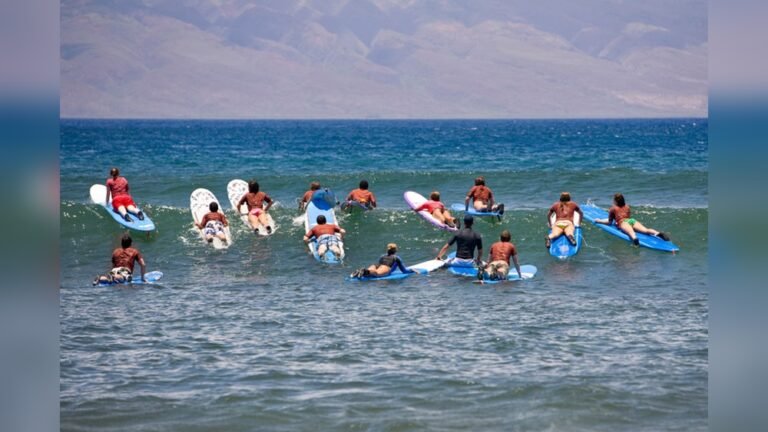
Catching a wave is the heart of surfing. It looks simple when you watch experienced surfers glide smoothly, but if you’re new to surfing, it can feel almost magical or impossible. The truth is, there’s a clear science and technique behind catching waves, and anyone can learn it with practice and understanding.
Whether you’re just beginning or have tried a few times and struggled, knowing exactly how surfers catch waves makes the process much less mysterious. Let’s break down the techniques, the timing, and the often-missed details that make all the difference.
Understanding Waves: The Surfer’s Playground
Before you can catch a wave, you need to know what you’re dealing with. Waves are not all the same, and recognizing the right kind of wave is the first skill a surfer must develop. The size, shape, and speed of a wave decide if it’s surfable.
Swell is created by wind blowing over the surface of the ocean. The stronger and longer the wind blows, the bigger the swell. When this energy reaches shallower water near the shore, it forms breaking waves—the kind surfers ride.
Waves can break in three main ways:
- Beach breaks – Over sandy bottoms, waves change shape often and can break anywhere along the beach.
- Point breaks – Over rocks or reef, the wave peels in a predictable line, often giving longer rides.
- Reef breaks – Over coral or stone, usually with powerful, consistent waves.
Knowing these differences helps surfers choose the right spot and understand how the wave will act.
Choosing The Right Wave
Not every wave is worth catching. Beginners often try for every wave, but this wastes energy and leads to frustration. Surfers look for waves with a clean face (not too steep, not closing out all at once), which let them paddle in and ride along the unbroken part.
A good wave for learning is:
- Around chest to head high
- Peeling gently, not dumping all at once
- With a clear shoulder (the unbroken part to ride along)
Experienced surfers scan the ocean for these waves, reading the swells and learning the rhythm of the set. Sets are groups of waves that come every few minutes, with lulls in between.
Surfboards And Equipment: What Matters
The type of surfboard you use can make catching waves much easier or harder. Larger boards, known as longboards, provide more stability and float, making it easier to paddle and catch waves early. Shortboards are more agile but require precise timing and strong paddling.
Key factors in a beginner board:
- Length: 8–9 feet is best for most adults starting out.
- Volume: More volume equals more float and easier paddling.
- Width: Wider boards offer more stability.
A leash keeps you safe, wax or traction pads give grip, and a wetsuit can make chilly water comfortable.
| Board Type | Length | Best For |
|---|---|---|
| Foam Longboard | 8–9 feet | Beginners, small waves |
| Mini Malibu | 7–8 feet | Intermediates, all-around |
| Shortboard | 5.5–6.5 feet | Advanced, steep waves |
Positioning In The Lineup
Where you sit in the water (the lineup) is critical. Sit too far out, and you’ll miss the wave before it breaks. Too close to shore, and the wave will break on top of you.
Surfers watch where waves begin to break (the peak) and position themselves just outside this spot. This lets them paddle into the wave before it stands up and breaks.
A common mistake is “inside” positioning—sitting too close to shore. Here, you get caught by the whitewater and miss the best part of the ride. The right spot is where you have time to catch the wave as it rises, not after it’s already foaming.
Timing And Reading The Ocean
Timing is everything in surfing. You need to spot a wave early, turn your board toward shore, and start paddling before the wave reaches you.
Tips for better timing:
- Watch the sets for a few minutes before paddling out.
- Notice where most waves break and where other surfers position themselves.
- Start paddling when the wave is 10–15 meters (about 30–50 feet) behind you.
Most beginners wait too long, thinking the wave will pick them up automatically. In reality, you need to match the speed of the wave to “catch” it—otherwise, it passes under you.
The Paddle: Getting Up To Speed
Strong paddling is the engine of wave-catching. Lying flat and paddling with deep, smooth strokes, you must build enough speed to match the wave’s motion.
How to paddle correctly:
- Keep your chest low on the board, with your chin up.
- Cup your hands and dig deep.
- Use long, steady arm movements rather than frantic splashing.
Efficient paddling is about rhythm and endurance, not just power. Many beginners get tired quickly because they paddle inefficiently, so focus on form. The last few strokes before the wave reaches you should be your fastest and strongest.
The Takeoff: Getting To Your Feet
Once you feel the wave lifting the back of your board, it’s time for the takeoff. This step is also called the “pop-up.” Timing is crucial—do it too early, and you’ll lose speed; too late, and the wave will break on you.
Steps for a smooth takeoff:
- Push your upper body up with your hands flat on the board, beneath your chest.
- In a single movement, bring your feet under you and stand up.
- Keep your knees bent and eyes looking forward, not down.
Practice this movement on the beach before entering the water. Muscle memory makes a big difference, especially when you’re learning.
A common beginner error is jumping up too slowly or with straight legs. This makes you unstable and more likely to fall.
The Angle: Riding Across The Wave
Many beginners try to ride straight toward the shore. However, experienced surfers angle their takeoff to ride along the unbroken “shoulder” of the wave. This allows for a longer, smoother ride.
To angle your takeoff:
- Paddle slightly toward the direction the wave is peeling (left or right).
- As you stand, point your leading shoulder in that direction.
- Shift your weight gently to guide the board along the wave’s face.
This technique, called trimming, turns a short ride into a long glide.
Common Mistakes And How To Avoid Them
Learning to catch waves is a process filled with trial and error. But many mistakes are easy to fix once you know them.
Sitting Too Far Back
If you sit too far back on your board, the nose lifts and you paddle slowly. Move forward until the nose is just above the water.
Too Far Forward
Too far forward, and the board “pearls”—the nose dives under water. Adjust your position until you find the sweet spot.
Not Paddling Hard Enough
You must paddle with commitment. Half-hearted paddling means missing most waves. Save your energy for the right wave, then go all in.
Poor Timing
Start paddling early, not when the wave is already at your tail. This gives you time to build speed.
Looking Down
Keep your eyes up as you stand. Looking at your feet makes you wobble and fall.
Two Non-obvious Insights Most Beginners Miss
- Wave Selection Over Quantity: It’s better to wait for a good, clean wave than to try catching every bump in the ocean. The right wave makes learning much faster and more fun.
- Reading the “Channel”: Most surf spots have a channel—a deeper area where waves don’t break. Use this to paddle out easily without fighting whitewater, then move to the peak when ready.

Safety And Surfing Etiquette
Safety is as important as technique in surfing. Strong currents, collisions, and the power of waves all present risks.
Key rules:
- Never surf alone as a beginner.
- Respect the right of way: The surfer closest to the breaking part of the wave has priority.
- Don’t ditch your board; hold on to it in crowds.
- Watch for rip currents, and know how to escape by paddling parallel to the shore.
Understanding and respecting these rules keeps everyone safer and improves your reputation in the water.
How Surfers Improve Their Wave Catching
Surfing is a lifelong journey. Even pros spend time practicing basics and learning from each session.
Ways to improve:
- Practice paddling and pop-ups on flat days.
- Study videos of yourself or others.
- Ask experienced surfers for tips.
- Keep a surf journal to track progress.
Small adjustments, like shifting your weight or changing your timing by a second, can lead to big improvements.

Real-world Example: Catching Your First Wave
Imagine you’re at a beach break on a 2-foot day, using an 8-foot foam longboard. You spot a gentle wave about 20 meters out. You paddle out through the channel, wait at the peak, and watch the sets roll in.
The right wave approaches; you turn your board, paddle hard, feel the lift, pop up, and ride along the unbroken face. With practice, this scenario becomes natural.
Quick Comparison: Beginner Vs. Advanced Wave Catching
To highlight the key differences, here’s a side-by-side look at how beginners and advanced surfers approach catching waves:
| Stage | Beginner | Advanced Surfer |
|---|---|---|
| Wave Selection | Tries for every wave | Chooses best waves only |
| Positioning | Often too far inside/outside | Knows exact takeoff spot |
| Paddling | Inconsistent, tires quickly | Efficient, strong strokes |
| Takeoff | Slow, awkward pop-up | Quick, smooth pop-up |
| Ride | Goes straight toward shore | Angles along wave face |
Extra Tips For Quicker Progress
- Watch the ocean for 10 minutes before paddling out. You’ll spot the best peaks and understand the rhythm.
- Practice breath-holding and swimming; these build confidence and safety in wipeouts.
- Start on smaller days with gentle waves. Progress is faster and safer.
One Useful Resource
For more on the science behind waves, check out the Wikipedia entry on ocean waves.
Frequently Asked Questions
How Do I Know Which Wave To Catch?
Look for waves that are not too steep or already breaking. The best beginner waves are about chest-high, with a clear, unbroken face. Watch how experienced surfers choose waves and try to position yourself similarly.
How Far Out Should I Paddle To Catch A Wave?
Sit just outside where the waves are breaking, often called the “peak. ” This is usually where more experienced surfers wait. If you’re too close to shore, waves break on top of you; too far out, and you miss the ride.
What If I Keep Missing Waves?
Check your board position and paddling. Move forward or back on your board if needed, and paddle harder when a wave comes. You may also be starting your paddle too late—try starting earlier.
Do I Need A Big Surfboard To Catch Waves?
Bigger boards have more float and are much easier for learning. They help you paddle faster and catch waves earlier. Once you’re consistent, you can try smaller boards for more maneuverability.
Is There A Best Time Of Day To Surf For Catching Waves?
Mornings are often best because winds are lighter, making waves cleaner and easier to catch. However, it depends on your local spot and tide. Always check the forecast before heading out.
Catching waves is a skill built from understanding, practice, and patience. As you learn to read the ocean, position yourself, paddle efficiently, and time your takeoff, you’ll discover the magic that keeps surfers coming back for more. With each session, you’ll feel the thrill and freedom that only surfing can give.
