
How Do Surf Forecasts Work?
If you love surfing, you know the feeling: waking up early, wondering if the waves will be good. But how do you really know if today is the day? That’s where surf forecasts come in. They help surfers all over the world decide when and where to catch the best waves. But the science behind these forecasts is more complex than many realize. Understanding how surf forecasts work can help you read them better, avoid disappointment, and even improve your surfing experience.
This article will guide you step by step through the main ideas behind surf forecasting. We’ll look at how waves form, what data is used, how forecasts are made, and how you can use them to plan your next session.
Even if you’re new to surfing, you’ll find practical advice and useful examples.
The Basics Of Wave Formation
Before you can understand surf forecasts, you need to know how ocean waves are created. Most waves that surfers ride are generated by wind blowing across the surface of the ocean, often hundreds or even thousands of kilometers away from the beach.
The process starts with wind. When wind blows over a large area of the ocean, it transfers energy to the water. The stronger and longer the wind blows, the larger the waves become. The main factors that affect wave creation are:
- Wind Speed: Faster wind creates more energy, making bigger waves.
- Wind Duration: The longer the wind blows, the more time waves have to grow.
- Fetch: This is the distance the wind blows across the water. A longer fetch allows waves to build up more.
After forming, these waves travel across the ocean as swells. Swells are groups of waves with similar height and period (time between waves). They can travel for days before reaching land.
Key Elements In A Surf Forecast
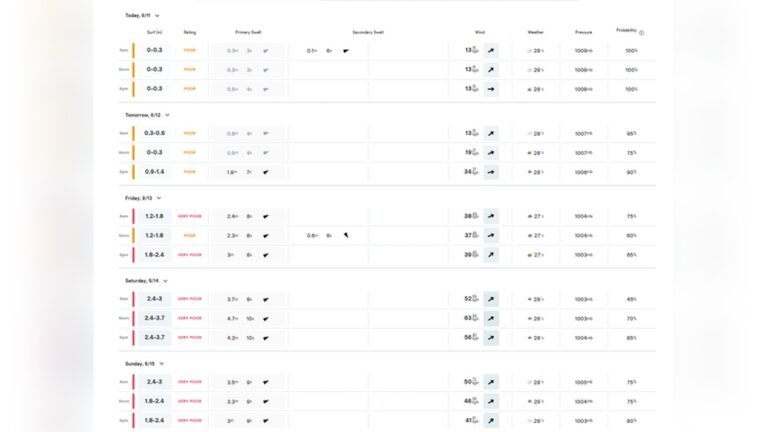
Surf forecasts combine many pieces of data to predict what the waves will be like at a specific beach. The main elements you’ll find in a typical surf forecast include:
1. Swell Height
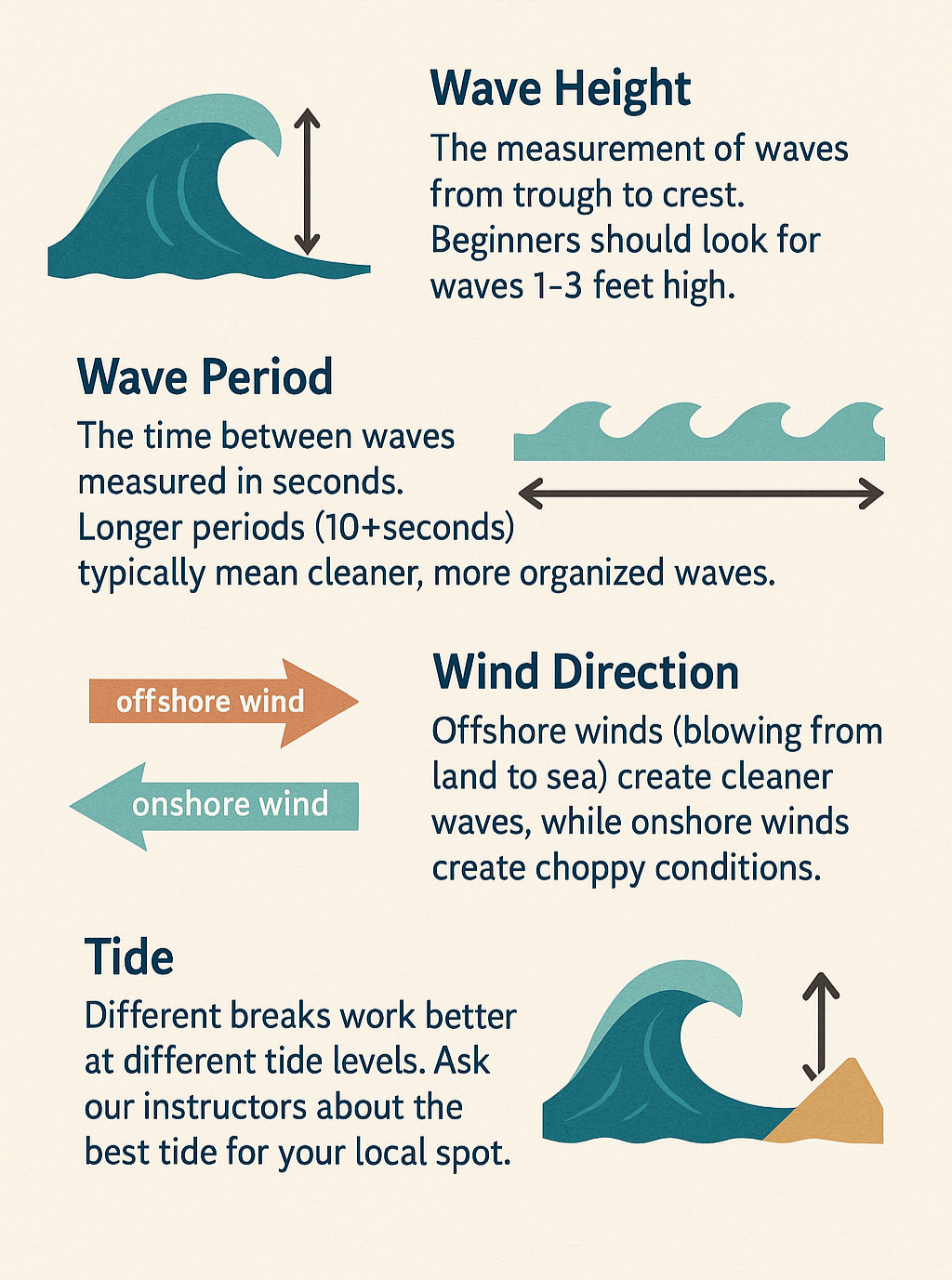
This tells you how big the waves are, usually measured in feet or meters. Swell height is the vertical distance from the top (crest) to the bottom (trough) of the wave.
2. Swell Period
Swell period is the time in seconds between each wave. It’s a key factor because longer periods usually mean more powerful waves. For example, a 4-foot wave with a 15-second period is much stronger than a 4-foot wave with a 7-second period.
3. Swell Direction
This shows the compass direction from which the swell is coming. Different beaches work better with different directions. For example, a beach facing west will get the best waves from a west or northwest swell.
4. Wind Speed And Direction
Wind can make or break surf conditions. Offshore winds (blowing from land to sea) hold up the wave faces and make them smoother. Onshore winds (from sea to land) can make waves messy and choppy.
5. Tide Information
Tides change the water level at the beach. Some surf spots work best at low tide, while others need high tide for the waves to break well. Most forecasts will show the times and heights of high and low tides.
6. Wave Energy
Some forecasts include a number for wave energy (often in kJ/m, kilojoules per meter). This measures the power of the swell, which helps to compare waves of similar height but different period.
Here’s a simple comparison of three surf spots showing how these factors can vary:
| Spot Name | Swell Height | Swell Period | Wind Direction | Tide |
|---|---|---|---|---|
| Pipeline | 8 ft | 16 s | ENE (offshore) | Mid |
| Bells Beach | 6 ft | 12 s | SW (onshore) | Low |
| Jeffreys Bay | 5 ft | 14 s | NW (offshore) | High |

Where Does Forecast Data Come From?
Surf forecasts use data collected from several sources:
- Weather satellites: Orbiting the Earth, they observe cloud movement and wind patterns.
- Buoys: Floating in the ocean, buoys measure wave height, period, and direction in real time.
- Weather models: Supercomputers use math to predict wind and wave patterns days in advance.
- Tide charts: Based on the moon’s position and gravity, these predict high and low tides for years into the future.
For example, the U. S. National Data Buoy Center has a network of buoys sending data every hour. This raw data is essential for accurate surf forecasting.
How Do Surf Forecasters Make Predictions?
Creating a surf forecast is like solving a huge puzzle. Forecasters start by collecting the data from satellites and buoys. They feed this data into numerical wave models. These computer programs use physics and math to predict how waves will travel, grow, or shrink as they move.
Some well-known wave models include:
- Wavewatch III (used by NOAA and many surf sites)
- WAM (used in Europe)
- SWAN (for coastal and shallow water forecasting)
These models can predict the size, period, and direction of swells for days or even weeks ahead. Then, forecasters combine the wave predictions with local wind and tide data. The result is a forecast for a specific beach at a specific time.
Here’s a summary of how the process works:
| Step | What Happens |
|---|---|
| 1. Data Collection | Satellites, buoys, and ships gather weather and wave data. |
| 2. Wave Modeling | Supercomputers run physics-based models to predict swells. |
| 3. Local Adjustment | Forecasts are adjusted for wind, tides, and local geography. |
| 4. Forecast Delivery | Websites and apps show the final forecast for each surf spot. |
Reading And Understanding A Surf Forecast
It’s not enough just to look at the numbers. To use a surf forecast well, you need to understand what the data means for your local beach.
Swell Height Isn’t Everything
Many beginners think bigger numbers mean better waves. But a 3-foot swell with a 15-second period can be more powerful (and harder to surf) than a 6-foot swell with a 7-second period. It’s important to check both the size and the period.
Swell Direction And Local Geography
Every beach works best with certain swell directions. If the forecast shows a big north swell but your beach faces south, you might not see much action. Local knowledge is key. For example, in California, Malibu needs a southwest swell to work well, while Huntington Beach prefers a west swell.
Wind Makes Or Breaks The Day
Even perfect swell and tide can be ruined by strong onshore wind. Offshore wind is usually best, but very strong wind from any direction can make surfing uncomfortable or even dangerous.
Tides Change Quickly
A surf spot that’s flat at low tide can be epic two hours later when the tide comes in. Checking the timing of tides for your session can make a huge difference.
Surf Forecast Apps And Websites
Some of the most popular surf forecast services include:
- Surfline
- Magicseaweed
- Windy
- Stormsurf
These sites show detailed forecasts for thousands of surf spots. Many also include live cameras, wind maps, and tide charts.
How Accurate Are Surf Forecasts?
Surf forecasts are much better today than they were twenty years ago, thanks to better technology and more data. But they’re not perfect. Forecasts are usually most accurate 1–3 days ahead. Beyond that, predictions become less reliable because weather patterns can change quickly.
Here’s a general guide to forecast accuracy:
| Forecast Range | Accuracy |
|---|---|
| 1 day ahead | Very high (80–90%) |
| 2–3 days ahead | High (70–80%) |
| 4–7 days ahead | Moderate (50–60%) |
| 8+ days ahead | Low (<40%) |

Common Mistakes When Using Surf Forecasts
Many surfers—especially beginners—make mistakes when reading surf forecasts. Here are two insights that most people miss:
- Ignoring Local Conditions: Forecasts are based on open ocean data. Local factors like reefs, cliffs, and river mouths can change wave size and shape a lot. Always check the beach or talk to local surfers if you’re new to an area.
- Trusting the Numbers Too Much: No forecast can guarantee perfect waves. A forecast might say 6 feet, but if the tide is wrong or the wind changes, it might not be good. Use forecasts as a guide, but be flexible.
Another common mistake is not comparing multiple sources. Sometimes, websites use different wave models and give different results. Checking two or three forecasts can help you spot trends and make better decisions.
How You Can Improve Your Surf Forecast Skills
Reading surf forecasts is a skill you can develop over time. Here are some ways to get better:
- Keep a surf journal. Write down the conditions, how the waves were, and how crowded it was. Over time, you’ll see patterns for your favorite spots.
- Check forecasts before and after you surf. Compare what was predicted with what you experienced. This helps you learn how accurate your local forecasts are.
- Talk to experienced surfers. Locals often know how wind, tide, and swell combine at their home break.
- Learn about weather patterns. For example, El Niño and La Niña can change the types of swells your region gets. The El Niño–Southern Oscillation is one of the most important climate phenomena for surfers.
How Technology Is Changing Surf Forecasting
In recent years, technology has made surf forecasting even better. High-definition webcams let you see the waves in real time. Drones are used to collect data over remote coastlines. Some apps use artificial intelligence to give personalized surf alerts based on your favorite conditions.
There are also “nowcast” features on some websites, which use live data to update forecasts every hour. This helps surfers make last-minute decisions. As technology improves, forecasts will become more accurate and more local.
Frequently Asked Questions
How Far In Advance Can You Trust A Surf Forecast?
Most forecasts are reliable for 1–3 days ahead. After that, accuracy drops because wind and weather can change. For planning a surf trip, check the forecast often and stay flexible.
What Is The Difference Between Swell Height And Wave Height?
Swell height is measured in deep water, far from the beach. Wave height at the beach can be bigger or smaller, depending on the local bottom and other factors. Experienced surfers often use both numbers to plan their session.
Why Do Some Surf Spots Work Better At Certain Tides?
The shape of the ocean floor, called the bathymetry, controls when waves break best. Some spots need high tide to cover rocks or reefs, while others need low tide to break over sandbars.
Are Surf Forecasts Free To Use?
Yes, most basic surf forecasts are free. Some websites and apps offer paid upgrades for more detailed data, live cameras, or expert analysis, but the main forecast is usually available at no cost.
Can Beginners Rely On Surf Forecasts?
Surf forecasts are helpful for all levels, but beginners should also check the beach, watch other surfers, and ask locals for advice. Forecasts are a tool, but not a guarantee.
Surf forecasting is both a science and an art. By learning how the process works and practicing with real data, you can make better decisions and enjoy more fun sessions. With time, you’ll develop a feel for reading forecasts and knowing when to paddle out.
