Skydiving may look simple from the ground, but preparing a beginner to jump from an airplane takes careful, expert training. For most people, the idea of free-falling through the sky is exciting and terrifying. That’s why skydiving instructors use proven methods to guide new jumpers step by step, focusing on both safety and confidence. Whether you dream of your first jump or just wonder how the pros train beginners, this article explains the entire process—from first briefing to landing. You’ll see how instructors help people overcome fear, learn key skills, and enjoy the thrill of skydiving safely.
Understanding The Role Of Skydiving Instructors
Skydiving instructors have a huge responsibility. They must teach beginners everything needed for a safe jump. Most are certified by national bodies like the United States Parachute Association (USPA) or similar organizations worldwide. Their training covers:
- Equipment safety and checks
- Emergency procedures
- Jump techniques
- Communication skills
Instructors must also be patient and able to calm nervous students. Many have hundreds or thousands of jumps behind them. Their experience helps them spot problems early, adapt teaching style, and build trust with beginners.
Pre-jump Preparation: What Happens Before You Leave The Ground
Training starts long before anyone boards a plane. The ground training phase is the foundation for every safe skydive.
Safety Briefing
Beginners first get a detailed safety talk. Instructors explain:
- How parachutes work
- What happens during a jump
- Potential risks and how to avoid them
This briefing sets expectations and reduces anxiety. Instructors encourage questions, making sure everyone understands the basics.
Equipment Introduction
Beginners learn to recognize and use important gear:
- Jumpsuit: Protects from wind and cold.
- Helmet: Shields the head during landing.
- Harness: Connects jumper to parachute or instructor.
- Altimeter: Shows altitude during the jump.
Instructors demonstrate proper fitting. They check every piece for correct adjustment. Beginners practice putting on and removing gear until they feel comfortable.
Ground Simulation
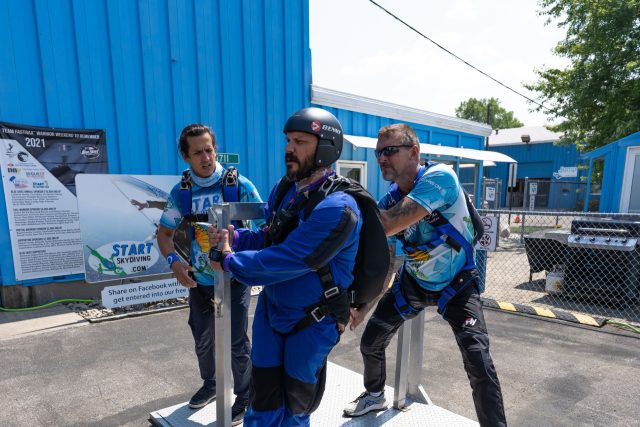
Before jumping, students practice body positions and movements on the ground. Using a mock airplane door or training mats, instructors teach:
- Exit position from the plane
- Stable free-fall posture
- How to arch the body for balance
- Pulling the parachute at the right altitude
Beginners repeat these actions several times. Instructors correct errors and give practical tips. This “muscle memory” helps new jumpers react quickly in the air.
Types Of Beginner Skydiving Courses
Not all beginners train the same way. Instructors use different course types, depending on the student’s goals and local regulations.
Tandem Jump
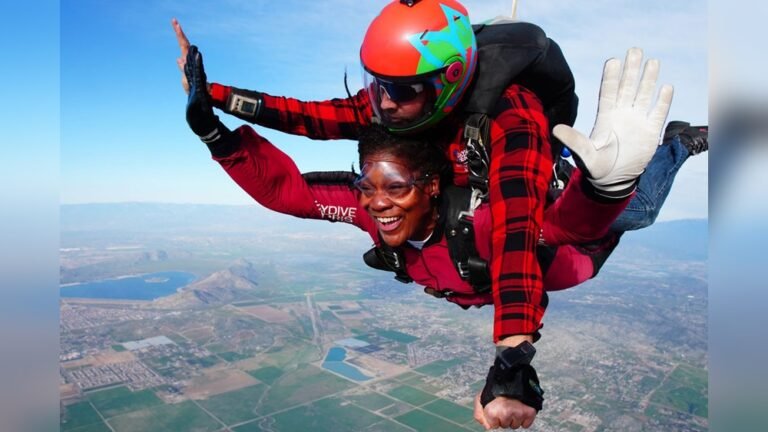
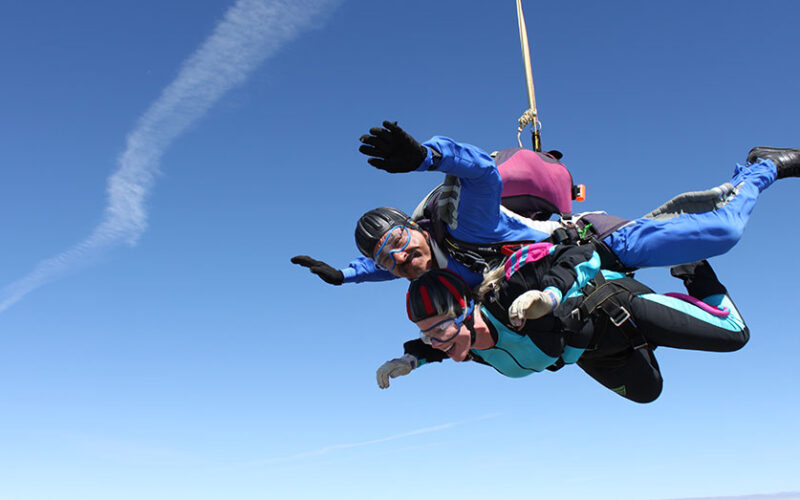
Most people start with a tandem jump. This means the student is harnessed to a certified instructor, who controls everything during the jump. Tandem jumps require less training (usually 30–60 minutes), focusing mainly on safety and what to expect. Beginners learn:
- How to exit the plane
- How to position their body
- When to lift legs for landing
Because the instructor handles the parachute and navigation, beginners can focus on enjoying the experience.
Accelerated Free Fall (aff)
For those who want to learn to skydive solo, instructors offer AFF courses. These are more detailed and require several hours of training. Students must:
- Master free-fall body position
- Practice parachute deployment
- Learn emergency procedures
During the first jumps, two instructors accompany the student in free-fall, guiding them with hand signals. The student pulls their own parachute, but instructors are ready to help if needed.
Static Line Progression
Another option is static line jumps, where the parachute deploys automatically as the jumper leaves the plane. Instructors train beginners to:
- Exit confidently
- Handle mild emergencies
- Land safely
This method is common in military and some civilian schools. It builds skills step by step before students progress to full free-fall.
Step-by-step Training Methods
Skydiving instructors use a mix of teaching methods to help beginners learn fast and remember important details.
1. Demonstration And Explanation
Instructors show each step, then explain why it matters. For example, they demonstrate the correct arching position in free-fall and explain how it keeps the jumper stable.
2. Practice Repetition
Beginners repeat movements and procedures until they feel natural. This includes:
- Simulated exits from the plane
- Parachute deployment
- Emergency drills (such as pulling the reserve)
3. Immediate Feedback
Instructors watch closely and give feedback right away. They point out mistakes, suggest improvements, and encourage students to ask questions.
4. Visual Aids
Many instructors use diagrams, videos, or photos to show what to expect. For example, they might show a video of a safe landing versus a dangerous one.
5. Realistic Scenarios
Instructors simulate problems, like tangled lines or delayed parachute deployment. Beginners learn how to react calmly and fix issues.
Building Confidence And Managing Fear
Fear is a normal part of skydiving, especially for beginners. Good instructors know how to address anxiety and help students feel confident.
Supportive Environment
Instructors create a positive atmosphere. They never rush beginners and always encourage open communication. Many use humor or personal stories to break tension.
Gradual Exposure
Training starts slow, with easy tasks first. Instructors let students practice on the ground as long as needed. They move to the next stage only when the student is ready.
Mental Preparation
Instructors teach breathing techniques and visualization. They encourage beginners to picture a successful jump, which reduces fear and builds mental strength.
In-flight Guidance: What Instructors Do During The Jump
Once training is complete, the real action begins. Instructors continue to help beginners during the flight and jump.
Pre-jump Checks
Instructors check all gear again before boarding. They review key steps and answer last-minute questions.
Communication In The Plane
Instructors use hand signals or shout instructions if noise is high. They help beginners stay calm as the plane climbs.
Exit Support
For tandem jumps, the instructor leads the exit. For AFF or static line, instructors guide students to the door, checking body position.
Free-fall Assistance
In AFF, instructors fly beside the student, giving hand signals for corrections. Tandem instructors control the fall, letting beginners enjoy the scenery.
Parachute Deployment
In AFF, instructors remind students when to deploy their parachute using signals. If a student forgets or struggles, instructors can deploy for them as a backup.
Landing Guidance
Instructors help beginners prepare for landing. For tandem jumps, the instructor handles the landing. For solo students, instructors give radio instructions to help steer and land safely.
Comparing Training Approaches
Different training methods have unique advantages and disadvantages. Here’s a quick comparison:
| Training Type | Preparation Time | Student Role | Instructor Role |
|---|---|---|---|
| Tandem Jump | 30–60 min | Follow instructions | Controls everything |
| AFF | 4–8 hours | Active participant | Guides and assists |
| Static Line | 2–4 hours | Exits and lands | Supervises, gives feedback |
Essential Skills Taught By Instructors
Beginners must master several key skills before their first jump. Instructors focus on:
- Body position: Keeping arms, legs, and back in the correct posture during free-fall.
- Parachute deployment: Pulling the main parachute at the right altitude.
- Emergency procedures: Recognizing malfunctions and using the reserve parachute.
- Landing technique: Lifting legs and steering for a safe landing.
These skills are practiced until the instructor is confident the student can perform them under pressure.
Typical Progression For Beginners
Most beginners follow a clear path from first training to solo jumps.
| Stage | Activity | Instructor Support |
|---|---|---|
| Ground Training | Safety, gear, simulation | Full supervision |
| First Jump | Tandem/AFF/Static line | Direct control or guidance |
| Follow-up Jumps | Solo practice | Radio instructions, feedback |
| Certification | Written/skills tests | Evaluation, final approval |
Common Mistakes Beginners Make (and How Instructors Prevent Them)
New skydivers sometimes make errors, but instructors use experience to prevent accidents.
- Poor body position: Beginners often arch incorrectly, causing unstable free-fall. Instructors correct this during ground practice and in the air.
- Forgetting to deploy parachute: Stress can make students forget. Instructors use signals and backup procedures.
- Not following landing instructions: Some beginners panic and ignore guidance. Instructors use radio reminders and repeat landing drills.
- Improper gear fitting: Beginners may not secure equipment correctly. Instructors double-check before every jump.
Experienced instructors know how to spot nervousness or confusion. They adapt their teaching and give extra practice when needed.
Advanced Tips From Experienced Instructors
Beyond basic training, instructors share practical advice that beginners may not hear elsewhere:
- Trust your training: Don’t overthink during the jump. Rely on what you practiced.
- Stay aware of altitude: Many beginners get distracted by the view. Always check your altimeter.
- Ask for feedback: After the jump, ask your instructor what you can improve. Honest feedback speeds up learning.
- Practice emergency drills regularly: Even after your first jump, keep practicing how to handle malfunctions.
These tips help new skydivers build skill and confidence quickly.
The Importance Of Instructor Certification And Experience
Not all instructors are equal. Choose schools with certified, experienced instructors. Look for credentials from national bodies like USPA or British Skydiving. Certified instructors must pass strict tests and keep their skills updated.
According to the USPA, certified instructors reduce accident rates and help beginners learn faster. For more info on certification standards, visit USPA.
Real-life Example: First Jump Experience
Let’s consider a typical first jump for a beginner named Maria. She arrives at the drop zone nervous but excited. Her instructor, Tom, greets her warmly and explains the day’s plan. Tom shows Maria the gear, fits her harness, and walks her through exit and landing procedures.
After ground practice, Maria boards the plane with Tom for a tandem jump.
During the climb, Tom keeps Maria calm, reminding her to breathe. As the door opens, Tom guides Maria into the correct position. They free-fall for 45 seconds, with Tom controlling the parachute. Maria follows instructions for landing, lifting her legs as they touch down.
Afterward, Tom reviews the jump, offering praise and advice for next time. Maria leaves with confidence, eager for another jump.
Frequently Asked Questions
What Qualifications Do Skydiving Instructors Need?
Most instructors must have hundreds of jumps, pass written and practical exams, and get certified by national bodies like the USPA. They must also renew credentials and stay updated on safety rules.
How Long Does Beginner Training Usually Take?
Tandem jumps need about 30–60 minutes of training. AFF or static line courses take 4–8 hours, including ground practice and safety drills.
Can Beginners Jump Solo On Their First Day?
In most cases, beginners jump tandem or with instructor support. Solo jumps usually happen after several supervised jumps and passing skills tests.
What Happens If A Beginner Panics During The Jump?
Instructors are trained to calm students and take control if needed. Tandem instructors handle everything, while AFF instructors can assist in free-fall or deploy the parachute as a backup.
Is Skydiving Safe For Beginners?
When trained and supervised by certified instructors, skydiving is statistically very safe. According to USPA, the accident rate is less than 0. 01% for tandem jumps.
Skydiving is one of the most thrilling experiences available, but it’s safe only because of careful, expert instructor training. If you trust the process and listen to your instructor, you can enjoy your first jump with confidence and excitement.
