
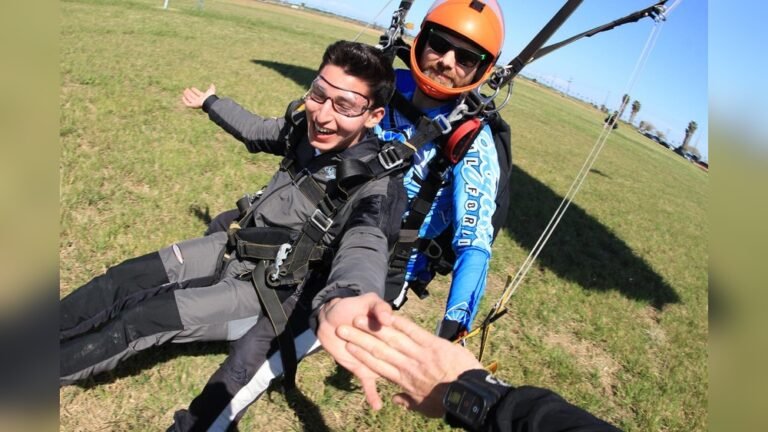
Skydiving is one of the most thrilling experiences you can have. Jumping from an airplane, feeling the rush of wind, and seeing the world from above is exciting—but the landing is the most critical part. People often wonder, “How do skydivers land safely?
” Landing safely is not just luck or skill; it involves careful training, the right equipment, and strict procedures. Many beginners think parachuting is only about pulling the cord, but there is much more to it. In this article, you’ll discover exactly how skydivers achieve safe landings, from the moment they leave the plane to their feet touching the ground.
Let’s dive deeper into the science, the steps, and the smart techniques that keep skydivers safe.
The Role Of Parachutes In Safe Landings
The parachute is the most important tool for a safe landing. Today’s parachutes are called ram-air parachutes. They look like rectangular wings and are much safer and easier to control than old round parachutes.
Ram-air parachutes allow skydivers to steer, slow down, and land gently. The fabric fills with air, creating lift like a glider. This design helps skydivers move forward and control their descent speed.
There are two parachutes: the main and the reserve. If the main parachute fails, the reserve is deployed. Reserve parachutes are packed and checked by certified professionals, making them extremely reliable.
How Parachutes Slow Down Skydivers
When a skydiver jumps, they reach speeds of about 120 mph (193 km/h) during freefall. The parachute slows this to about 10-15 mph (16-24 km/h), which is safe for landing. This huge reduction in speed is what makes landing possible without injury.
Steering And Landing Accuracy
Skydivers use toggle controls—handles attached to the parachute lines—to steer left, right, and control their speed. With training, they can land within a few feet of their target.
Preparing For A Safe Landing: Training And Practice
Skydivers spend hours learning how to land safely. Training includes ground practice, simulation, and real jumps with instructors.
Basic Landing Techniques
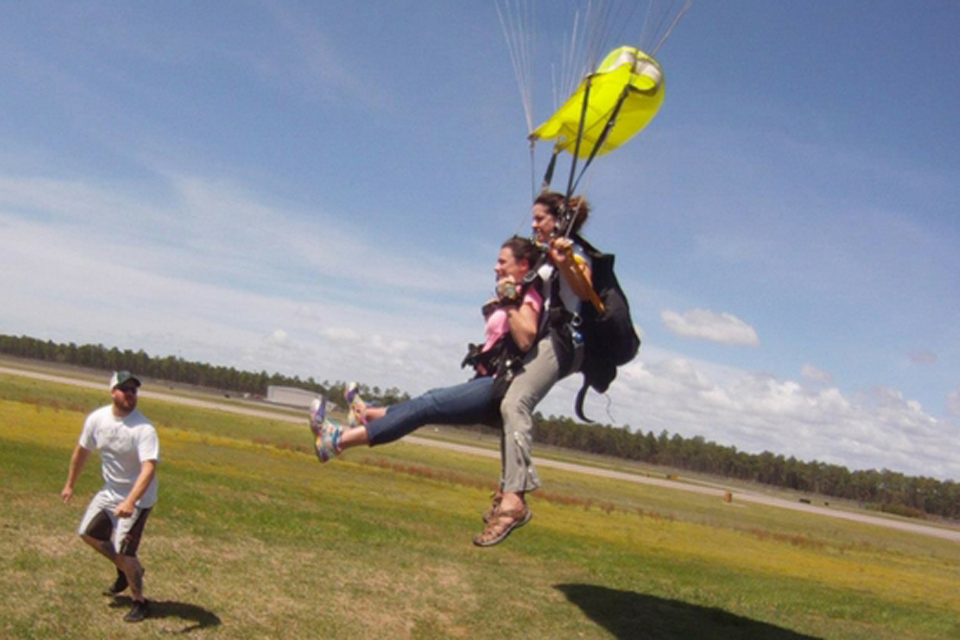
The most common method is the flare. At the right moment before touching down, the skydiver pulls both toggles down sharply. This action slows the parachute and reduces forward speed, allowing a gentle landing.
Common Training Steps
- Landing pattern practice: Skydivers learn to follow a landing pattern—downwind, base, and final approach—similar to airplanes.
- Judging wind conditions: Wind affects landing. Beginners learn to read windsocks and flags to understand wind direction and speed.
- Target accuracy drills: Instructors place targets on the ground, and students practice landing as close as possible.
Why Training Matters
Many beginners make mistakes like flaring too early or too late. These errors can lead to hard landings or injuries. Proper training reduces these risks.
Equipment For Safe Landings
Skydivers rely on more than just parachutes. Several pieces of equipment help ensure safe landings.
Essential Safety Equipment
- Helmet: Protects the head during landing or unexpected incidents.
- Jumpsuit: Reduces wind resistance and keeps the body safe.
- Altimeter: Shows altitude so skydivers know when to deploy the parachute and prepare for landing.
- Automatic Activation Device (AAD): Opens the reserve parachute automatically if the main is not deployed in time.
Parachute Types And Landing Characteristics
| Parachute Type | Landing Speed | Steering Ability | Common Use |
|---|---|---|---|
| Round Parachute | High | Limited | Military, Cargo |
| Ram-Air Parachute | Low | Excellent | Sport Skydiving |
| Reserve Parachute | Moderate | Basic | Emergency Only |
Ram-air parachutes are the safest for landing because they allow for steering and flaring.
Landing Procedures: Step-by-step
Landing safely involves following a set of steps:
- Check wind direction: Before landing, skydivers look at wind indicators and plan their approach.
- Follow landing pattern: They fly in a rectangular pattern, like a plane landing, to align with the wind.
- Prepare for flare: About 10-15 feet (3-5 meters) above the ground, the skydiver prepares to flare.
- Execute the flare: Pull both toggles down to slow speed and reduce forward motion.
- Feet and body position: Keep legs slightly bent, feet together, and prepare to absorb impact.
- Touchdown and roll: If landing is harder than expected, skydivers do a parachute landing fall (PLF). This technique spreads impact across the body and prevents injury.
Parachute Landing Fall (plf)
PLF is a special skill taught to all skydivers. It involves landing with feet together, bending knees, and rolling sideways to spread the force. It is especially useful in windy or rough conditions.
Wind And Weather: How Conditions Affect Landing
Weather is a major factor in safe skydiving. Wind, rain, and turbulence can change landing plans.
Wind Speed Comparison
| Wind Speed | Landing Difficulty | Recommended Action |
|---|---|---|
| 0-5 mph (0-8 km/h) | Easy | Normal jump |
| 6-15 mph (9-24 km/h) | Moderate | Extra caution |
| 16+ mph (25+ km/h) | High | Delay or cancel jump |
Skydivers avoid jumping in strong winds or storms. Landing in high winds can cause injury. Most drop zones have strict rules about weather limits.
Reading The Landing Area
Skydivers check landing zones for obstacles—trees, wires, water, or uneven ground. They always aim for clear, flat areas. If the wind changes, they adjust their pattern to avoid danger.
Common Landing Mistakes And How To Avoid Them
Even experienced skydivers can make mistakes. Knowing these helps you understand how safe landings happen.
Typical Mistakes
- Flaring too early: This causes the parachute to lose lift before landing, resulting in a hard impact.
- Flaring too late: The parachute does not slow enough, leading to fast landings.
- Landing with legs apart: Increases risk of ankle injuries.
- Ignoring wind direction: Landing with the wind increases speed and danger.
- Choosing poor landing spots: Not checking for obstacles can lead to accidents.
How Skydivers Avoid Mistakes
Skydivers use checklists, follow strict patterns, and rely on instructors to review each jump. They also use radios for guidance during student jumps.
Experience And Skill: How They Improve Landing Safety
Landing safely improves with experience. Beginners often need guidance, but skilled skydivers can handle tough conditions.
Progression Of Landing Skills
| Experience Level | Landing Accuracy | Decision Making |
|---|---|---|
| Beginner | Low | Needs guidance |
| Intermediate | Moderate | Can adjust to wind |
| Expert | High | Handles emergencies |
With practice, skydivers learn how to judge wind, flare timing, and landing patterns. Advanced skydivers can land in small areas and manage unexpected changes.
Non-obvious Insight: Mental Preparation
Many people overlook mental preparation. Skydivers visualize their landing before the jump. This helps them stay calm and react quickly if something changes.
Another Insight: Body Positioning
A small mistake in body position can change a safe landing into a hard one. Keeping legs together and bending knees is crucial. Even a slight error can cause injury.
Emergency Procedures: When Things Go Wrong
Sometimes, parachutes fail or conditions change suddenly. Skydivers are trained for emergencies.
Reserve Parachute Deployment
If the main parachute does not open or is tangled, skydivers use the reserve. This is rare (about 1 in 1000 jumps), but training makes it routine.
Off-target Landings
If a skydiver lands away from the planned area, they use PLF and look for clear spots to avoid injury. Radios and ground crews help guide them back safely.

Technology And Innovations In Landing Safety
Modern skydiving uses technology to improve safety.
Automatic Activation Devices (aad)
AADs sense altitude and speed. If a skydiver is too low and hasn’t deployed the parachute, the device opens the reserve automatically. This has saved many lives.
Gps And Video
Some skydivers use GPS trackers to monitor their landing accuracy. Video recordings help review and improve technique. Drop zones use cameras to provide feedback.
Ongoing Improvements
Manufacturers continue to make parachutes lighter, stronger, and easier to control. Training programs use simulators for realistic practice.
The Importance Of Drop Zones And Support Teams
Landing safely is not just about the skydiver. The drop zone staff play a big role.
Support Provided
- Wind readings and weather updates
- Ground crew guidance
- Emergency medical support
- Radio instructions for student jumps
Skydivers rely on their team for information and help. This teamwork increases safety.
Frequently Asked Questions
What Is The Safest Way To Land As A Skydiver?
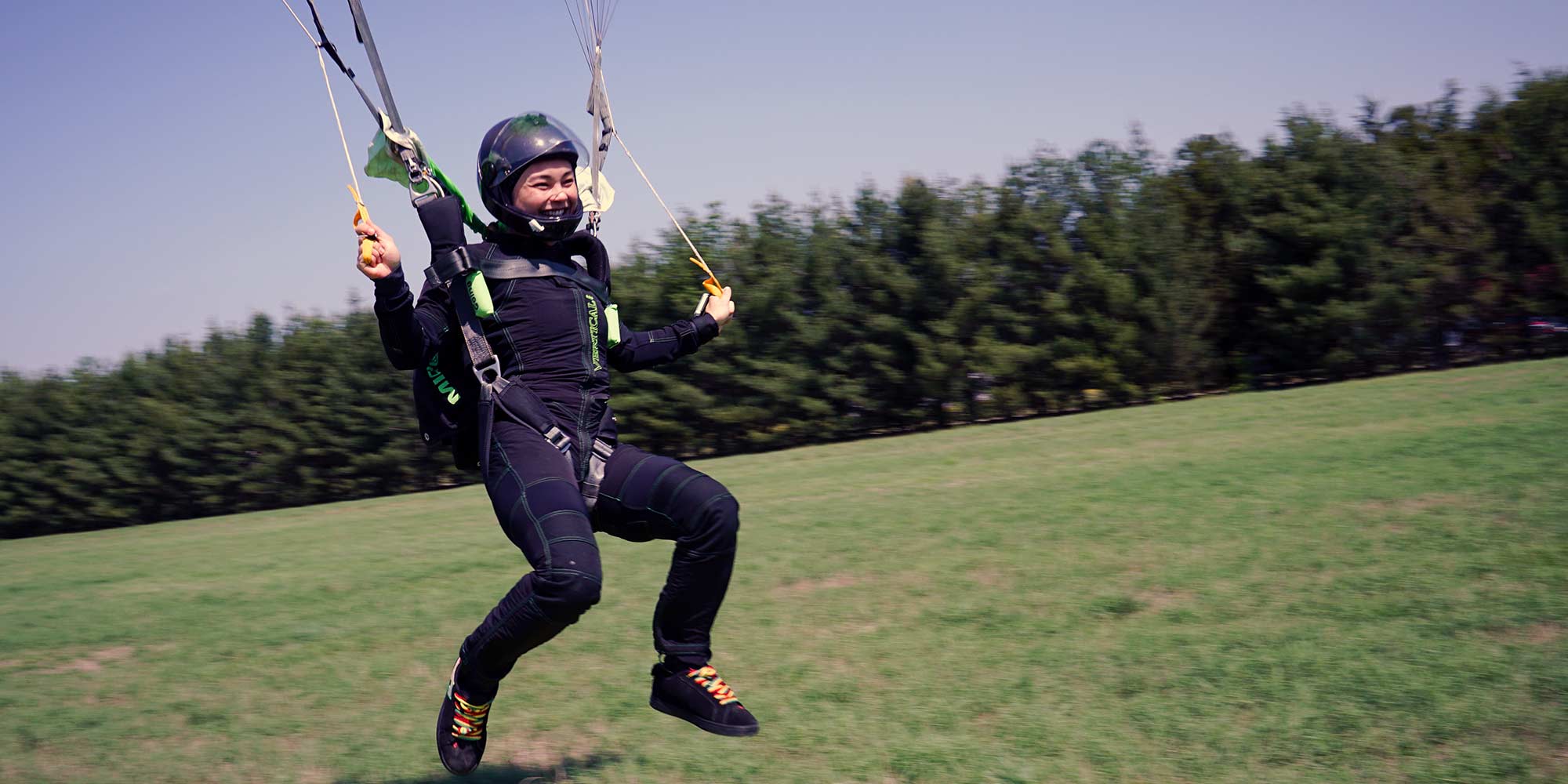
The safest way is to flare the parachute at the right height, keep legs together, and use PLF if needed. Training and following landing patterns are key.
How Often Do Parachutes Fail To Open?
Parachute failures are rare, about 1 in 1000 jumps. Reserve parachutes and automatic devices make backup systems very reliable.
Can You Land Anywhere You Want?
Skydivers aim for designated landing zones. Landing anywhere is risky due to obstacles. If off-target, skydivers look for the safest clear spot.
What Happens If The Wind Changes Suddenly?
If wind changes, skydivers adjust their landing pattern or use emergency skills like PLF. Drop zone staff may give radio guidance for safety.
Is Skydiving Landing Dangerous?
With proper equipment, training, and following procedures, landing is safe for most jumps. Risks increase in bad weather or if mistakes are made. Most injuries happen from poor landing technique.
Landing safely in skydiving is not about luck—it’s a mix of training, the right equipment, smart decisions, and teamwork. The process starts long before the jump and continues until the feet touch the ground. Each step, from steering the parachute to flaring at the right moment, is practiced and perfected. Even in emergencies, skydivers have systems and skills to protect themselves. As technology and training improve, landings become even safer. If you’re curious to learn more about parachute systems and safety, visit Wikipedia for detailed information. Skydiving is thrilling, but safety is always the top priority—and that’s how skydivers land safely every time.
