
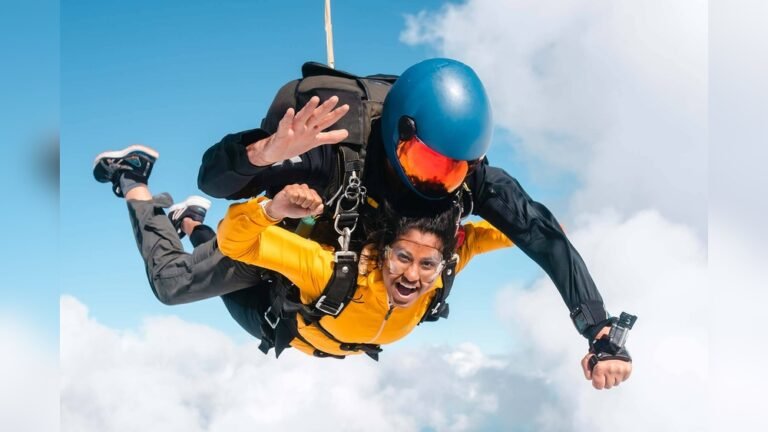
Skydiving looks wild from the ground. People leap out of a plane, fall fast, and somehow land gently on the earth. But if you watch closely, you’ll see skydivers do much more than just fall. They twist, turn, fly in formation, and sometimes make it look as if they’re “swimming” through the sky.
How do they control their direction while they’re falling at over 100 mph? Let’s explore what really happens in the air, the techniques skydivers use, and the science that makes it all possible.
The Basics Of Skydiving Freefall
Skydiving is not just about jumping and hoping for the best. Once the skydiver leaves the airplane, they enter freefall—the time before the parachute opens. In freefall, gravity is pulling the skydiver straight down, but the air pushes back. This balance of forces lets a trained skydiver control their body just like a swimmer in water.
Skydivers reach terminal velocity—the fastest speed they’ll fall—after about 10 seconds. For most, that’s around 120 mph (193 km/h) when belly-to-earth. At this speed, tiny changes in body position create big changes in direction. This is where skill and practice come into play.
Body Position: The Foundation Of Control
The most important tool skydivers use to control their direction is their own body position. Think of the body as a wing or a rudder.
When skydivers want to move in a certain direction, they change their shape, angle, or the part of the body that faces the wind. Here are the key positions:
- Belly-to-Earth (Box Position): This is the stable, flat position most beginners learn first. The arms and legs are spread, creating a wide surface area. This slows the fall and provides stability.
- Head-Down: Here, the skydiver points their head toward the earth. This reduces air resistance, so the fall is much faster (up to 180 mph or 290 km/h). It’s less stable and used by advanced skydivers.
- Back-to-Earth: Similar to belly-to-earth, but flipped. It’s less common but useful in some maneuvers.
By arching or flattening their back, tucking arms and legs, or moving limbs asymmetrically, skydivers steer themselves with surprising precision.
How Skydivers Turn In The Air
Turning in freefall is all about asymmetry. If both sides of the body do the same thing, the skydiver flies straight. If one arm or leg moves differently, the body starts to spin or turn.
For example:
- Right Turn: The skydiver pulls their right arm in slightly and extends their left arm. The right side drops, and the body rotates right.
- Left Turn: The opposite—left arm in, right arm out.
Small changes have a big effect. Even a slight bend at the elbow or knee can start a turn. This is why skydivers must practice control and awareness.
Moving Forward, Backward, And Sideways
Skydivers don’t just spin—they can fly across the sky. This is called tracking.
- Forward Movement: The skydiver straightens their legs, brings arms alongside the body, and points toes. This streamlines the body like an arrow, pushing air behind and moving forward.
- Backward Movement: A slight arch in the back and a change in arm position can cause the body to drift backward.
- Sideways Movement: Shifting weight or angling one shoulder forward allows the skydiver to “crab” sideways.
Here’s a quick comparison of movement techniques:
| Movement Type | Body Position | Typical Speed | Skill Level |
|---|---|---|---|
| Turn | One arm/leg in, opposite out | Moderate | Beginner+ |
| Forward Track | Legs straight, arms back | 20–30 mph | Intermediate+ |
| Side Slide | Hip and shoulder shift | 5–10 mph | Advanced |
The Role Of Aerodynamics
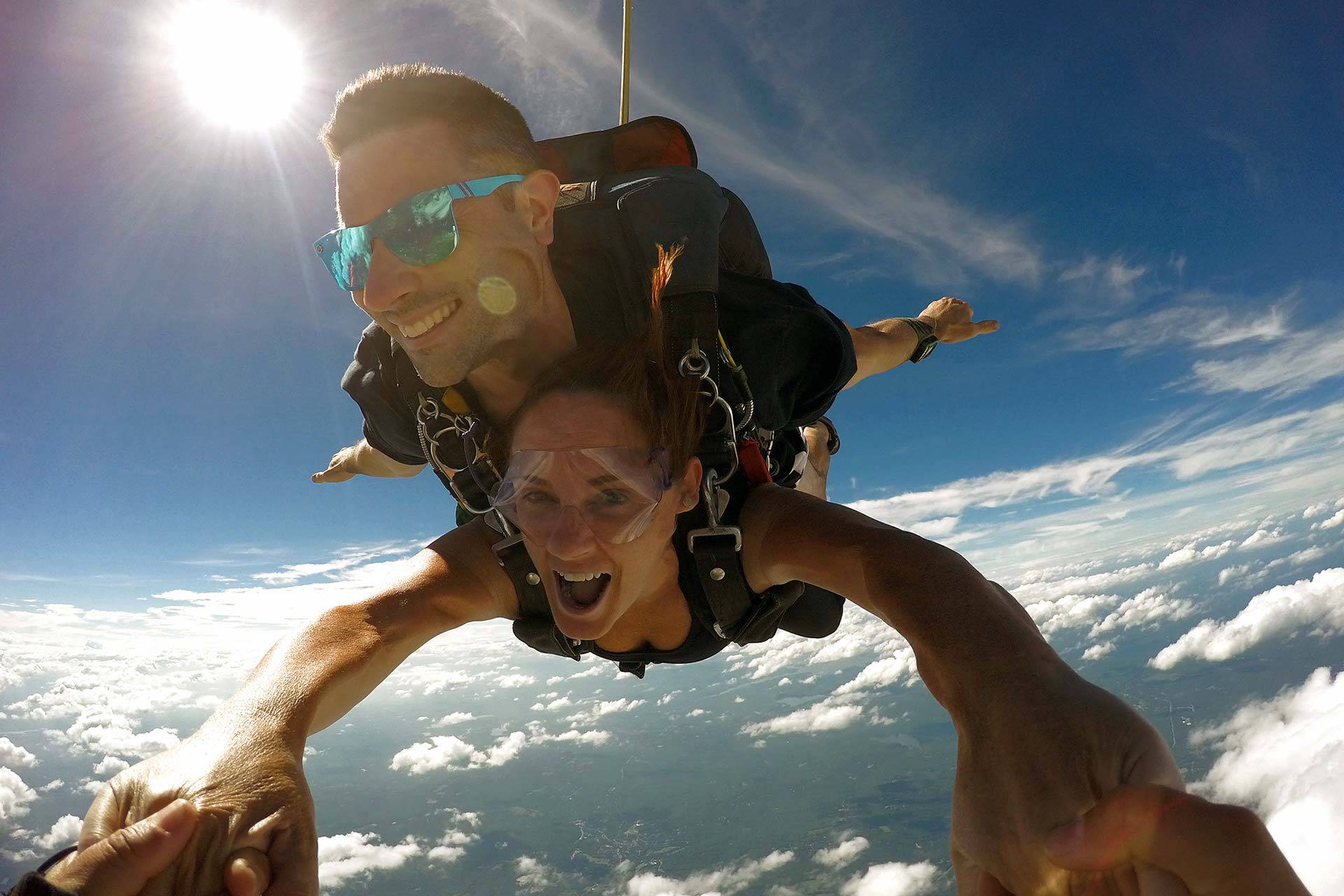
Skydivers use aerodynamics—the science of air and movement—to control their flight. The human body acts like a wing, creating lift and drag. The more surface area facing the wind, the slower the fall and the more control a skydiver has.
Lift: When air moves faster over one part of the body than another, lift is created. This allows the skydiver to “fly” horizontally.
Drag: Spreading out increases drag, slowing the descent and adding stability.
A beginner’s mistake is to make big, fast movements. This can spin the body out of control. Small, gentle adjustments are more effective and safer.
Advanced Maneuvers: Head-down And Sit Flying
As skydivers gain experience, they learn new freefall positions:
- Head-Down Flying: This is like diving headfirst. It’s fast and unstable, but allows for rapid movement and advanced tricks.
- Sit Flying: The skydiver sits as if in a chair, feet down. This offers a good balance of speed, visibility, and maneuverability.
Switching between these positions is called transitioning. It requires precise control to avoid spinning or tumbling.
Here’s a look at typical speeds for each position:
| Position | Average Speed (mph) | Difficulty |
|---|---|---|
| Belly-to-Earth | 120 | Easy |
| Head-Down | 180 | Hard |
| Sit Fly | 150 | Intermediate |
Controlling Direction Under Canopy
After freefall, the parachute opens and a new phase begins. Now, the skydiver is under the canopy—a special rectangular or elliptical parachute designed for steering.
Steering is done with toggle brakes—handles attached to the parachute’s back corners. Pulling the right toggle turns right, left turns left. Pulling both slows the descent.
The canopy acts like a small airplane wing. By shifting weight in the harness or pulling the risers, skydivers can turn, spiral, or even “flare” for a soft landing.
Compare parachute and freefall control:
| Aspect | Freefall | Under Canopy |
|---|---|---|
| Main Tool | Body Position | Toggle Brakes |
| Speed Range | 120–180 mph | 10–20 mph |
| Turning Method | Arm/Leg Movement | Pulling Toggles/Risers |
Common Mistakes In Direction Control
Many beginners think bigger, faster movements are better. In reality, overcorrecting can lead to spinning, tumbling, or losing control. Another mistake is to ignore the wind direction—both in freefall and under canopy, wind affects flight.
Skydivers also sometimes forget to relax. Tension makes movements jerky and less effective. Smooth, calm adjustments are best.
A less obvious mistake is not practicing in a wind tunnel. Many professionals use vertical wind tunnels to improve their body flight without jumping from a plane. This gives instant feedback and faster learning.
The Importance Of Awareness And Training
Controlling direction in the air is not only about physical movement. Situational awareness is critical. Skydivers must know where they are in the sky, watch for other jumpers, and keep track of altitude.
Training includes:
- Ground School: Before ever jumping, students learn the theory of flight, body position, and emergency procedures.
- Practice Jumps: Early jumps are with instructors who give feedback during and after freefall.
- Video Debrief: Many skydivers wear cameras to watch their own jumps later, analyzing body position and direction changes.
Advanced skydivers even use GPS trackers and altimeters to study their flight paths and improve accuracy.
How Teams Fly Together
In group skydiving, direction control is even more important. Teams of 4, 8, or more jumpers perform choreographed sequences, flying into and out of formations.
Everyone must match speed, direction, and timing. Small mistakes can lead to collisions or missed grips. This requires trust, communication, and hours of practice together.
A common insight for new team flyers: It’s better to make micro-adjustments than big moves. Gentle corrections keep everyone together and safe.
Real-world Examples And Data
Skydivers compete in events like formation skydiving, freefly, and canopy piloting. In the 2015 World Record for largest formation, 164 skydivers linked hands in a single pattern. Each person had to control their direction perfectly to dock without crashing into others.
Professional skydivers often make 500–1,000 jumps per year. Studies show that with training, most can move horizontally at 30–60 feet per second during tracking.
The Science: Why Small Movements Matter
In freefall, air is thick enough that even small changes are amplified by speed. For example, tilting the hand just 10 degrees can create enough force to start a turn or stop a spin. This is why skydivers practice “micro-movements” in wind tunnels before trying them in the sky.
One non-obvious fact: The human body is not perfectly symmetrical, so skydivers often need to adjust more on one side than the other for the same effect.
Practice And Progression
No one masters direction control in a day. Most skydivers spend their first 25 jumps just learning stable flight and gentle turns. Only with experience do they move on to tracking, back-flying, and head-down positions.
Wind tunnels have changed training. A skydiver can practice for hours in a tunnel, making hundreds of corrections, and bring those skills to real jumps.
A key tip: Always warm up with simple moves before trying advanced maneuvers. Muscle memory improves with repetition.
The Role Of Equipment In Direction Control
While body position is key, equipment also matters.
- Jumpsuits: Some suits have extra fabric called “wings” or “grippers” to help with control, especially in formation flying.
- Helmets: These reduce drag and protect the head during group jumps.
- Canopies: Modern parachutes are highly steerable, and some are designed for speed or precision turns.
Choosing the right equipment for skill level and jump type is essential. Beginners should avoid overly responsive canopies, which are harder to control.
Weather And Environmental Factors
Wind, air temperature, and humidity all affect how skydivers control direction. For example, strong upper winds can push a skydiver off course. Cold, dense air offers more resistance, making movements more effective.
Experienced jumpers check weather reports and plan their exits and landings based on wind direction and speed. This is critical for safety and accuracy.
For more on the science of skydiving and aerodynamics, check out this Wikipedia page on skydiving.
Frequently Asked Questions
How Do Skydivers Avoid Colliding With Each Other In The Air?
Skydivers use clear communication and strict exit timing. They spread out when jumping in groups and keep visual contact. Teams practice formations and have assigned slots for safety.
Can You Steer Yourself Enough To Land Exactly Where You Want?
In freefall, steering is limited—most direction control happens under the parachute. However, tracking skills let you cover some horizontal distance before deploying the canopy.
Is It Possible To Go Up Or “gain Altitude” In Freefall?
No, gravity always pulls you down. Some skydivers can slow their fall rate using special positions, but they cannot rise or gain altitude during freefall.
What Happens If You Lose Control And Start Spinning?
If a spin starts, the skydiver must relax, spread arms and legs, and arch their back to regain stability. Training covers these emergency procedures, and instructors can assist during tandem jumps.
How Long Does It Take To Learn Good Direction Control In Skydiving?
Most students gain basic control after 10–25 jumps, but advanced skills like tracking and head-down flying can take 100 jumps or more. Wind tunnel training speeds up the process.
Skydiving is a sport where the body becomes both the vehicle and the steering wheel. With practice, anyone can learn to move across the sky with skill and confidence. The secrets are small movements, awareness, and respect for the power of the air.
Whether you’re watching from the ground or thinking about your first jump, now you know the science and art behind skydivers’ graceful flight.
