Ski lifts are a central part of any mountain resort experience. Without these machines, skiers and snowboarders would have to climb up the slopes themselves—a tiring and time-consuming task. But how do ski lifts actually work? The answer is more interesting than many people expect.
Whether you’re a beginner planning your first ski trip or someone curious about mountain engineering, understanding ski lifts will help you enjoy the sport safely and confidently.
In this article, you’ll discover the main types of ski lifts, the mechanical principles behind them, how they keep you safe, and what happens behind the scenes to keep everything running smoothly. You’ll also get answers to common questions and a look at the future of ski lift technology.
Let’s get started!
What Is A Ski Lift?
A ski lift is a transportation system used to move people and sometimes equipment up a mountain. Ski lifts are specially designed for snowy and icy conditions. They make it possible for skiers and snowboarders to reach the top of the slopes quickly and easily. Most ski lifts consist of a cable loop, support towers, and passenger carriers (like chairs or cabins).
Main Types Of Ski Lifts
There are several types of ski lifts, each with unique features. The most common types include:
1. Chairlifts
Chairlifts are probably the most familiar ski lifts. Passengers sit on a bench-like seat, usually with safety bars. Chairlifts can carry two to eight people at once, depending on the design. They are ideal for medium to long distances and are popular at resorts worldwide.
2. Gondola Lifts
Gondolas use enclosed cabins that can carry four to 20 people. These lifts are perfect for families, people with small children, or anyone who wants more comfort and protection from the weather. Gondolas can cover long distances and are often found at large ski resorts.
3. Surface Lifts
Surface lifts keep the passenger on the ground while pulling them uphill. The most common surface lifts are:
- Button lifts (Poma lifts): Passengers stand on their skis or boards and hold onto a pole with a circular disc at the end.
- T-bar lifts: Two riders rest their legs on a T-shaped bar that drags them uphill.
- Rope tows: Riders hold onto a moving rope and are pulled uphill.
Surface lifts are usually used on beginner slopes or short distances.
4. Aerial Tramways
Aerial tramways are large cabins that move back and forth between two stations. They can carry 50 or more passengers at once. Tramways are used for very steep or difficult terrain where other lifts are not practical.
5. Magic Carpets
Magic carpets are moving conveyor belts set on the snow. Beginners can stand on these belts, and they gently carry them uphill. Magic carpets are common in ski schools and children’s areas.
Here’s a quick comparison of the main lift types:
| Lift Type | Capacity (People) | Weather Protection | Best Use |
|---|---|---|---|
| Chairlift | 2-8 | Low | All slopes |
| Gondola | 4-20 | High | Long/steep slopes |
| Surface lift | 1-2 | None | Beginner/short |
| Aerial Tramway | 30-100 | High | Very steep/remote |
| Magic Carpet | 1 | None | Beginner area |

How Do Ski Lifts Move?
The movement of ski lifts is based on a simple but strong idea: a continuous steel cable loops around pulleys at the top and bottom stations of the slope. Here’s how the main components work together:
The Drive System
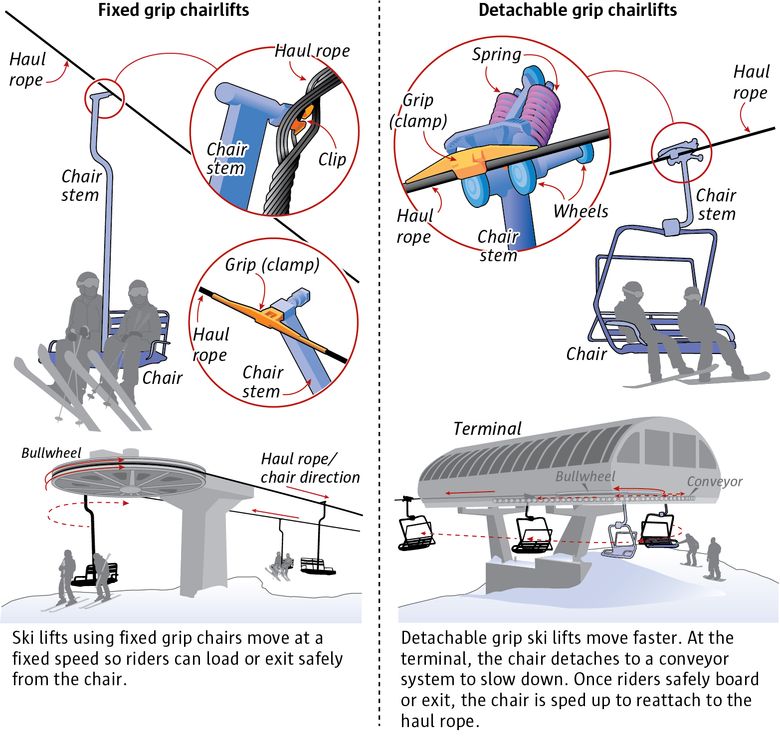
The drive system provides the power to move the cable. Most ski lifts use a large electric motor, though some have backup diesel engines. The motor turns a bullwheel, which is a giant wheel that the cable wraps around. As the bullwheel spins, the cable moves—carrying chairs or cabins along with it.
Cable And Towers
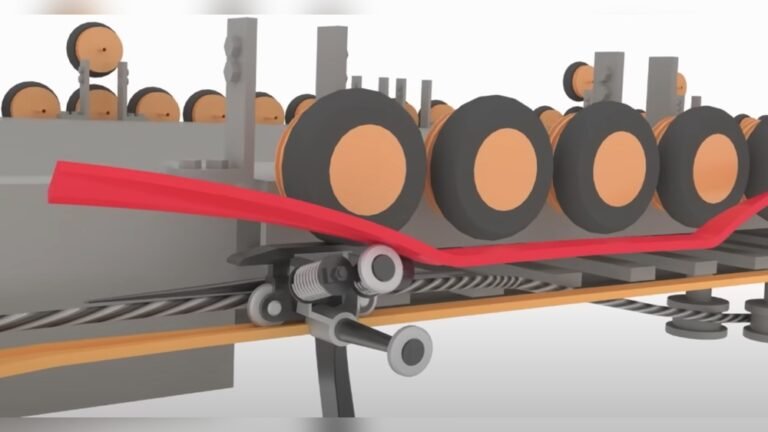
The cable is made of strong steel and is designed to handle heavy loads and bad weather. Towers are placed along the slope to support the cable and keep it at the right height above the ground. Rollers on top of each tower guide and support the cable as it moves.
Passenger Carriers
The passenger carriers—chairs, cabins, or bars—are attached to the cable. For chairlifts and surface lifts, these are fixed directly to the cable. For gondolas and tramways, the cabins have a special grip that attaches and detaches at the stations, allowing for easier loading and unloading.
Return System
At the top (or bottom) of the lift, the cable loops around another bullwheel and returns to the starting point, creating a continuous loop.
Here’s a simple breakdown:
- The motor turns the bullwheel.
- The bullwheel moves the cable.
- Chairs, cabins, or bars move with the cable, carrying passengers uphill.
- At the end, the cable loops around and returns down.
Safety Features Of Ski Lifts
Safety is a top priority in ski lift design. Modern lifts have many systems to protect riders:
- Automatic brakes: If a problem is detected, the lift stops immediately.
- Backup power: Diesel or battery backups keep the lift running during power failures.
- Cable sensors: Detect changes in cable tension or speed and alert operators.
- Evacuation systems: Allow for safe rescue if a lift stops for a long time.
- Regular inspections: Technicians check cables, towers, and carriers often.
One non-obvious safety measure is the use of wind monitoring systems. If winds become too strong, operators stop the lift to prevent dangerous swaying.
The Loading And Unloading Process
Getting on and off a ski lift can be stressful for beginners. Here’s what happens:
- Loading: Lifts slow down or stop at the station. Passengers wait in line, then move into position. For chairlifts, the chair arrives behind you, and you sit down as it moves past. For gondolas, the cabin doors open for easy entry.
- The Ride: The lift speeds up after loading. You ride above the slopes, enjoying the view.
- Unloading: As you approach the top, the lift slows again. For chairlifts, you stand up and slide off when your skis or board touch the snow. For gondolas, the cabin stops and the doors open.
Unloading can cause pileups if riders hesitate or fall. That’s why staff are always present to help.
How Are Ski Lifts Built And Maintained?
Building a ski lift is a big job that requires careful planning and expert engineering. Here’s a basic overview of the process:
Planning And Construction
- Site study: Engineers measure the mountain, check weather patterns, and plan the safest route.
- Towers and stations: Concrete bases are poured for towers. Towers and stations are then built, sometimes using helicopters for remote locations.
- Cable installation: The steel cable is brought in sections and joined together, then pulled up the mountain and attached to the bullwheels.
- Testing: The whole system is tested for safety and smooth operation before opening to the public.
Maintenance
Ski lifts need regular checks:
- Daily inspections: Before opening, crews check the cable, carriers, and controls.
- Weekly/monthly checks: Deeper inspections of machinery and electronics.
- Annual overhauls: Lifts are taken apart, cleaned, and tested before each season.
A surprising fact: Many older lifts, built 30 or 40 years ago, are still running safely because of strict maintenance and upgrades.

How Do Ski Lifts Stay Safe In Bad Weather?
Winter weather can be harsh—strong winds, heavy snow, or ice. Ski lifts are designed to handle tough conditions, but extreme weather still affects operations.
Wind
High winds can cause the cable and carriers to swing. Most lifts have anemometers (wind speed sensors) on towers. If wind speeds go above safe limits (usually 50-60 km/h for chairlifts), operators stop the lift.
Snow And Ice
Heavy snow or ice can build up on cables and towers. Crews often use special tools or heat systems to clear ice. Some resorts run lifts slowly overnight to prevent ice from building up.
Lightning
During thunderstorms, lifts are usually closed. Towers act like lightning rods and can carry dangerous electrical charges.
Here’s a summary of how different weather affects lift operation:
| Weather Condition | Effect on Lift | Common Action |
|---|---|---|
| High wind | Swaying, safety risk | Lift stops |
| Heavy snow | Blockages, extra weight | Manual clearing |
| Ice build-up | Cable problems | De-icing tools |
| Lightning | Electrical risk | Lift closure |
How Do Ski Lifts Differ Around The World?
Ski lifts are used in snowy regions all over the globe, but there are some interesting differences:
- Europe: Many resorts use high-capacity gondolas and chairlifts. Resorts often update lifts for faster speeds and more comfort.
- North America: Chairlifts are most common, but large resorts use big gondolas and tramways for crowds.
- Asia: Japan and South Korea use a mix of modern gondolas and older surface lifts. Some lifts are heated for extra comfort.
- Southern Hemisphere: Resorts in places like Chile, Argentina, and New Zealand often use second-hand lifts from Europe or North America.
One non-obvious insight: Some ski areas use combined lifts (also called “chondolas”)—a mix of chairs and gondola cabins on the same cable. This gives guests a choice depending on their needs.
Modern Innovations In Ski Lifts
Ski lift technology continues to advance. Here are some of the latest trends:
- Heated seats: Some new chairlifts have heated seats and wind shields for comfort.
- High-speed lifts: Modern lifts can move up to 6 meters per second, cutting ride times in half compared to older models.
- Automatic gates: Electronic gates organize lines and improve safety at loading points.
- Accessibility: Many new lifts are designed to help people with disabilities, including easy boarding for wheelchairs.
A fascinating example is the Peak 2 Peak Gondola in Whistler, Canada. It holds the record for the longest free span between towers (3.03 kilometers) and highest lift above ground (436 meters).
For more technical details about ski lift engineering, you can visit the Wikipedia ski lift page.
Tips For First-time Ski Lift Riders
If you’re new to skiing or snowboarding, using a ski lift can feel intimidating. Here are some practical tips to help you:
- Watch others: Spend a few minutes observing how people load and unload before your turn.
- Listen to staff: Lift operators are there to help. Ask questions if you’re unsure.
- Keep your gear ready: Hold your poles in one hand, make sure your backpack is secure, and keep your tips up when unloading.
- Don’t panic: If you miss the chair, step aside and wait for the next one.
- Stay seated and calm: Don’t try to adjust your gear or stand up while riding.
Most Important—enjoy The View And The Unique Experience!
Frequently Asked Questions
How Fast Do Ski Lifts Travel?
Most chairlifts move at about 2–5 meters per second (7–18 km/h). High-speed lifts can go up to 6 meters per second, but always slow down for loading and unloading.
Are Ski Lifts Safe For Children?
Yes, ski lifts are designed with safety in mind. Children should always ride with adults and use the safety bar. Some resorts have special lifts for kids and beginners.
What Happens If A Ski Lift Breaks Down?
If a lift stops, operators first try to fix the problem quickly. If repairs take too long, rescue teams use ropes and harnesses to lower passengers safely to the ground.
Can Snowboarders Use All Ski Lifts?
Most lifts are snowboard-friendly, but surface lifts like rope tows and T-bars can be harder for snowboarders. Magic carpets and chairlifts are the easiest for snowboarders.
Why Do Ski Lifts Stop Sometimes?
Lifts may stop for many reasons: safety checks, weather, or a passenger having trouble loading or unloading. Usually, stops are brief and for everyone’s safety.
Ski lifts are more than just machines—they’re the moving heart of every mountain resort. Next time you ride one, you’ll know exactly what’s happening behind the scenes and why these lifts are both safe and essential for a great day on the slopes.
