Skiing is an exciting sport, but it comes with risks. If you have ever watched a skier click their boots into their skis, you have seen ski bindings in action. These small devices are not just for connecting your boots to your skis—they are essential for your safety and performance on the slopes. Understanding how ski bindings work can help you stay safe, avoid injuries, and get more enjoyment from your time on the mountain. In this article, you’ll learn everything you need to know about ski bindings: their parts, how they function, why proper adjustment matters, and common mistakes to avoid.
What Are Ski Bindings?
Ski bindings are the mechanical parts that attach your ski boots to your skis. They are more than just connectors; they are designed to release your boot in case of a fall or strong force, which helps prevent injuries. Bindings have evolved over the years, and today’s models are engineered with advanced safety and performance features.
Bindings work by holding your boots firmly in place while skiing but release them when too much force is applied—such as during a fall. This release mechanism protects your legs and knees from twisting injuries, which are common in skiing.
Main Parts Of Ski Bindings
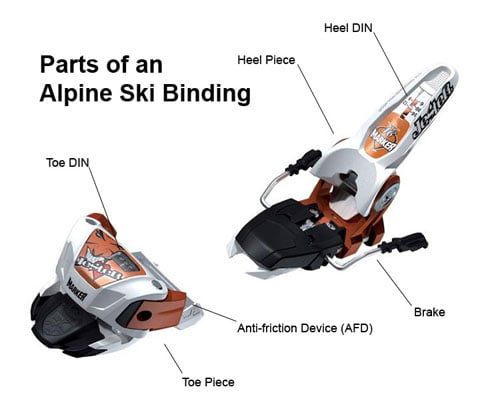
To understand how ski bindings work, it helps to know their main parts. Each part plays a unique role:
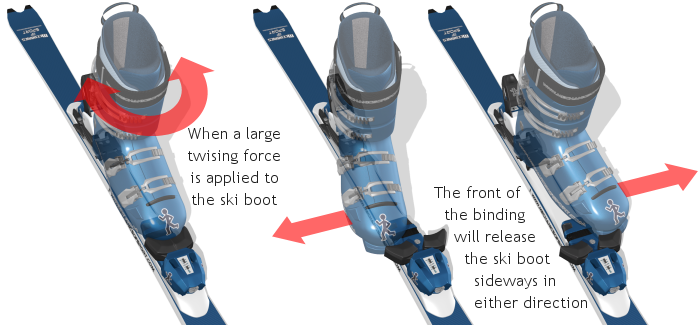
- Toe Piece: The front part of the binding where your boot’s toe sits. It holds the front of your boot and can release it sideways during a fall.
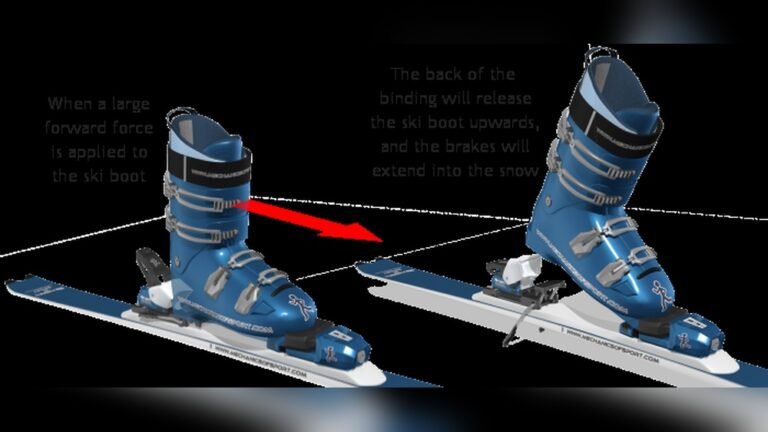
- Heel Piece: The back part that locks the heel of your boot. It releases upwards or diagonally when too much force is detected.
- Brake Arms: These are metal arms under the heel. They prevent your skis from sliding downhill if your boots come out of the bindings.
- DIN Adjustment Screws: These allow you to set how much force is needed before the bindings release. The settings are called DIN values.
- Mounting Plate/Track: The base where the binding attaches to the ski. Some bindings allow for size adjustments along this track.
- Anti-Friction Device (AFD): A sliding plate under the toe, helping the boot release smoothly in a fall.
Each part must work together for the binding to do its job—keeping you safe and secure while skiing.
How Ski Bindings Hold And Release
Bindings have a simple but clever job: hold your boot firmly when skiing and release it safely when necessary. Here’s how they do it:
Holding Your Boot
When you step into your bindings, the toe piece clamps over the front of your boot, and the heel piece snaps up behind your heel. Springs inside both pieces keep your boot tightly in place. This secure hold is important for transferring your movements to the skis, giving you control and stability.
Releasing During A Fall
If you fall or twist your leg hard, the binding detects this force. When the force reaches a specific level (set by your DIN value), the binding’s springs and release mechanisms let go of your boot. The toe can release the boot sideways (to protect your knee), and the heel can release it upwards or diagonally (to protect your ankle and leg).
The Importance Of The Din Setting
The DIN value is a number that adjusts how much force is needed to release your boot from the binding. A higher DIN means the binding holds tighter (for heavier or more aggressive skiers). A lower DIN means it releases more easily (for lighter or beginner skiers).
Choosing the right DIN setting is critical. If it’s too high, the binding might not release when you fall, which can cause injuries. If it’s too low, your boot might come out when you don’t want it to, leading to loss of control.
Types Of Ski Bindings
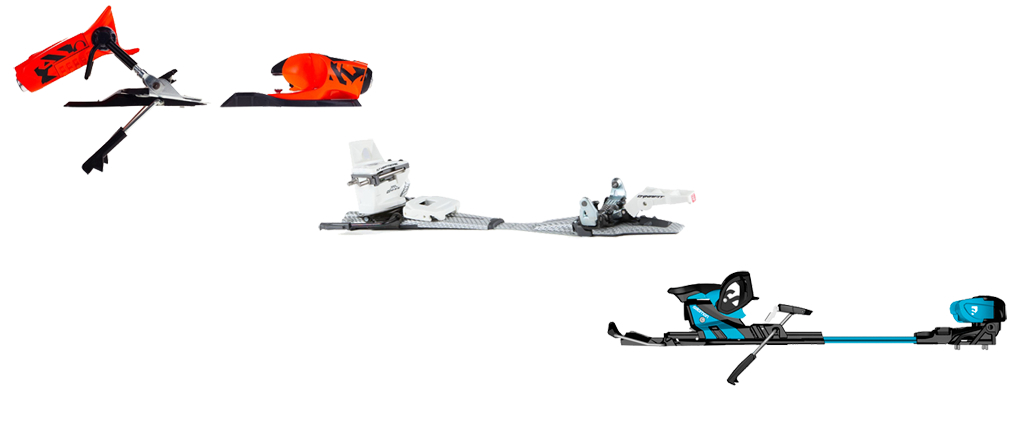
Bindings come in different types for different skiing styles. Understanding these helps you pick the right one for your needs.
Alpine Bindings
Alpine bindings are the most common. They are designed for downhill skiing and focus on keeping the boot secure while allowing safe release in a fall. They do not allow the heel to lift, so they are not suitable for walking uphill.
Alpine Touring (at) Bindings
Alpine Touring bindings are for backcountry skiing. They let you lift your heel for walking uphill, then lock it down for skiing downhill. Some use a frame, while newer models use a tech system with pins that fit into special boots.
Telemark Bindings
Telemark bindings attach only at the toe, leaving the heel free. This allows for the unique telemark turn, which looks like a lunge. These are used by a smaller group of skiers who enjoy this style.
Children’s Bindings
These are smaller and have lower DIN settings. They are designed to fit children’s boots and work with lighter weights.
Race Bindings
Race bindings are built for maximum power transfer and have higher DIN ranges. They are used by competitive skiers who need the tightest hold.
Here’s a comparison of common binding types:
| Type | Main Feature | Release Mechanism | Skill Level |
|---|---|---|---|
| Alpine | Downhill only | Toe & Heel | Beginner–Expert |
| Alpine Touring | Uphill & Downhill | Toe & Heel/Tech Pins | Intermediate–Expert |
| Telemark | Free Heel | Toe Only | Advanced |
| Children’s | Lightweight | Toe & Heel | Beginner |
| Race | High DIN | Toe & Heel | Expert |
How To Set Ski Bindings Correctly
Proper binding adjustment is key for safety. You should never guess your settings. Bindings are usually set by a ski technician, but it helps to know what’s involved:
- Determine Your DIN Setting: This depends on your weight, height, age, boot sole length, and skiing ability.
- Position the Toe and Heel Pieces: The binding must match your boot size so the boot fits snugly without being too tight or loose.
- Set Forward Pressure: This keeps your boot at the right distance from the heel piece. Too much or too little pressure can stop the binding from releasing correctly.
- Adjust the Toe Height and AFD: The boot should sit flat on the AFD, not tilted or loose.
- Check the Release: A trained technician will test the binding to make sure it releases at the correct force.
Here’s a simplified DIN range chart for reference:
| Skier Type | Weight (kg) | DIN Range |
|---|---|---|
| Beginner | 40–60 | 2–5 |
| Intermediate | 55–80 | 4–7 |
| Advanced | 75–100+ | 6–12+ |
Always have your bindings checked by a professional before your first run each season.
Common Mistakes And How To Avoid Them
Even experienced skiers can make errors with their bindings. Here are some common issues:
- Wrong DIN Setting: Many people copy friends’ settings or guess. Always use a chart or technician.
- Bindings Not Maintained: Dirt and rust can stop bindings from releasing. Clean and check them regularly.
- Using Old Bindings: Bindings over 10 years old may not work safely, even if they look fine.
- Wrong Boot Size: If your boots are too big or small for the binding, release won’t work correctly.
- Ignoring the AFD: If the AFD is sticky or worn out, the boot may not release smoothly.
One often-missed detail: the forward pressure. If the heel piece is not set with the right pressure, your boot might not release at all, even with the correct DIN. Always check this if you change boots or bindings.
Another point: snow or ice under your boot can block the binding from closing fully. Always tap your boots clean before stepping in.
The Science Behind Binding Release
Ski bindings use springs and cams to control how tightly they hold your boot. When force is applied, the spring compresses or stretches until it reaches the set DIN value, then the cam lets the boot pop out.
Modern bindings are tested with machines to make sure they release at the right force. Studies show that well-set bindings reduce leg injuries by up to 75%. However, no binding can prevent all injuries—there’s always some risk in skiing.
Bindings are also designed to work with standard boot soles. Using boots with unusual shapes or worn-out soles can affect how well your bindings work.
Choosing The Right Ski Bindings
When buying bindings, think about:
- Your weight and skiing style: Aggressive skiers need higher DIN settings.
- Where you ski: Backcountry, park, or groomed slopes need different bindings.
- Boot compatibility: Some touring bindings need special boots.
- Release safety: Look for models with good safety reviews.
Never buy bindings just because they look cool or are cheap. Proper fit and function are always more important.
If you want to learn more about binding standards and safety, the International Organization for Standardization (ISO) sets the rules for ski bindings. You can read more at the official Wikipedia page on ski bindings.
Practical Maintenance Tips
Bindings need regular care. Here are a few expert tips:
- Check for cracks, rust, or broken parts before each trip.
- Clean off mud and salt after skiing to stop corrosion.
- Store skis in a cool, dry place with bindings closed.
- Have a technician check your bindings at least once a year.
- Do not lubricate bindings with oil—use only products recommended by the manufacturer.
If your bindings do not snap closed or release easily, get them checked right away.
Frequently Asked Questions
How Often Should I Get My Ski Bindings Checked?
It’s best to have your bindings checked by a professional technician at the start of every ski season. If you change boots or notice problems, get them checked again.
What Is The Din Value And Why Does It Matter?
The DIN value is the setting that controls how much force is needed for your bindings to release your boots. It’s important because it balances safety (easy release) with performance (secure hold). Using the wrong DIN can lead to injuries.
Can I Adjust My Ski Bindings Myself?
You can adjust minor things like the size track, but only trained technicians should set the DIN and forward pressure. Improper adjustment is a major cause of injury.
Do Bindings Fit All Ski Boots?
Most alpine bindings fit standard alpine ski boots. Touring and telemark bindings may need special boots with matching soles or inserts. Always check compatibility before buying.
How Long Do Ski Bindings Last?
Bindings usually last 5–10 years if well cared for. After that, plastic and springs may become unsafe, even if they look fine. Replace them if they are very old or have visible damage.
Ski bindings are a small but vital part of your gear. Understanding how they work—and how to set and care for them—can make your skiing safer and more fun. Whether you’re a beginner or an expert, a little knowledge about bindings can save you from injury and keep you skiing with confidence all season long.