Scuba diving opens a door to a silent world, full of color and life. But for divers, the beauty comes with a challenge: how to talk underwater. With a regulator in the mouth and thick masks covering the face, normal speech is impossible. Even shouting doesn’t work because sound travels differently in water. Still, divers need to share important messages—sometimes to save lives.
This article explores how scuba divers communicate below the waves. You’ll discover the main methods, why each one matters, and the clever tricks divers use to make sure everyone understands. Whether you’re curious, planning your first dive, or want to improve your skills, you’ll find clear answers here.
Why Communication Is Vital Underwater
Without reliable communication, diving would be risky. Imagine you spot a problem with your equipment, or get low on air. You need to tell your buddy immediately. Underwater, strong communication prevents accidents, helps teams stick together, and makes the experience more enjoyable.
Poor communication is a leading cause of underwater incidents. According to the Divers Alert Network, miscommunication is involved in up to 20% of reported diving accidents. This shows how important it is to master the different ways divers “talk” without words.
Main Methods Of Underwater Communication
Scuba divers use several methods to share messages beneath the surface. Each has its strengths and limitations. Let’s explore the main tools divers use.
Hand Signals
Hand signals are the global language of diving. They’re fast, reliable, and work even if visibility is poor. Every diver learns a set of standard hand signals in their basic training, but there are also extra signals for special situations.
Common Hand Signals
Some signals are recognized worldwide, making them almost universal. Here are some key examples:
- OK – Forming a circle with thumb and index finger, with other fingers extended. Means “I’m fine.”
- Up – Thumbs-up (not “good job” as on land), meaning “Let’s ascend.”
- Down – Thumbs-down, meaning “Let’s descend.”
- Something is wrong – Open hand, palm down, tilted side to side.
- Low on air – Flat hand, fingers together, tapped on chest.
- Out of air – Slashing motion across the throat.
- Look at me – Pointing two fingers at your eyes, then at the buddy.
- Stop – Hold up a flat hand, palm out.
Hand signals must be clear and visible. Divers use lights or get closer in dark water. For group dives, leaders repeat signals until every diver responds.
Non-obvious Insights
- Signals can change slightly between regions or dive schools. Always review hand signals during pre-dive briefings.
- In cold water, wearing thick gloves can make signals harder to see. Divers exaggerate movements or use both hands for clarity.
Underwater Writing Slates
When a message is too detailed for hand signals, divers use writing slates. These are waterproof boards with pencils attached. They allow divers to write instructions, ask questions, or share directions.
Writing slates are especially useful for:
- Giving complex instructions
- Explaining equipment problems
- Communicating with students during training
- Recording data for scientific dives
Slates are simple, cheap, and require no batteries. However, writing takes more time than signaling, and slate size limits how much can be written at once.
Underwater Communication Devices
Technology has brought electronic communication to diving. These devices allow divers to talk using sound waves, just like a walkie-talkie. There are two main types:
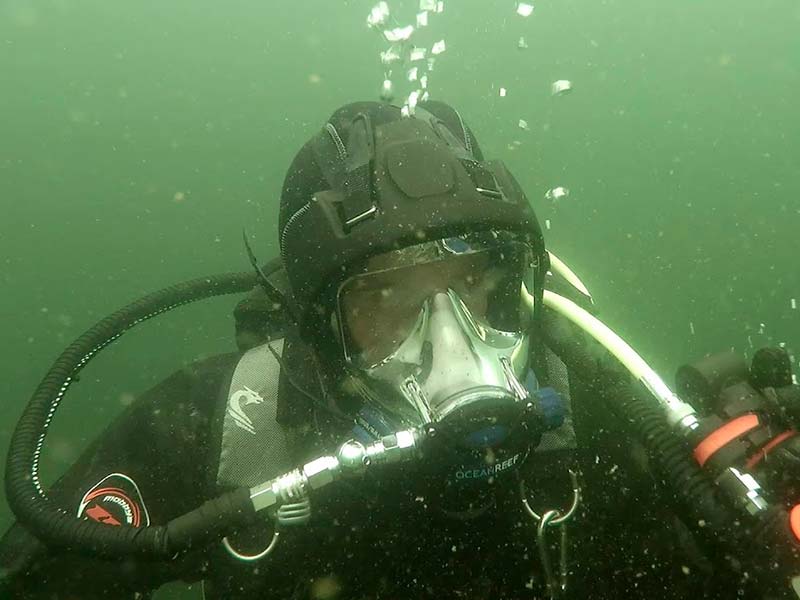
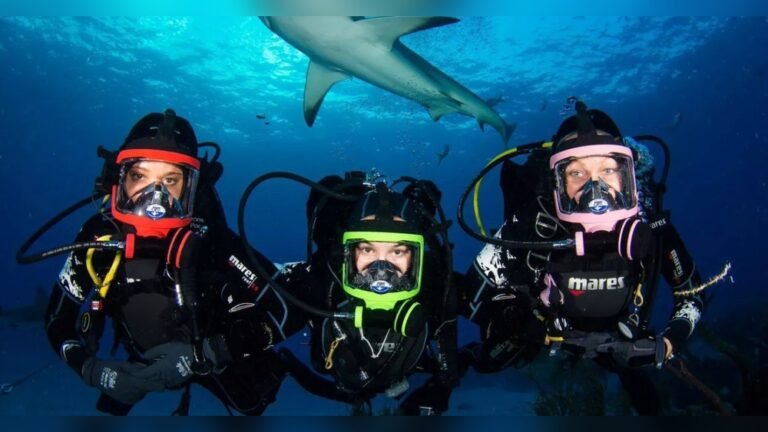
Full-face Mask Radios
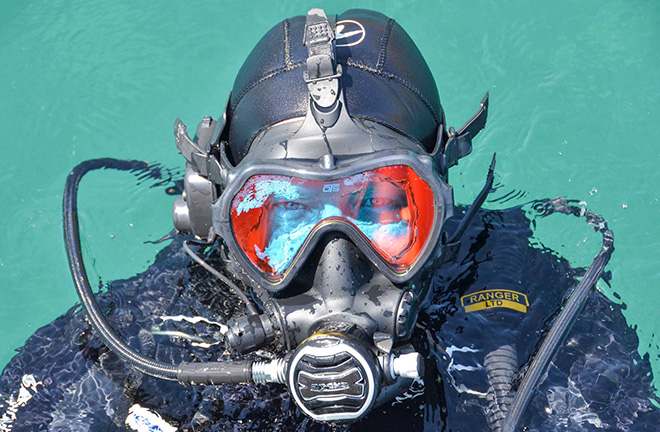
Divers wear a mask with a built-in microphone and speaker. They can speak directly to each other, or to the surface team. These systems are common in commercial, military, and scientific diving.
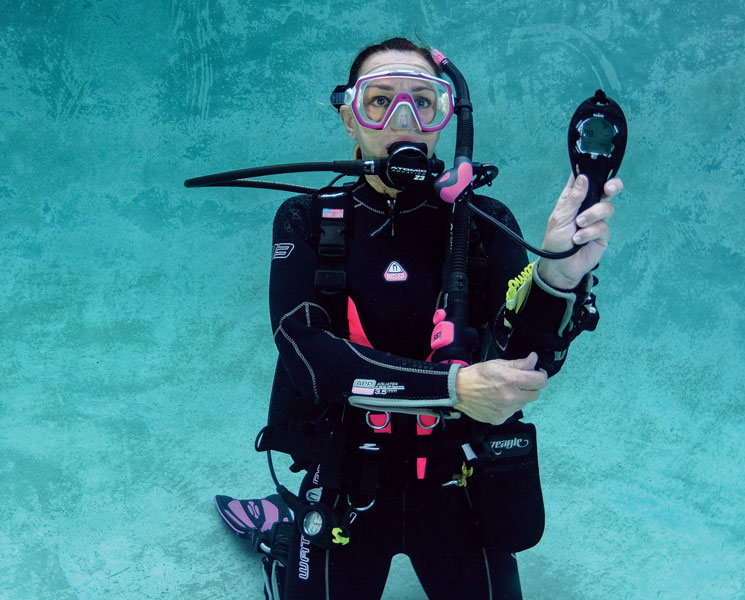
Handheld Underwater Radios
These are small devices that send simple messages or alert tones. Some let you send pre-set messages, like “Come here” or “Emergency. ”
Limitations
- Sound does not travel as clearly in water as in air. Voices may sound distorted.
- Electronic devices are expensive and need regular maintenance.
- Battery life can be a limiting factor during long dives.
Despite these challenges, communication devices are growing more popular as technology improves.
Light Signals
In dark or murky water, light signals are essential. Divers use underwater torches (flashlights) to send coded messages. For example:
- Moving light in a circle: “OK”
- Waving light side to side: “Attention needed”
- Shining light on another diver: “Look here”
Light signals are crucial for night dives, wreck dives, or caves. All divers must agree on the meaning of each signal before entering the water.
Touch Signals
Sometimes, visibility is so poor that even lights don’t help. In these cases, divers rely on touch signals. For example:
- Squeezing the buddy’s arm: “Are you OK?”
- Two squeezes: “Yes, I’m OK.”
- Pulling on the arm or fin: “Stop” or “Follow me.”
Touch signals are especially important for disabled divers or those in zero-visibility conditions.
Surface Marker Buoys (smbs) And Signal Tubes
These are used to communicate with people at the surface. By releasing a surface marker buoy, divers can signal their position or send up a message. Colors and patterns of SMBs can have specific meanings:
- Red/Orange: “Normal ascent”
- Yellow: “Emergency” or “Need help”
Some buoys have waterproof pockets for messages or glow sticks for night use.
Comparison Of Communication Methods
Different methods serve different needs. Here’s a comparison to help you understand when each is best:
| Method | Best For | Drawbacks |
|---|---|---|
| Hand Signals | Quick, basic messages | Limited detail, visibility needed |
| Writing Slates | Complex instructions | Slow, both hands needed |
| Electronic Devices | Long or technical dives | Expensive, requires power |
| Light Signals | Night or low-visibility dives | Need agreed meanings |
| Touch Signals | Zero visibility | Physical contact required |
When And Why Divers Use Each Method
The choice depends on dive conditions, team size, and purpose.
- Recreational divers mainly use hand signals and lights.
- Technical divers use a mix of signals, slates, and sometimes radios.
- Professional divers (scientists, military) often use full-face masks with radios for complex missions.
For example, a diver exploring a shipwreck at night may use both light signals and touch signals. A group surveying coral reefs may rely on slates to record data.
The Role Of Pre-dive Briefings
No matter how experienced, divers always start with a pre-dive briefing. This is where the group agrees on hand signals, light codes, emergency plans, and communication devices. The briefing ensures everyone “speaks the same language,” reducing confusion.
A good pre-dive briefing includes:
- Reviewing all signals to be used
- Assigning roles (leader, follower)
- Discussing emergency procedures
- Agreeing on how to get attention (shaker, tank tap, light)
This step is often skipped by beginners but is vital for safety and teamwork.
Non-obvious Challenges In Underwater Communication
Many new divers underestimate the effects of stress and environment. Cold water, strong currents, or fear can make even simple signals hard to recognize. Here are some less obvious problems:
- Gloves and thick wetsuits: Make hand signals harder to see. Divers must exaggerate movements.
- Group size: In large groups, it’s easy to miss a signal. Leaders should check that everyone has seen and understood.
- Cultural differences: Some hand signals mean different things in different countries. Always clarify before the dive.
- Equipment noise: Bubbles, cameras, and other gear can distract or block signals.
Training And Practice: The Key To Success
Learning signals in a classroom is not enough. Divers must practice in real conditions. Many dive schools include communication drills in their courses. Practicing with your regular dive buddy builds trust and speeds up reaction times.
Here’s an example practice session:
| Step | Activity | Goal |
|---|---|---|
| 1 | Review hand signals on land | Memory refresh |
| 2 | Use signals in shallow water | Test visibility and understanding |
| 3 | Simulate an emergency | Practice fast response |
| 4 | Switch to light/touch signals | Adapt to changing conditions |
Technology Trends In Underwater Communication
The future brings new solutions. Advances in underwater radios and digital slates allow more precise and private messages. For example, some dive computers now display text messages from the dive leader.
Still, technology cannot fully replace traditional methods. Batteries die, electronics can fail, and new gear adds cost. That’s why every diver, from beginner to pro, must master basic signals.
For more on the science behind underwater communication, check out the Wikipedia page on Underwater Communication.
Practical Tips For Clear Communication
- Always make eye contact before signaling.
- Repeat important signals until you see a response.
- Agree on signals during the pre-dive briefing.
- Avoid showing signals behind your body or against dark backgrounds.
- Carry a backup method (slate, light) in case the main method fails.
- Stay calm—panic leads to confusion and missed signals.
Frequently Asked Questions
How Do Scuba Divers Say “i’m Ok” Underwater?
Divers use the OK hand signal: touch the tip of the thumb to the tip of the index finger, forming a circle, with the other three fingers extended. This signal is used both to ask “Are you OK?” and to answer “I’m OK.”
Can Divers Talk Underwater Using Their Voice?
Normal speech isn’t possible with a regulator in the mouth and water all around. However, full-face mask radios let divers talk, though the sound quality is not as clear as on land. Most recreational divers rely on hand signals instead.
What Happens If Divers Don’t Understand Each Other?
If there’s confusion, divers repeat the signal or switch to another method, like writing on a slate or using light signals. In emergencies, divers use universal distress signals, like slashing the throat for “out of air.”
Are There Differences In Hand Signals Around The World?
Yes, while many hand signals are standard, some vary by country or dive agency. For example, the “OK” signal is almost universal, but signals for “danger” or “problem” can differ. Always review and agree on signals before the dive.
What Is The Most Important Thing For Safe Communication Underwater?
The most important rule is clarity and confirmation. Every message should be clear, and the receiver should reply to show they understood. Pre-dive planning and regular practice help make communication smooth and safe.
Scuba diving is a team sport, and good communication is the key to safe, enjoyable dives. By mastering these methods and staying aware of the challenges, you’ll be ready for any underwater adventure.