
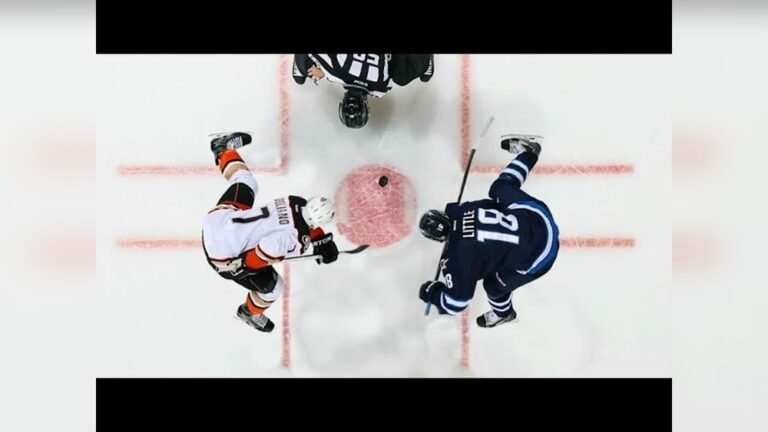
Every ice hockey game starts with a moment of intense focus: the faceoff. Players bend low, eyes locked on the puck, waiting for the referee’s signal. In just a second, the puck drops, and the action explodes. Faceoffs might look simple, but they are a critical part of hockey strategy. Teams often win or lose possession—and sometimes the game itself—based on how well they handle these fast, physical battles. Understanding how faceoffs work gives you a new appreciation for the sport and reveals just how much skill and planning goes into every play.
What Is A Faceoff In Ice Hockey?
A faceoff is a method used to start play at the beginning of periods and after most stoppages. Two opposing players, usually centers, stand in a designated spot on the ice. The referee drops the puck between them, and they try to gain control for their team.
Faceoffs are used:
- To start each period
- After a goal is scored
- After most whistles (like offsides, icing, or when the puck leaves the rink)
- At the start of power plays
There are nine faceoff spots on the ice, each marked with a circle or dot. The location depends on why play stopped. For example, an offside call leads to a faceoff near the blue line, while a goalie’s save leads to one in that team’s zone.
Faceoff Procedure: Step By Step
Understanding the steps of a faceoff helps you see why they can be so tricky.
- Referee blows the whistle to signal a stoppage.
- Players line up at the correct faceoff dot.
- The two centers place their sticks on the ice, as directed by the official.
- Wingers and defensemen line up in set positions outside the circle.
- The referee checks for fair positioning.
- The puck is dropped between the two centers.
- Both players battle to win the puck, using skill and timing.
If a player cheats (for example, by moving too early), the referee can remove them and another teammate must take their spot. This makes discipline and focus essential.
Faceoff Locations Explained
Faceoffs aren’t random—they happen in specific spots for a reason. Here’s how it works:
| Situation | Faceoff Location |
|---|---|
| Start of period | Center ice |
| After a goal | Center ice |
| Offside | Nearest blue line |
| Icing | Defending zone of team that iced the puck |
| Puck out of play | Closest faceoff dot to where play stopped |
Teams often aim to win faceoffs in the offensive zone, as it gives them a chance to set up a scoring play.
Faceoff Rules: What You Need To Know
Faceoff rules are strict to keep the game fair. Here are the main points:
- Only the two designated players are allowed inside the faceoff circle before the puck drops.
- All other skaters must stay outside the circle and on their own side.
- Both players must place their stick on the ice before the puck is dropped.
- No body contact before the puck drops—only after.
If a player breaks a rule, the referee may:
- Remove them from the faceoff
- Give a warning
- Call a penalty (for repeated infractions)
A common mistake is entering the circle too early, which is called encroachment. This can cost a team a prime scoring chance.
Strategies For Winning Faceoffs
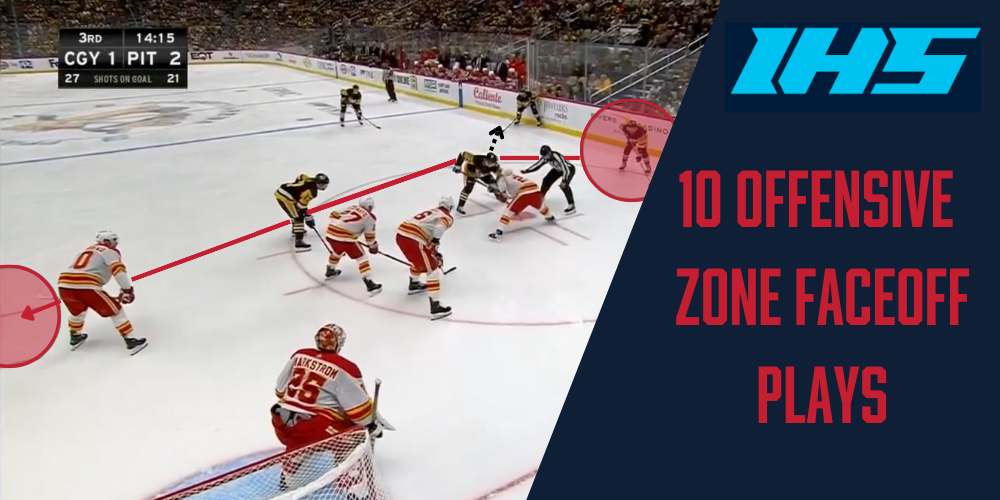
Winning a faceoff is more than just being quick. Players use different techniques depending on their strengths and the game situation.
Common Faceoff Techniques
- Stick lift: Lifting the opponent’s stick to get to the puck first.
- Body positioning: Using the body to shield the puck.
- Tie-up: Tying up the opposing center’s stick so a teammate can grab the puck.
- Forehand/backhand sweep: Using quick stick movement to pull the puck to a teammate.
Teams often study faceoff statistics to find the best matchups. For example, some centers win over 55% of their faceoffs, which is a big advantage.
Why Possession Matters
Winning a faceoff means your team starts with the puck. This can lead to quick shots on goal, especially in the offensive zone. On defense, winning a draw lets you clear the puck and relieve pressure.
| Zone | Impact of Winning |
|---|---|
| Offensive | Set up scoring plays, maintain pressure |
| Defensive | Clear puck, prevent scoring chances |
| Neutral | Control transition, launch attack or defend |
Faceoff Success: Stats And Key Players
In the NHL, the best faceoff specialists are highly valued. For example, Patrice Bergeron was known for winning over 60% of his faceoffs during his career—a remarkable number.
Some teams win more than 52% of their faceoffs in a season, giving them a small but steady edge in puck possession. Coaches often put their top faceoff centers on the ice for crucial draws, especially late in games or during power plays.
Common Mistakes And Penalties
Faceoff mistakes can lead to lost possession or even penalties. Here are a few to watch for:
- Jumping early: Moving before the puck drops leads to removal from the circle.
- Encroachment: Other players entering the circle early.
- Illegal stick placement: Not having the stick on the ice.
- Delay of game: Taking too long to set up.
One non-obvious insight is that some teams use intentional fouls to get a better faceoff specialist on the ice. While risky, this tactic is occasionally used in high-stakes moments.
Faceoffs Around The World
Faceoff rules are nearly universal, but some leagues have small differences. In the International Ice Hockey Federation (IIHF), referees may be stricter with encroachment. The NHL has its own timing and positioning guidelines. If you watch international hockey, you might notice players adjusting to the referee’s style.
Another subtle point: In youth and amateur leagues, referees sometimes allow a bit more flexibility, focusing more on teaching players the right technique.

Frequently Asked Questions
How Many Faceoff Spots Are There In Ice Hockey?
There are nine faceoff spots on a standard ice hockey rink: two in each team’s end zone, two in the neutral zone, and one at center ice.
Who Can Take A Faceoff?
Usually, the center on each line takes the faceoff. However, any skater on the ice can take it if the center is removed or chooses not to.
Why Do Some Players Get Removed From The Faceoff?
Players may be removed for violating faceoff rules, such as moving too early, not placing their stick properly, or encroachment by teammates.
Does Winning Faceoffs Help Teams Win Games?
Yes, winning faceoffs often leads to more puck possession, more scoring chances, and better defensive control. It is a key part of team strategy, especially in critical situations.
Where Can I Learn More About Ice Hockey Rules?
You can read more about faceoff rules and other details on the official Wikipedia page on ice hockey rules.
Faceoffs may look like a simple drop of the puck, but there’s a world of skill, strategy, and teamwork behind each one. Next time you watch a game, pay close attention to the faceoff—it’s often the small battles like these that decide the biggest moments in hockey.
