
Paddle boarding is becoming one of the most popular ways to enjoy water, nature, and fitness at the same time. If you own an inflatable stand-up paddle board (SUP), you already know that getting the right air pressure inside your board is critical. But here’s a question many beginners and even some experienced paddlers ask: Do paddle board pumps have pressure gauges? The answer is not as simple as “yes” or “no.” There are different types of pumps, gauges, and pressure requirements. Knowing how these all work together can make your paddling experience safer and more enjoyable.
Let’s explore what you really need to know about paddle board pumps and pressure gauges—and why it’s worth paying attention.
Why Pressure Matters For Paddle Boards
The right air pressure is the foundation of a good paddle boarding session. Inflatable SUPs are designed to feel rigid and stable on the water, but only if they are pumped up to the correct PSI (pounds per square inch). Too little pressure means a soft, floppy board that bends and slows you down. Too much pressure can damage the seams or even burst the board.
Most inflatable paddle boards recommend a pressure between 12 and 18 PSI. Some racing or performance boards may go even higher. But without a way to measure the pressure, you’re just guessing.
Types Of Paddle Board Pumps
There are three main kinds of paddle board pumps. Each one interacts differently with pressure gauges.
1. Manual Hand Pumps
Most inflatable SUPs come with a manual hand pump. These are usually either single-chamber or double-chamber designs.
- Single-chamber pumps are simple and require more effort.
- Double-chamber pumps move more air with each stroke, so you inflate the board faster.
Many manual pumps include a built-in pressure gauge on the handle or base. But not all do. Cheaper or older models may have no gauge at all, or the gauge may be unreliable.
2. Electric Pumps
Electric SUP pumps are battery-powered or plug into your car’s 12V socket. They make inflation much easier, especially if you have multiple boards.
Almost all modern electric pumps include a digital or analog pressure gauge. Some even let you set your target PSI and will shut off automatically when they reach it.
3. High-pressure Pumps (hp Pumps)
These are specialized pumps meant for high-performance or racing boards. They are often more robust and usually include a precision pressure gauge, since these boards need very specific PSI.
Do All Pumps Have Pressure Gauges?
Not every pump comes with a pressure gauge. Here’s a quick look at which pumps typically have one:
| Pump Type | Gauge Included | Typical Price Range |
|---|---|---|
| Manual Single-Chamber | Sometimes | $20–$40 |
| Manual Double-Chamber | Usually | $40–$80 |
| Electric Pump | Almost Always | $60–$180 |
| High-Pressure Pump | Yes | $80–$150 |
Non-obvious insight: Some budget SUP packages skip the gauge to save money, leaving you guessing about pressure. Always check what your pump includes before you buy.
How Do Pressure Gauges Work On Paddle Board Pumps?
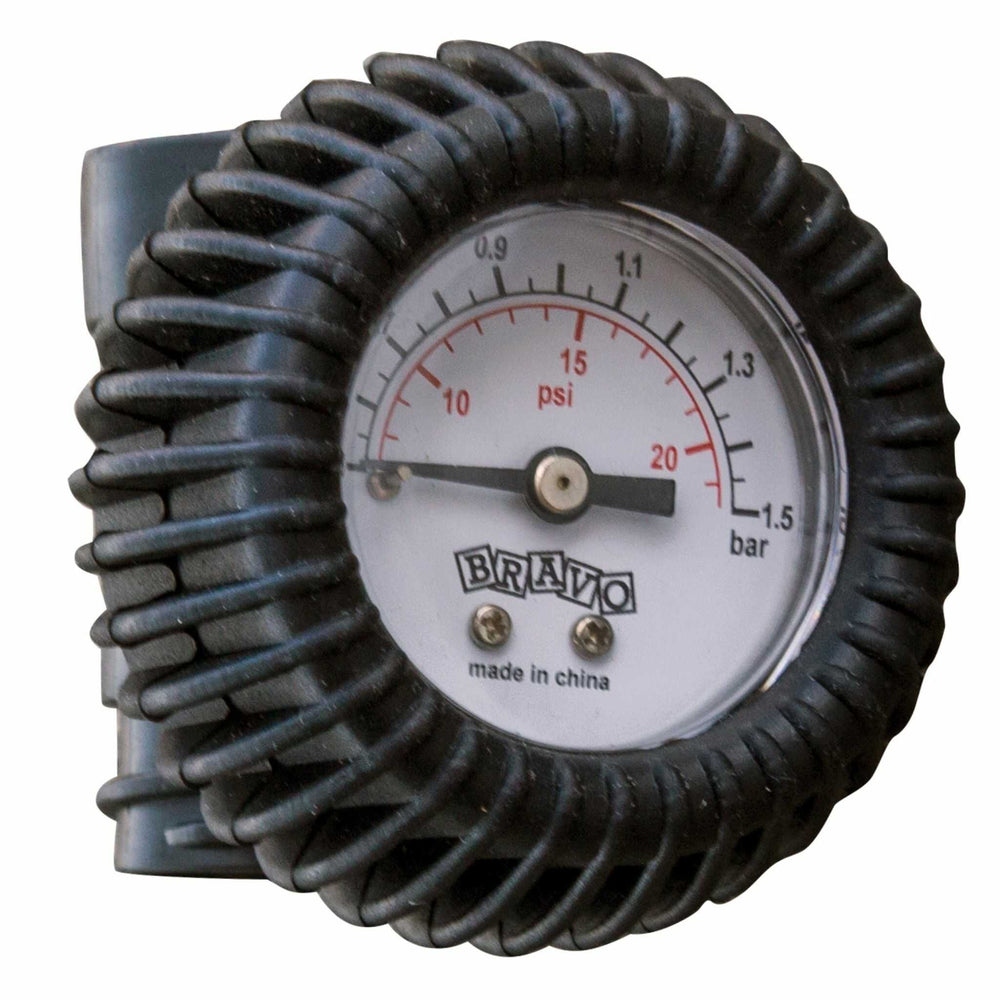
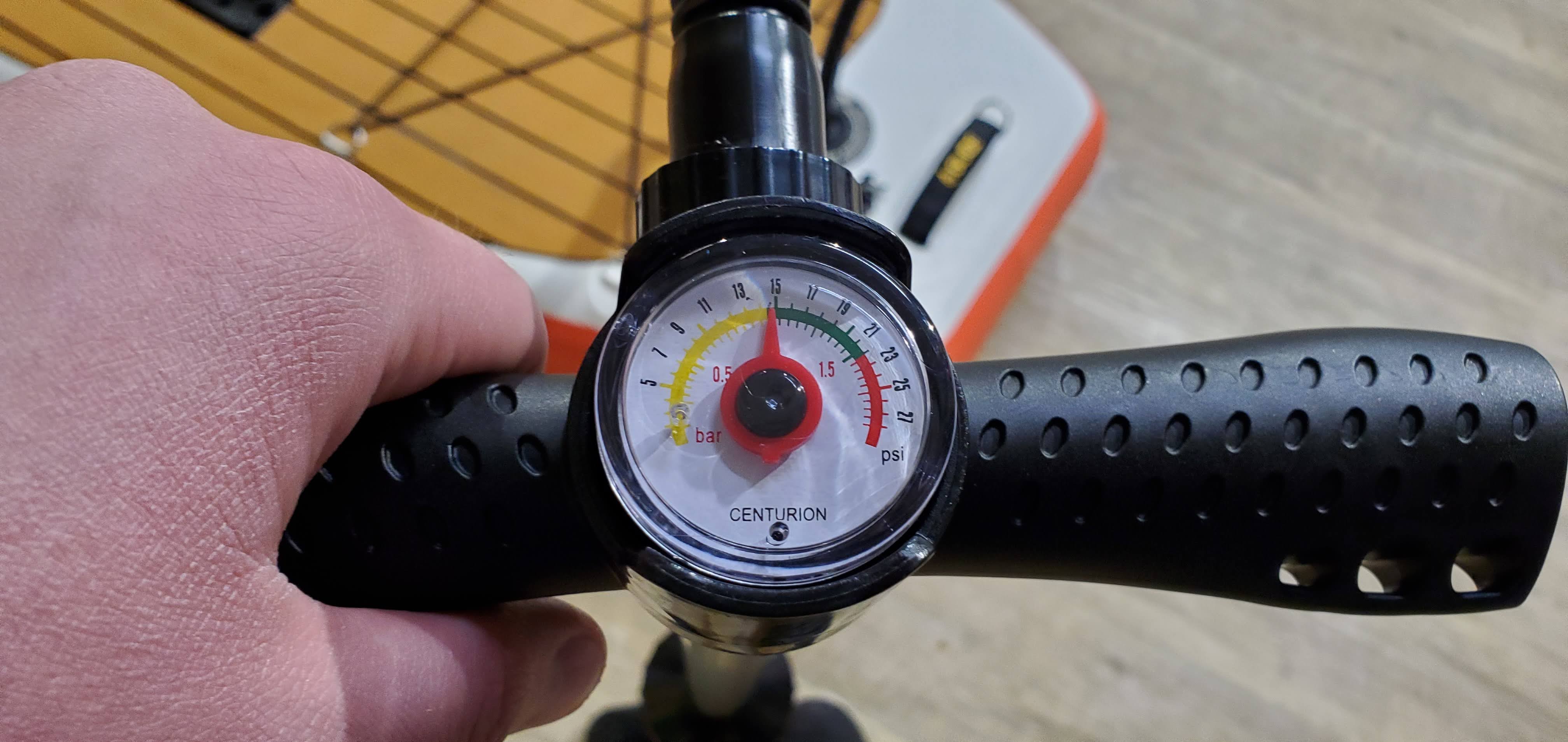
A pressure gauge measures how much air you’ve pumped into your SUP, usually in PSI. There are two main types:
- Analog gauges: Have a dial with a pointer. They are easy to read but can be less precise at low pressures.
- Digital gauges: Show the exact PSI in numbers. These are more common on electric pumps.
The gauge is usually located on top of the pump or near the hose connection. It only starts to register a reading once there’s enough back-pressure—often around 5 PSI. If you’re inflating and the needle doesn’t move at first, don’t worry.
This is normal. Keep pumping until the pressure builds up.
What If My Pump Doesn’t Have A Gauge?
If your pump doesn’t have a pressure gauge, you have three main options:
- Buy a separate gauge: Standalone SUP pressure gauges are available. You simply attach them between the hose and the valve.
- Upgrade your pump: Consider buying a better pump with an accurate gauge, especially if you paddle often.
- Estimate by touch: Experienced paddlers sometimes judge firmness by pressing the board. But this is risky and not accurate for most people.
Pro tip: Never rely only on touch if you’re new to paddle boarding. Boards that feel “firm” at 8 PSI are still underinflated and will not perform well.
Why Is A Pressure Gauge Important?
Using a pressure gauge is not just about comfort—it’s also about safety and board life.
- Performance: The board glides faster and tracks straighter when at proper PSI.
- Stability: A firm board supports your weight better, making it easier to balance.
- Board lifespan: Over-inflating can damage the seams and valves. Under-inflating wears out the material faster.
- Safety: A soft board can fold or buckle, especially in waves or with heavier paddlers.
Common Problems With Paddle Board Pressure Gauges
Many beginners run into issues with their SUP pump gauges. Here are some common problems:
The Gauge Doesn’t Move
Most analog gauges don’t show a reading until you reach about 5 PSI. At lower pressures, the board is still too soft to push back on the gauge. Keep pumping and check again.
Inaccurate Readings
Cheaper gauges may be off by 1–2 PSI. Digital gauges are usually more accurate but can run out of battery. Always check your gauge against a known good one if your board feels wrong.
Fogged Or Cracked Gauges
Water or condensation can get inside the gauge, making it hard to read. If the gauge cover is cracked, moisture can get in and ruin the mechanism.
Non-obvious insight: If your gauge is acting strangely, try connecting it to a different pump or board. Sometimes a faulty valve or worn-out seal is the real problem.
How To Use A Sup Pump Pressure Gauge Properly
Getting the correct PSI isn’t hard, but a few simple steps will help you get it right every time:
- Connect the pump hose securely to the board’s valve. Make sure the valve pin is in the correct “up” position.
- Pump steadily until you see the needle or digital display move. This usually happens after a few minutes.
- Stop when you hit the recommended PSI for your board. Most boards have this written near the valve or in the manual.
- Double-check the gauge if you’re unsure. If the board feels wrong at the right PSI, your gauge might be faulty.
- Release the hose carefully to avoid losing pressure.
Comparing Manual And Electric Pump Gauges
Here’s a side-by-side look at the differences between manual and electric pump gauges:
| Feature | Manual Pump Gauge | Electric Pump Gauge |
|---|---|---|
| Gauge Type | Analog (dial) | Digital or Analog |
| Accuracy | Good, but varies | High (digital), varies (analog) |
| Ease of Use | Simple, no power needed | Very easy, set-and-forget |
| Can Set Target PSI? | No | Yes (most models) |
What To Look For When Buying A Sup Pump
If you’re shopping for a paddle board pump, here’s what matters most:
- Built-in pressure gauge: Make sure it’s included and easy to read.
- Pump type: Manual for portability; electric for ease.
- Gauge accuracy: Look for reviews that mention accuracy, especially for digital models.
- Durability: A sturdy pump lasts longer and is less likely to break.
- Compatibility: Check that the hose fits your board’s valve.
Common mistake: Don’t assume all pumps fit all boards. Double-check the valve type (most use the Halkey-Roberts style, but not all).
How To Maintain Your Pump And Gauge
Taking care of your pump and gauge will make them last longer:
- Keep the gauge dry: Store your pump in a dry place.
- Check the hose for leaks: Even a small leak can ruin pressure readings.
- Don’t drop the pump: This can break the gauge or housing.
- Rinse off sand and dirt: Grit can damage the moving parts and seals.
Real-world Examples
Here are a few scenarios where the pressure gauge makes a big difference:
- Family paddling: Kids and adults often share boards. A gauge ensures everyone gets a stable ride, no matter their weight.
- Group trips: If you’re inflating several boards, a digital gauge saves time and avoids over-inflating any one board.
- Cold water paddling: Air pressure drops in cold temperatures. With a gauge, you can add a little more air to compensate.

Are Aftermarket Gauges Worth It?
If your pump doesn’t include a gauge, an aftermarket SUP pressure gauge can be a smart investment. They cost around $10–$25 and are usually accurate enough for most users.
Tip: Choose one that’s compatible with your valve type and is easy to read in sunlight.
The Bottom Line: Do Paddle Board Pumps Have Pressure Gauges?
Most modern SUP pumps—especially electric and double-chamber manual pumps—come with a pressure gauge. But not all do, especially budget or older models. Using a reliable gauge helps you get the best performance and life out of your board.
If your pump doesn’t have a gauge, don’t ignore the problem. Add a separate gauge, upgrade your pump, or borrow a friend’s. Guessing the right PSI isn’t worth the risk.
For more technical details and SUP gear advice, you can check resources like Wikipedia.
Frequently Asked Questions
How Do I Know If My Paddle Board Pump Has A Pressure Gauge?
Most pumps with a gauge will have a dial or digital display near the handle or hose connection. Check your pump for a clear indicator. If you don’t see one, read the manual or look for “PSI” markings.
Why Doesn’t My Gauge Show Any Pressure When I Start Pumping?
The gauge needs enough back-pressure to register. This usually happens after 5 PSI. Keep pumping—once the board is firm, the gauge will start to move.
Can I Use A Bike Pump With A Pressure Gauge For My Paddle Board?
No, bike pumps are not designed for the large air volume or the correct valve type used on SUPs. They can’t generate the right pressure or fit the valve properly.
How Accurate Are Sup Pump Pressure Gauges?
Most built-in gauges are accurate within 1–2 PSI. Digital gauges on electric pumps tend to be more precise. For the most critical use, consider a high-quality standalone gauge.
What Psi Should I Inflate My Paddle Board To?
Check your board’s valve or manual, but most SUPs work best between 12 and 18 PSI. Heavier paddlers or racing boards may require more. Never exceed the manufacturer’s maximum PSI.
Paddle boarding is more fun and safer when your board is inflated just right. Taking a few minutes to use a good pressure gauge makes a big difference for every trip on the water.
