
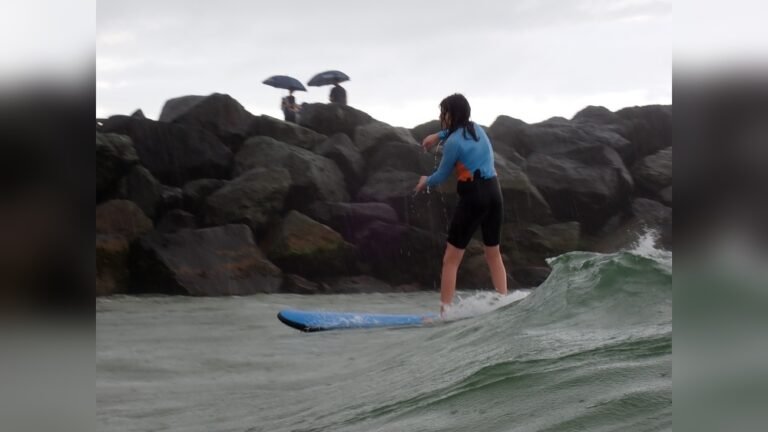
Can You Surf In The Rain?
Rainy days often make people stay indoors, but for surfers, the question is different: can you surf in the rain? The simple answer is yes, you can. But the real story is more complex. Surfing in the rain comes with unique challenges, risks, and even some surprising benefits. Understanding all aspects helps you make safer, smarter choices before paddling out when the sky turns grey.
Why Rain Attracts Surfers
Many surfers love rainy sessions because the ocean feels quieter. Fewer people are on the beach. The wind and weather can bring bigger waves. Rain itself does not stop people from surfing. In fact, rain and storms often create the swells that surfers wait for. These bigger swells can lead to more exciting and challenging rides.
However, it’s not just the waves that change. The entire environment is different in the rain, from the water quality to the visibility. For new surfers, this can be both exciting and risky.
What Changes When Surfing In The Rain
Several things are different when you surf in rainy weather. Understanding these changes is key to having a safe and enjoyable session.
Water Quality
One of the biggest differences is water pollution. When it rains, water runs off the land into the sea. This runoff can carry:
- Dirt and mud
- Trash and plastic
- Oil from roads
- Animal waste
- Chemicals and fertilizers
All these things make the water less clean, and sometimes even dangerous. The first 24 to 72 hours after heavy rain are the riskiest for water quality. Many health experts recommend waiting at least 48 hours after heavy rain before entering the ocean near cities or busy areas.
Wave Conditions
Rain itself does not change the waves, but storms and wind often come with it. Wind can make the water choppy and harder to surf. On the other hand, offshore wind (blowing from land to sea) can make waves cleaner and more powerful. Sometimes, rain is a sign of a good swell, but every spot is different.
Visibility And Safety
Rain usually means less light. Clouds and falling rain reduce visibility. This can make it harder to see waves, other surfers, or even hazards like rocks. If you surf near a river mouth, runoff can make the water brown and muddy, making visibility even worse.
Crowd Levels
Most people avoid the beach when it’s raining, so you’ll often have more space in the water. For many surfers, this is a big plus. However, fewer people also means fewer eyes to help if something goes wrong.
Risks Of Surfing In The Rain
Surfing in the rain brings extra risks. These are real dangers you should always consider.
Increased Chance Of Infection
Water pollution is the number one risk. When you surf after rain, you are more likely to get:
- Ear infections
- Sinus infections
- Skin rashes
- Stomach problems (if you swallow water)
- Eye infections
One study in California found surfers had a twice higher risk of stomach illnesses if they surfed within 3 days after a rainstorm compared to dry days.
Hidden Hazards In Water
Rain washes debris into the ocean. This can include branches, plastic, glass, or sharp objects that you cannot see in muddy water. Hitting something under the surface can cause serious injury.
Lightning Danger
Many people worry about lightning. While it is rare, it is a real risk during thunderstorms. Water conducts electricity very well. If you see lightning or hear thunder, leave the water immediately. Lightning can strike miles from the storm.
Stronger Currents
Storms and heavy rain can create stronger currents and riptides. These are powerful flows of water that can pull you out to sea or make it hard to return to shore. Even experienced surfers can get caught.
Hypothermia
Rain often brings cooler air and wind. If you do not wear the right wetsuit, your body can lose heat quickly. Hypothermia is when your body temperature drops dangerously low, and it can happen even in mild climates if you are wet and windy.
Benefits Of Surfing In The Rain
Not everything about surfing in the rain is negative. There are some benefits that experienced surfers enjoy.
Fewer Crowds
You often have the waves to yourself. This can make your session more peaceful and fun. You do not have to compete for waves.
Unique Experience
Surfing in the rain feels different. The sound of rain hitting the water, the mist, and the moody sky can make for a memorable session.
Better Waves
Storms can create bigger, more powerful waves. For skilled surfers, this is a chance to catch rides that are not possible on sunny days.
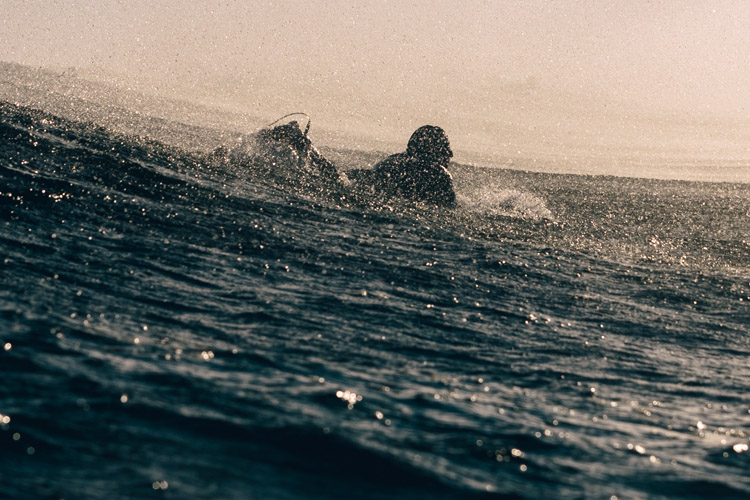
How To Surf Safely In The Rain
If you decide to surf when it’s raining, take extra steps to stay safe and healthy.
- Check the Water Quality: Look for local water quality reports. Many beaches have websites or signs with warnings after rain. Avoid surfing near river mouths or urban areas where pollution is worse.
- Wait After Heavy Rain: If there has been a big storm, wait at least 24–48 hours before surfing, especially in cities.
- Wear the Right Gear: Use a wetsuit to stay warm. Consider earplugs to prevent ear infections. Rinse off well after your session.
- Stay Visible: Surf with a friend if possible. Wear bright colors so you are easy to see in low light.
- Watch for Lightning: If you see or hear thunder, leave the water immediately and seek shelter.
- Know Your Limits: Rainy conditions can make waves and currents unpredictable. Only surf if you are comfortable and confident in the conditions.
Comparing Surfing In Rain Vs. Dry Weather
It helps to see how rainy and dry sessions compare. Here is a simple overview:
| Aspect | Surfing in Rain | Surfing in Dry Weather |
|---|---|---|
| Water Quality | Often poor, risk of pollution | Usually clean, safer for health |
| Crowds | Fewer people | More crowded |
| Wave Size | Often larger, less predictable | More consistent |
| Visibility | Low, can be dangerous | Good |
| Lightning Risk | Possible | Very rare |

Common Mistakes When Surfing In The Rain
Many beginners make mistakes when surfing in rainy weather. These errors can be costly.
Surfing Immediately After Rain
The biggest mistake is paddling out right after a heavy rain. Remember, pollution is highest right after rainfall, especially near cities and river mouths. Waiting a day or two makes a big difference.
Not Checking Local Warnings
Some ignore signs or local advice about water quality. Many beaches post alerts about dangerous conditions or high bacteria levels. Always check before you go.
Surfing Alone
Because the beach is empty, some surfers go out alone in poor conditions. This is dangerous if you get into trouble or are injured. Always surf with someone or let people know where you are.
Wearing The Wrong Gear
Cold, wind, and rain can lead to hypothermia. Beginners sometimes skip wetsuits or forget to bring extra layers. Always prepare for bad weather.
Non-obvious Insights For Rainy Surf Days
There are some things even experienced surfers sometimes overlook:
- Sunscreen Still Matters: Even on rainy days, UV rays can pass through clouds and reflect off the water. You can get sunburned even if the sky is grey.
- Leash Safety: Rain and wind can make it harder to spot your board if you lose it. Double-check your leash and make sure it’s in good shape.
- Ear Health: After rainy sessions, rinse your ears with fresh water. This helps prevent infections from bacteria and pollution.
Choosing A Spot For Rainy Surfing
Some beaches are safer than others in the rain. Here is a quick comparison:
| Spot Type | Safety After Rain | Why |
|---|---|---|
| Urban Beach | Poor | High pollution runoff, more trash |
| Remote Beach | Better | Less runoff, fewer pollutants |
| River Mouth | Poor | Collects all upstream pollution |
| Rocky Reef | Variable | Depends on location, but often less runoff |
For the cleanest water, avoid city beaches and river mouths right after rain. Remote beaches and open ocean spots are usually safer.
Real-world Example: California’s Rainy Surf
In California, many surfers chase winter swells, which often come with rain. After big storms, local authorities sometimes close beaches because of high bacteria levels. In 2017, there were over 2,600 beach closure days in California because of polluted water after rain. Yet, many skilled surfers still go out, choosing remote points or waiting a day or two after the storm passes.
This example shows that the decision is personal. Some are willing to take the risk for a special session, but they know how to reduce the dangers.

Final Thoughts: Is Surfing In The Rain Worth It?
Surfing in the rain can be fun, peaceful, and even give you the best waves of your life. But it is not without risk. The main dangers are polluted water, hidden debris, and changing weather. If you decide to go, always check conditions, prepare the right gear, and consider waiting after heavy storms.
For some surfers, the reward is worth it. For others, it is better to wait for the sun.
Whether you paddle out or not, knowing the real risks and rewards helps you surf smarter—not just when it’s sunny, but every day.
Frequently Asked Questions
Can I Get Sick From Surfing In The Rain?
Yes, there is a higher risk of getting sick after rain because the water often contains more bacteria and pollution. Ear, skin, and stomach infections are most common. Avoid surfing near river mouths or city beaches right after rain.
Is It Dangerous To Surf During A Thunderstorm?
Yes, surfing during a thunderstorm is very dangerous because lightning can strike the ocean, sometimes miles from the storm. If you see lightning or hear thunder, leave the water immediately.
Does Rain Affect The Size Of The Waves?
Rain by itself does not change wave size, but storms that come with rain can create bigger and more powerful waves. Always check local surf reports for conditions.
How Long Should I Wait To Surf After It Rains?
Most experts recommend waiting at least 24–48 hours after heavy rain, especially near urban beaches. This allows time for pollution levels to drop.
Where Can I Find Water Quality Reports For My Beach?
Many local governments and surf organizations publish online water quality reports. For example, you can check real-time conditions at California Beach Watch if you surf in California.
Knowing the facts helps you make better decisions next time you see rain clouds over your favorite break. Stay safe, stay smart, and enjoy your session—rain or shine.
