
Many paddle board owners remember their first time inflating a board. You roll it out, connect the pump, and then—after several minutes of hard work—realize it’s not as easy as it looks. If you’re wondering, “Can I use an electric pump for a paddle board?
” you’re not alone. With inflatable paddle boards becoming more popular, people want simpler, faster ways to get on the water. But does an electric pump really make sense? Is it safe? Will it work with your board? This article answers all these questions, plus some that beginners often forget to ask.
Understanding Paddle Board Inflation
Before jumping into electric pumps, it’s good to know why proper inflation matters. Inflatable paddle boards (also called iSUPs) need to be filled to a certain air pressure—usually between 12 and 15 PSI (pounds per square inch). Too little air, and your board will bend and feel unstable. Too much, and you might damage the seams.
Most boards come with a manual pump. These work, but can be tiring, especially for people who want to save energy for paddling. That’s why many look at electric pumps as a solution.
What Is An Electric Pump For Paddle Boards?
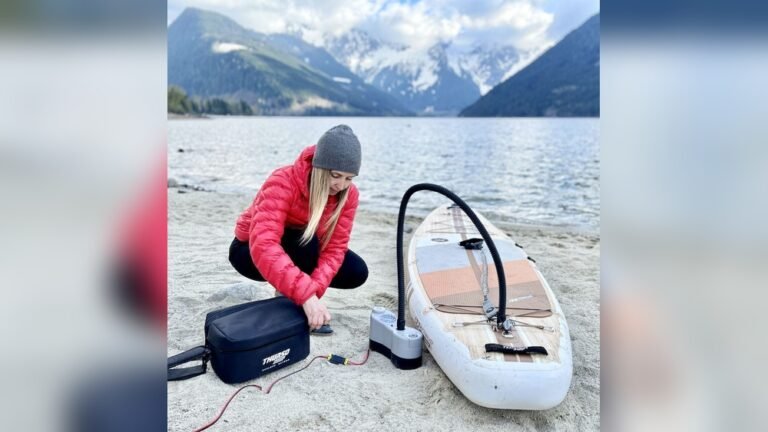
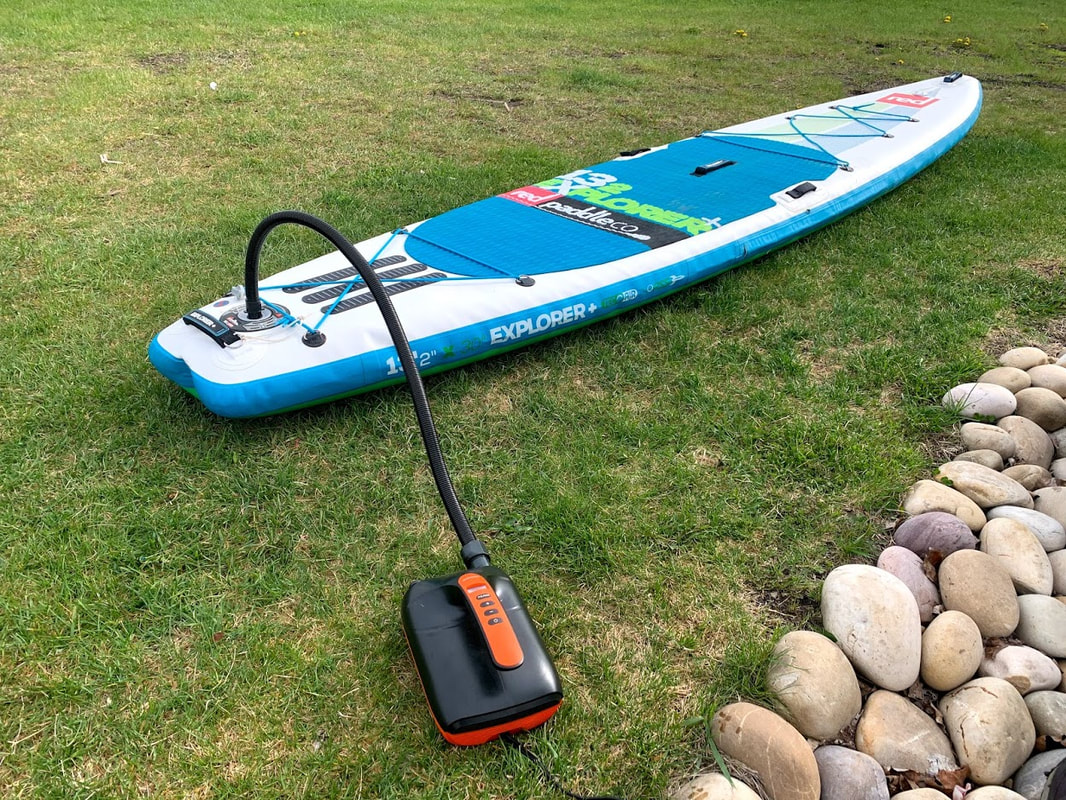
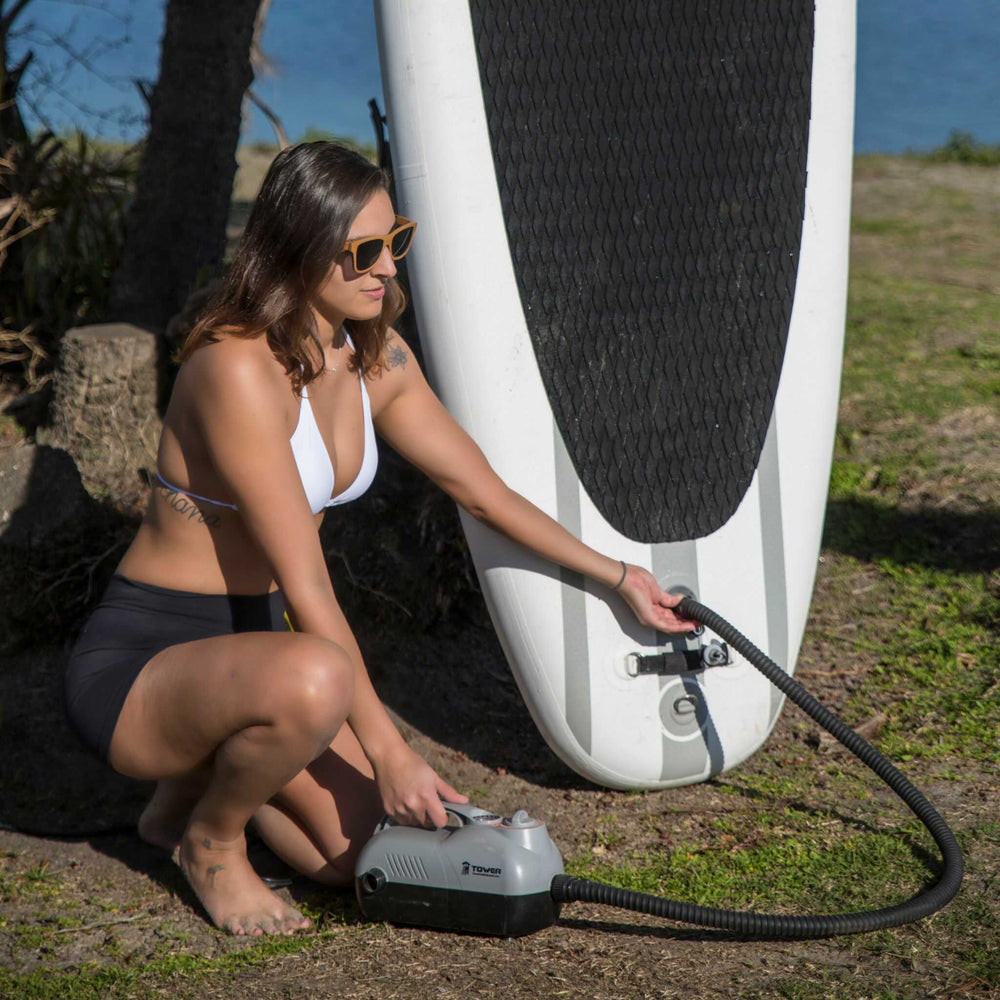
An electric pump is a small device, powered by your car or battery, that inflates your paddle board without manual effort. These pumps connect to the same valve as your manual pump, but they do the hard work for you.
There are two main types:
- Single-stage pumps: Inflate at one speed and pressure.
- Two-stage pumps: Start with high volume, low pressure (faster fill), then switch to low volume, high pressure (for final PSI).
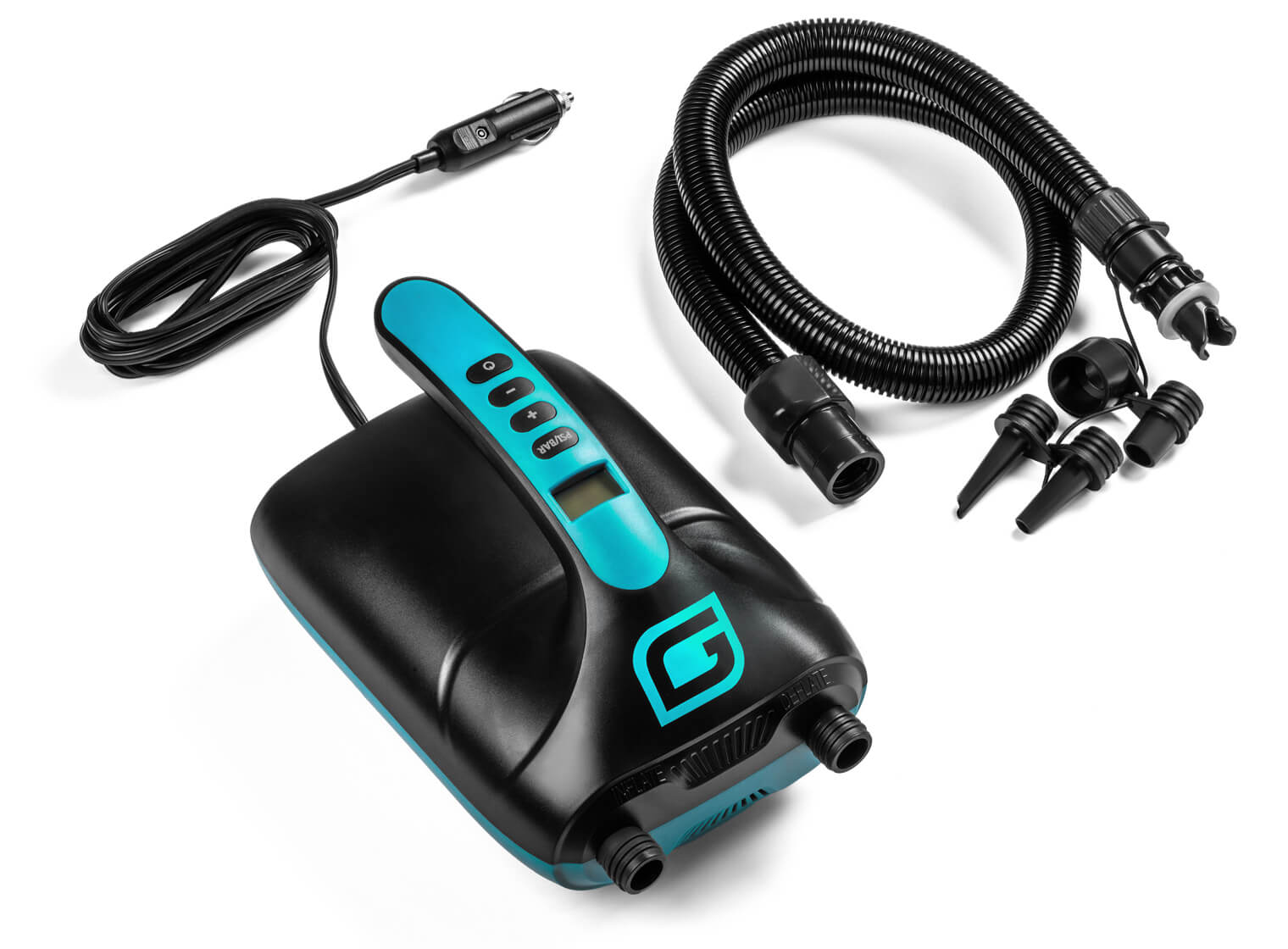
Both types are designed to reach the pressure needed for paddle boards. Some even have automatic shut-off when the right PSI is reached.
Can You Use An Electric Pump For Your Paddle Board?
In most cases, yes, you can use an electric pump for a paddle board. In fact, many brands now sell electric pumps made specifically for iSUPs. However, not every electric pump is suitable. Here’s what you must check:
- Valve Compatibility: Most paddle boards use the Halkey-Roberts valve. Your pump must have an adapter that fits this valve. Using the wrong adapter can damage the valve or cause leaks.
- Pressure Range: The pump must reach at least 12-15 PSI. Some general air mattress pumps only go up to 2 PSI, which isn’t enough for paddle boards.
- Power Source: Many electric pumps use a 12V car outlet (cigarette lighter), but some are battery powered. Make sure your pump suits where you’ll use it.
- Automatic Shut-Off: This feature prevents over-inflation. Without it, you risk damaging your board.
Advantages Of Using An Electric Pump
Switching to an electric pump offers several clear benefits:
- Saves time and energy: You can set up your board in 5-10 minutes, hands-free.
- Consistent inflation: Electric pumps reach the right PSI every time.
- Easy for all ages: Great for kids, older adults, or anyone who finds manual pumping hard.
One less obvious benefit: warming up. Manual pumping is tiring, but it only works your arms and chest. If you save that energy, your actual paddling session will feel better.
Possible Downsides And Risks
Though electric pumps are handy, they aren’t perfect. Here are some potential drawbacks:
- Noise: Electric pumps are much louder than manual ones.
- Dependence on power: If you’re at a remote lake with no car, your pump might not work.
- Overheating: Cheap electric pumps can overheat if you inflate several boards in a row.
- Extra gear: You need to remember to bring the pump, cables, and sometimes an extension cord.
A mistake many beginners make is using a cheap air mattress pump. These can’t reach the right PSI and may leave your board too soft. Always check the specs.
How To Choose The Right Electric Pump
Not all electric pumps are equal. Here’s what really matters when choosing one for your paddle board:
- Pressure Capability: Look for a pump that can reach at least 15 PSI.
- Reliable Power Source: If you paddle far from your car, consider a battery-powered model.
- Valve Adapter Set: The pump should come with a Halkey-Roberts adapter.
- Automatic Shut-Off: This is essential for safety and convenience.
- Cooling System: Pumps with built-in cooling can handle multiple boards without overheating.
- Size and Portability: A compact pump is easier to pack and carry.
- Reputation: Stick to brands known for paddle board accessories.
Comparing Electric Pump Features
Here’s how typical features compare in popular electric pumps:
| Feature | Basic Pump | Advanced Pump |
|---|---|---|
| Max PSI | 12 PSI | 20 PSI |
| Power Source | 12V Car Plug | 12V Car & Battery |
| Automatic Shut-Off | No | Yes |
| Inflation Time | 10-15 min | 7-10 min |
| Noise Level | High | Medium |
Step-by-step: How To Use An Electric Pump Safely
If you’ve bought a compatible pump, follow these steps for safe and effective inflation:
- Unroll your paddle board on flat, clean ground.
- Connect the hose to the pump and the correct adapter to your board’s valve.
- Set your desired PSI on the pump if it has a digital display or dial.
- Connect to power (car outlet or battery).
- Turn on the pump. Stay nearby to monitor for any problems.
- Wait for automatic shut-off (or keep an eye on the pressure gauge).
- Remove the hose quickly to avoid losing air.
- Secure the valve cap tightly.
A tip: If you inflate multiple boards, let the pump rest for a few minutes between uses. This prevents overheating.
Common Mistakes To Avoid
Beginners often make these errors:
- Using a low-pressure pump: Air mattress pumps will not work. Your board will sag.
- Skipping the valve check: Make sure the valve is in the “inflation” position before starting.
- Ignoring rest times: Some electric pumps overheat if used too long.
- Leaving the pump in direct sun: Heat can damage the pump’s motor or electronics.
- Not watching the pressure: Even with auto shut-off, keep an eye on the gauge.
Manual Vs. Electric Pump: Which Is Better?
There’s no single right answer, but here’s a quick comparison:
| Factor | Manual Pump | Electric Pump |
|---|---|---|
| Setup Time | 10-20 min | 5-10 min |
| Effort | High | Low |
| Portability | Easy | Usually easy |
| Noise | Silent | Loud |
| Cost | Included | Extra $60-150 |
| Reliability | Always works | Needs power source |
Real-world Example: How Much Time And Effort Does An Electric Pump Save?
Let’s say you’re going for a paddle with friends. You have two boards to inflate.
- With a manual pump: One person spends 15 minutes on the first board, then rests while the next person takes another 15 minutes. Total: 30 minutes and sore arms.
- With an electric pump: Attach, set PSI, and wait. Both boards are ready in 20 minutes, and you’re not tired.
This difference is even bigger if you paddle often, have kids, or want to maximize your time on the water.
Extra Insights Most Beginners Miss
- Pressure drops in cold water: If you inflate your board on a hot day, but the water is much colder, the air inside can contract. To avoid under-inflation, inflate to the higher end of your board’s recommended PSI range.
- Electric pumps can deflate, too: Many electric pumps have a deflate mode. This helps pack your board tighter and faster, especially useful for travel.
When Not To Use An Electric Pump
Electric pumps are not always the answer. Avoid them if:
- You’re in a location with no power and didn’t bring a battery pump.
- Your board has a unique valve type that’s not supported.
- The manufacturer specifically warns against electric pumps (rare, but always check your manual).
How To Care For Your Electric Pump
Good pumps last for years if you maintain them:
- Keep them dry: Never use a wet pump or store it in damp areas.
- Clean sand/dirt: Grit can damage the motor or valve connection.
- Avoid overheating: Let the pump rest after inflating one or two boards.
- Check cables and hoses: Look for cracks or wear before each use.
Where To Learn More
For more technical details on paddle boards and inflation safety, you can visit the official Wikipedia page on standup paddleboarding.
Frequently Asked Questions
Can I Use Any Electric Pump For My Paddle Board?
No. Only pumps that reach at least 12-15 PSI and have the correct valve adapter are safe. Air mattress or pool toy pumps do not work for paddle boards.
Is It Safe To Leave The Electric Pump Unattended?
No. You should stay close while inflating your board. Even with automatic shut-off, problems like leaks or overheating can happen.
How Long Does It Take To Inflate A Paddle Board With An Electric Pump?
Most electric pumps take 5 to 10 minutes for a single board, depending on pump power and board size.
Will Using An Electric Pump Damage My Paddle Board?
Not if you use a compatible pump and do not over-inflate. Always follow your board’s PSI recommendations and use a pump with automatic shut-off.
Do Electric Pumps Work For Deflating Paddle Boards?
Yes, many electric pumps have a deflate setting. This helps remove air quickly and makes packing easier.
Inflating your paddle board should be simple, safe, and not steal your energy for the water. The right electric pump can make your paddle trips faster and more enjoyable. Just remember to choose carefully, follow the right steps, and keep your pump in good shape.
That way, you’ll spend less time setting up and more time paddling.
