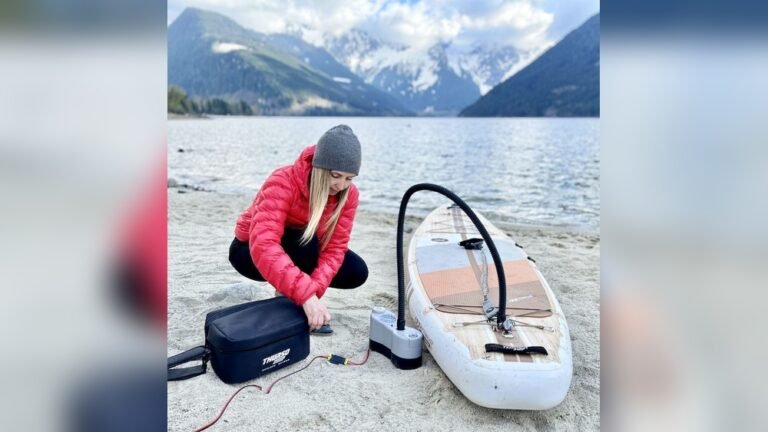
Many paddle boarders get excited about their next trip to the water, only to realize they’ve forgotten the most important tool: the pump. It’s a frustrating moment. You might look at your flat paddle board and wonder, “Can I inflate my paddle board without a pump?” The answer is more complex than a simple yes or no. While a traditional paddle board pump is designed for this specific job, there are other ways to get your board ready. However, each method comes with unique challenges, limits, and risks. This guide will explain what’s possible, what’s practical, and what you should avoid. If you’re stuck without a pump, or just want to be prepared, read on to discover all your options and some vital tips that many beginners miss.
How Paddle Board Inflation Works
To understand your options, it’s important to know how inflatable paddle boards are built. Most inflatable boards use a material called drop-stitch PVC, which gives the board its strength and allows it to hold high pressure. The recommended pressure for most SUPs (stand-up paddle boards) is between 12 to 18 PSI (pounds per square inch). This is much higher than inflating a pool toy or air mattress, which often only need 1 to 3 PSI.
A standard SUP pump is designed to reach these high pressures efficiently. Air mattresses, bicycle pumps, and even your breath cannot reach this level of pressure easily or safely. That’s why manufacturers always recommend a proper SUP pump.
Alternative Methods To Inflate A Paddle Board Without A Pump
If you don’t have a SUP pump, you might be tempted to get creative. Let’s look at what really works, what doesn’t, and what to watch out for.
1. Using An Air Compressor
An air compressor is the most powerful alternative. Many garages, workshops, and even gas stations have them. However, there are key points to remember:
- Correct Adapter: You need an adapter that fits the SUP valve. Most air compressors use a different fitting.
- Pressure Control: Air compressors can easily over-inflate and damage your board if you’re not careful. Always monitor the PSI as you fill.
- Speed: Air compressors fill much faster than hand pumps, but this speed can lead to mistakes.
Using an air compressor can inflate your board, but you risk over-inflation, which can burst the seams or even cause injuries if the board explodes.
2. Manual Alternatives: Bicycle Or Ball Pumps
A bicycle pump or ball pump can technically move air into your paddle board. However, there are important limitations:
- Pressure Limit: Most bike pumps only reach 8-10 PSI, much lower than the 12-18 PSI needed for a SUP.
- Effort: It can take hundreds of pumps and a lot of energy to reach even half the recommended pressure.
- Adapters: SUP valves are different from bike tire valves, so you’ll need a valve adapter.
While it’s possible to get your board semi-firm with a bike pump, the board will likely feel soft and unstable on the water. You won’t get the same performance or safety.
3. Electric Pumps (non-sup Specific)
Some people try using electric pumps meant for air mattresses or pool toys. These can quickly fill your board with air, but:
- Low Pressure: These pumps rarely reach above 2-3 PSI.
- Soft Board: Your board will be under-inflated, making it wobbly and hard to use.
- Overheating: Running these pumps for too long can damage them.
You might manage a fun session on calm water, but this isn’t safe for long paddles or rough conditions.
4. Inflating By Mouth
It might sound silly, but some people have tried to inflate a paddle board by blowing into it. This is not practical. The volume and pressure needed are simply too high. You would likely pass out from exhaustion before you even fill a quarter of the board.
5. Co2 Canisters
There are portable CO2 inflation kits designed for emergency inflation. These are often used by cyclists for tires. Theoretically, you could use multiple canisters and the right adapter to put some air in your board, but:
- Cost: You would need several canisters just to get the board semi-inflated.
- Pressure Limits: CO2 canisters are not designed for this use, and the pressure may be too high or too low.
- Not Sustainable: This is not a reliable solution and should only be considered in an emergency.
6. Using A Vacuum Cleaner (reverse Mode)
Some vacuum cleaners can blow air if you reverse the hose. This sounds clever, but it has big limitations:
- Low Pressure: Most vacuum cleaners only create a small amount of pressure.
- Adapter Issues: It’s hard to get a good seal with a SUP valve.
- Noise and Power: Not practical at the beach or lake.
You might get some air in, but the board will stay soft and unstable.

Comparison: Pump Alternatives Vs Standard Sup Pump
To help you understand the real differences, here’s a comparison of common inflation methods.
| Method | Max PSI | Time to Inflate | Board Usable? |
|---|---|---|---|
| Standard SUP Pump | 15-20 | 7-10 min | Yes |
| Air Compressor | 20+ | 2-3 min | Yes (risk of overfill) |
| Bicycle Pump | 8-10 | 20+ min | Partly (soft board) |
| Electric Air Mattress Pump | 2-3 | 5-7 min | No |
| CO2 Canister | Varies | Quick | No (emergency only) |
| Vacuum Cleaner | 1-3 | 10-15 min | No |
As you can see, only the standard SUP pump and a carefully controlled air compressor can inflate your board properly.
Dangers And Risks Of Improvised Inflation
Trying to inflate your paddle board without a proper pump can be risky. Here’s what to watch out for:
- Over-inflation: Especially with air compressors, it’s easy to burst your board.
- Under-inflation: Most alternatives leave the board too soft, which can cause poor balance, increased drag, and even injuries if the board folds.
- Valve Damage: Forcing the wrong adapter or tool can damage the valve, causing leaks.
- Personal Injury: Handling high-pressure air can be dangerous if you’re not careful.
Many beginners don’t realize that an under-inflated board is not just slow – it’s also much more likely to fold, buckle, or throw you off balance. This can turn a fun day into a frustrating or even dangerous experience.
What About Non-inflatable Paddle Boards?
If you’re worried about pumping, you might wonder if a hard paddle board (rigid or epoxy board) is a better choice. These boards don’t need inflation at all. However, they are much heavier, harder to transport, and more expensive. Many paddlers still prefer inflatables for the convenience, even if it means dealing with a pump.
Practical Tips For Paddle Board Inflation
A little preparation can save you a lot of trouble. Here are some key tips:
- Always Pack Your Pump: Double-check before you leave home.
- Get a Spare Pump Adapter: These are cheap and small. Keep one in your gear bag.
- Practice at Home: Try inflating your board with your pump, so you know how long it takes.
- Check for Leaks: Before every session, inspect the valve and seams.
- Monitor PSI: Use a pressure gauge to avoid overfilling or underfilling.
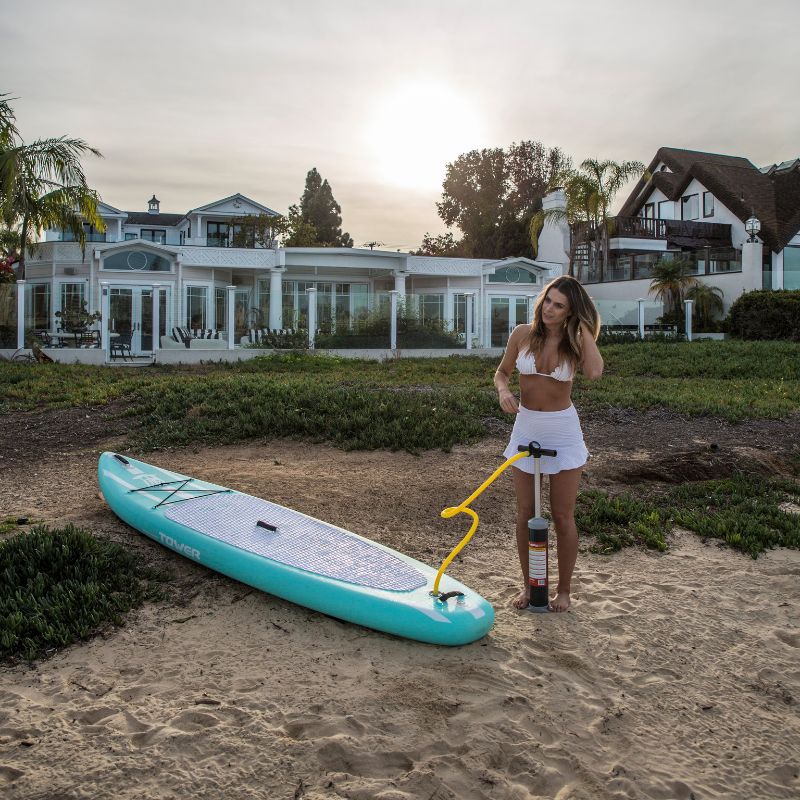
- Invest in a Dual-Action Pump: These pumps work on both up and down strokes, saving time and effort.
- Consider an Electric Pump: These are made for SUPs and can plug into your car.
Many people overlook the importance of valve care. Always clear sand, dirt, or salt before attaching any pump or adapter. A damaged valve can ruin your whole day.

Real-world Example: Beach Day Without A Pump
Imagine you arrive at the beach, realize you forgot your SUP pump, and there’s no store nearby. You try using a friend’s bike pump, but after 30 minutes, your board is still too soft to ride. You spot a gas station with an air compressor.
Using a bottle cap and tape, you manage to fit the hose to your valve. The board inflates quickly, but you’re nervous about bursting it. By watching the gauge closely and stopping at 15 PSI, you get your board ready – but you wasted an hour and took a risk.
This story is more common than you think. Most paddle boarders face a similar situation at least once. That’s why it pays to be prepared.
The Science: Why Proper Psi Matters
A paddle board at the right pressure performs much better. When properly inflated:
- The board sits higher on the water, reducing drag.
- The surface is rigid, giving you better balance.
- The board is less likely to fold or “taco” in waves.
Here’s a simple breakdown of how board firmness changes with PSI:
| PSI Level | Board Firmness | Performance |
|---|---|---|
| 2-5 | Very Soft | Unusable, folds easily |
| 6-10 | Semi-Firm | Possible to stand, but wobbly |
| 11-15 | Firm | Good performance |
| 16-18 | Very Firm | Optimal performance |
Many first-time paddlers don’t realize that even a few PSI below the recommended range can make the board much harder to use.
When You Might Get Away Without A Pump
If you just want to float in shallow, calm water and don’t mind a wobbly board, you might manage with a soft inflation. For example, kids playing at the beach may not care about firmness. But for paddling, touring, or surfing, you need a fully inflated board.
Are There Any Pump-free Sup Designs?
Some companies have experimented with self-inflating boards that use compressed air cartridges or built-in pumps. However, these are rare, expensive, and not widely available. For most people, a pump is still essential.
What To Do If You Forget Your Pump
- Ask Other Paddlers: Someone nearby may have a spare.
- Check Local Rentals: Many shops will loan or rent pumps.
- Look for a Compressor: As a last resort, a gas station compressor can work with caution.
It’s smart to keep a backup plan in mind, especially if you paddle far from home.
Frequently Asked Questions
Can I Use A Car Tire Pump To Inflate My Paddle Board?
You can use a car tire pump if you have the right adapter, but most tire pumps aren’t designed for the high volume and pressure of a paddle board. They can overheat or break, and inflating the board will take a long time.
How Do I Know If My Paddle Board Is Fully Inflated?
Check the PSI gauge on your pump. Most boards list the recommended PSI near the valve. The board should feel hard to the touch with little to no flex when you press on it.
Is It Safe To Use A Gas Station Air Compressor?
It’s possible, but you must use the correct adapter and watch the pressure closely. Gas station compressors are very powerful and can over-inflate or damage your board in seconds. Always stop before reaching the maximum PSI.
What Happens If I Paddle On An Under-inflated Board?
An under-inflated SUP will be floppy, slow, and unstable. You’ll find it harder to balance, and the board may fold or buckle in the water, making it unsafe.
Are There Any Sups That Don’t Need A Pump?
Hard paddle boards (fiberglass, epoxy, or plastic) don’t need to be inflated at all. However, they are harder to store and transport. Self-inflating boards are rare and not common for most users. For most inflatable SUPs, a pump is required.
Paddle boarding should be fun and stress-free. With the right preparation and a good pump, you’ll avoid most common problems. If you ever forget your pump, remember: only a few alternatives will work, and each comes with risks. For best results, always use the proper equipment and enjoy your time on the water. For more information on paddle board safety and equipment, visit the Standup Paddleboarding Wikipedia page.
