Every paddle boarder knows the feeling: you arrive at the water, the sun is shining, and you can’t wait to start paddling. But first, you face the task of inflating your stand-up paddle board (SUP). This step can be tiring and time-consuming, especially if your pump isn’t efficient. That’s why many people ask, are dual-action paddle board pumps faster than regular pumps? If you want to spend less time pumping and more time paddling, understanding how these pumps work and what really makes a difference is essential.
Let’s dive into the world of SUP pumps, compare dual-action and single-action models, and find out if a dual-action pump will truly get you on the water faster.
Understanding Paddle Board Pumps
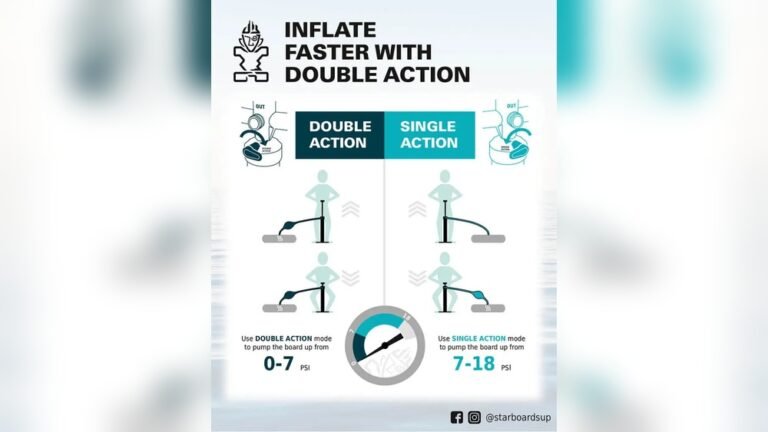
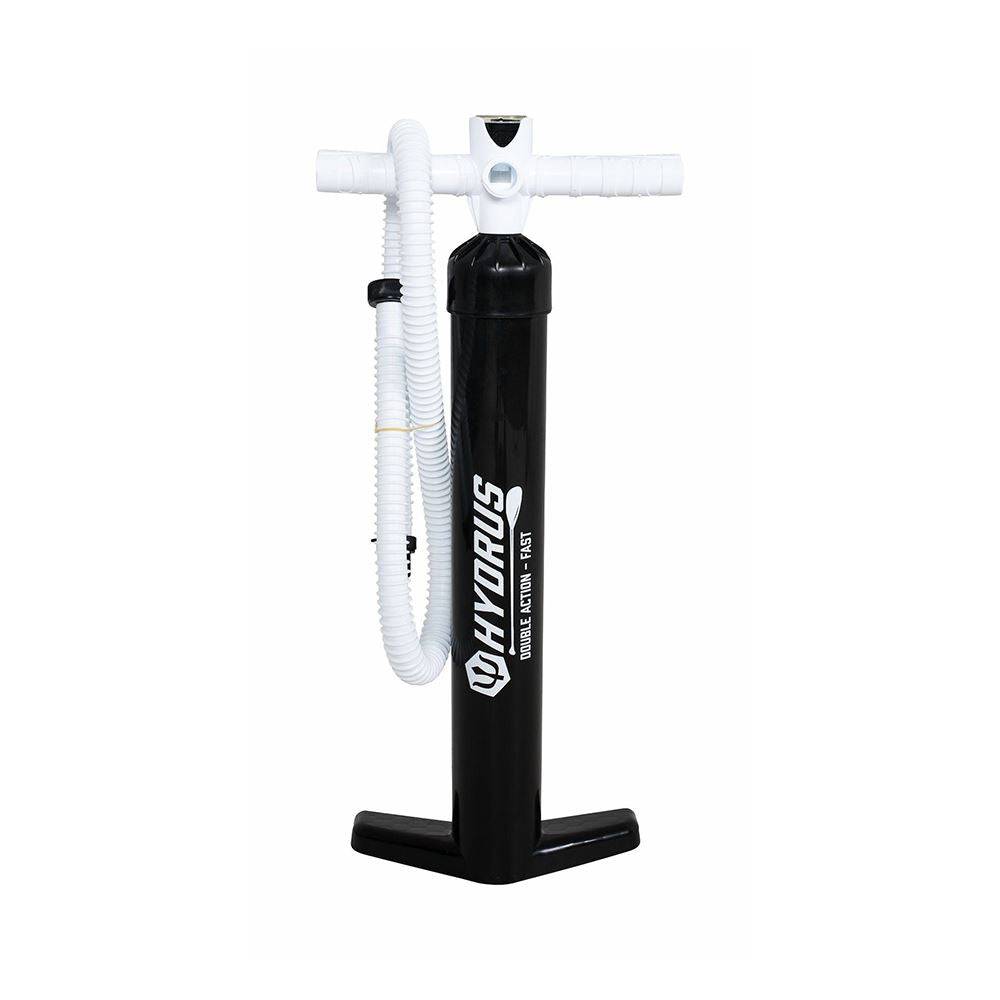
Before comparing speed, it’s important to know what makes a paddle board pump dual-action or single-action. A single-action pump pushes air into the board only on the downward stroke, while a dual-action pump pushes air in on both the up and down strokes. This means, in theory, that a dual-action pump delivers air twice as fast—one of the main reasons for its popularity.
However, speed isn’t just about air movement. The total time it takes to inflate your board depends on the pump’s design, your technique, and even your own strength. So, is a dual-action pump always the fastest? Let’s see.
How Dual-action Pumps Work
Dual-action pumps use a simple but clever system. They have a valve that lets them switch between modes:
- Dual-action mode: Air moves into the board both when you push down and pull up.
- Single-action mode: Air enters the board only on the downstroke.
Most dual-action pumps allow you to switch to single-action mode when the pressure gets high (usually above 7-8 PSI). This is because pushing air at high pressure can be tough, and single-action mode makes it easier to finish the job.
Comparing Speed: Dual-action Vs. Single-action
To answer the main question—are dual-action paddle board pumps faster? —let’s look at what really happens during inflation.
Air Volume Per Stroke
A dual-action pump moves air both ways, so in the early stages (when the board is soft), it fills up much faster. For example:
- Dual-action pump: 2 liters per cycle (up + down)
- Single-action pump: 1 liter per cycle (down only)
So, with each motion, the dual-action pump delivers about twice as much air.
Real-world Inflation Times
In practice, a dual-action pump can cut your inflation time by 30-50% for a standard SUP (10-12 feet). Typical numbers are:
- Single-action pump: 8–12 minutes to inflate to 15 PSI
- Dual-action pump: 5–8 minutes to inflate to 15 PSI
Of course, actual times depend on your fitness, pump quality, and the size of your board.
Example: Inflating A 10’6” Sup
Let’s compare how long it takes to inflate a popular all-around 10’6” board (about 250 liters volume):
| Pump Type | Inflation Time | Pump Strokes |
|---|---|---|
| Single-Action | 10 minutes | 500–600 |
| Dual-Action | 6 minutes | 350–400 |
This shows a clear advantage for dual-action pumps. You spend less time and do fewer strokes, which also means less fatigue.
Not Just Faster: Other Advantages Of Dual-action Pumps
Speed is important, but it’s not the only benefit. Here are some other reasons people prefer dual-action pumps:
- Energy-saving: Less time and fewer strokes mean less effort.
- Easier for beginners: Less tiring, especially for those not used to inflating big boards.
- Switchable modes: When pumping gets hard, switch to single-action and finish without struggle.
- Compact design: Most dual-action pumps are not much bigger than single-action ones.
One insight beginners miss is that switching modes is not automatic. You need to open or close a valve or move a plug. Many new users forget this, making the last part of pumping much harder than necessary.
When Dual-action Isn’t Faster
Despite the clear advantages, dual-action pumps are not always the fastest in every situation. Here’s why:
- At high pressure, pushing air on both up and down strokes gets tough. Your arms may tire quickly, and it can even slow you down if you don’t switch to single-action at the right time.
- Poor technique can waste the speed advantage. If you make short, weak strokes, you won’t move much air.
- Low-quality pumps can leak air or have poor seals, making them less efficient than a well-made single-action pump.
So, while dual-action pumps are designed for speed, using them correctly is key. Missing this detail can make you think the pump is “slow,” when actually, it’s user error.
Key Features That Influence Pump Speed
Let’s look at what really matters when choosing a pump for speed:
1. Pump Volume (liters Per Stroke)
A bigger cylinder means more air per stroke. But, too big, and it becomes hard to pump at high pressures.
2. Pressure Rating
Most SUPs need 12–18 PSI. A good pump should handle at least 15 PSI without breaking a sweat.
3. Build Quality
Sturdy handles, smooth action, and good seals prevent air leaks and wasted effort.
4. Mode Switching
Easy-to-use valves for switching between dual and single action make a big difference. Some pumps have a simple plug; others use a twist dial.
5. Hose Fit
A tight, secure hose prevents leaks. Beginners often forget to check this, which can slow down inflation or lose air.

Dual-action Vs. Electric Pumps
Some people prefer electric SUP pumps for maximum convenience. But are they faster than dual-action manual pumps?
| Pump Type | Inflation Time | Effort |
|---|---|---|
| Dual-Action Manual | 6–8 minutes | Medium |
| Electric Pump | 10–12 minutes | Low |
You might be surprised—electric pumps are often slower than a strong paddler using a dual-action pump. But they save energy, which is valuable if you have multiple boards or want to avoid a workout before paddling.
Practical Tips For Faster Inflation
To get the most speed from your dual-action pump, use these tips:
- Start in dual-action mode for fast, easy air movement.
- Switch to single-action when pumping gets hard (usually above 7–8 PSI).
- Use full strokes—push and pull the handle all the way for maximum air per cycle.
- Check the hose connection before you start. A loose hose leaks air and wastes effort.
- Keep a steady rhythm. Fast, jerky strokes are less efficient than smooth, steady ones.
A common mistake is to pump quickly with short strokes, thinking this will be faster. In fact, slow, full strokes fill your board quicker with less effort.
Why Pumping Technique Matters
Many people blame the pump if inflation is slow, but often it’s the technique. Here are two insights most beginners miss:
- Body position matters. Stand with feet shoulder-width apart, use your body weight, and keep your back straight.
- Don’t rush the last PSI. The final 2–3 PSI always feel harder. Slow down, switch to single-action, and finish strong rather than tiring out.
These small adjustments can save time and make pumping less of a chore.
Should You Upgrade To A Dual-action Pump?
If your SUP came with a basic single-action pump, you may wonder if a dual-action model is worth the investment. Here are some signs you should consider upgrading:
- You want to spend less time inflating and more time paddling.
- You struggle to reach the recommended PSI with your current pump.
- You often paddle with friends or family and inflate multiple boards.
- You get tired or sore arms from pumping.
Dual-action pumps are not expensive compared to the price of a quality board. Many users say it’s one of the best upgrades for their paddling experience.
Common Buyer Mistakes
When shopping for a dual-action pump, people often make these mistakes:
- Choosing the biggest pump: Large volume pumps are fast at low pressure but can be impossible to use above 10 PSI.
- Ignoring build quality: Cheap pumps often leak, break, or have poor seals.
- Forgetting compatibility: Not all hoses fit all valves—check before buying.
- Not reading the pressure gauge: Some pumps have inaccurate gauges, so you may over- or under-inflate your board.
- Assuming electric is always better: Electric pumps are convenient but not always faster, and they need a power source.
If you avoid these mistakes, you’ll get the most from your dual-action pump.
Real-world Experiences
Many experienced paddlers report saving several minutes per session using a dual-action pump. For example, one user said switching from a single-action to a dual-action pump cut their inflation time from 12 minutes to 7 minutes for a 12-foot touring board.
Another found that inflating two boards back-to-back was much less tiring with a dual-action model.
Still, some people prefer electric pumps, especially when inflating multiple boards for a group. The choice depends on your needs, but for most solo paddlers, a dual-action manual pump offers the best mix of speed, portability, and price.
Data: Dual-action Pump Inflation By Board Size
Here’s a quick look at how inflation time changes with board size for a typical dual-action pump:
| Board Size | Volume (Liters) | Inflation Time (Minutes) |
|---|---|---|
| 10’ All-Around | 240 | 6 |
| 11’ Touring | 300 | 8 |
| 12’6” Race | 330 | 10 |
As the board gets larger, time increases, but the dual-action system still saves several minutes compared to single-action pumps.
Final Thoughts
So, are dual-action paddle board pumps faster? In nearly every real-world test, the answer is yes. They move more air per stroke, fill your board quicker, and make pumping less tiring. The key is to use the right technique and switch modes at the right time. While not perfect for every situation, a dual-action pump is one of the best upgrades for any SUP owner who wants to maximize water time.
If you want even more convenience, electric pumps are a good option, but for pure speed and portability, dual-action remains king. For more on paddle board accessories and pump comparisons, you can check trusted sources like Wikipedia.
Frequently Asked Questions
What Is A Dual-action Paddle Board Pump?
A dual-action pump is a hand pump that pushes air into your paddle board on both the up and down strokes, making inflation faster and more efficient compared to single-action pumps.
Can A Dual-action Pump Over-inflate My Sup?
Most dual-action pumps come with a pressure gauge. As long as you monitor the gauge and stop at the recommended PSI, you won’t over-inflate your board. Always check your board’s suggested PSI level.
Are Dual-action Pumps Harder To Use At High Pressure?
Yes, as the board fills and pressure rises, pumping in dual-action mode gets tougher. Most pumps let you switch to single-action mode for easier, more controlled inflation at high PSI.
Is A Dual-action Pump Suitable For All Paddle Boards?
Almost all inflatable SUPs can be inflated with a dual-action pump, as long as the hose fits the valve. Always check compatibility before buying a new pump.
Do Electric Pumps Inflate Paddle Boards Faster Than Dual-action Pumps?
Usually, dual-action hand pumps are faster than most electric pumps if you have good technique. Electric pumps, however, require less physical effort and are better for inflating several boards in a row.
