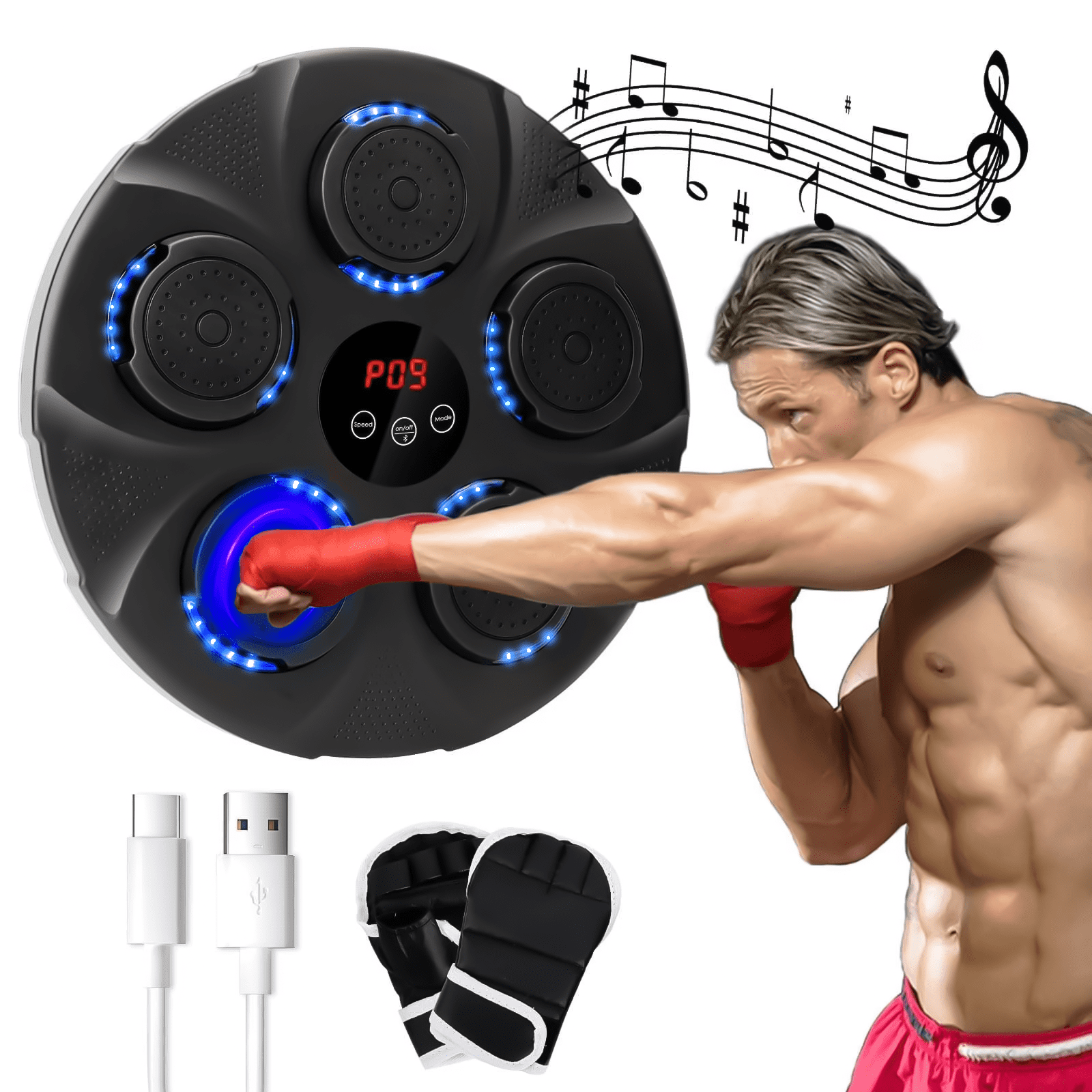
Many people enjoy playing music boxing machines in arcades, but few understand how these machines actually work. If you have ever wondered about the technology and logic behind these fun devices, you are in the right place. Music boxing machines mix rhythm, gaming, and physical activity.
Players hit pads or buttons in time with music and visuals. While it looks simple, the machine uses advanced systems to create an exciting experience. This article will break down the inner workings, features, and the science behind music boxing machines, so you can appreciate them even more next time you play.
Today's Exclusive Deals
Limited-time Exclusive Deals. Check current discount on Amazon.
Check Price on Amazon As an Amazon Associate I earn from qualifying purchases.What Is A Music Boxing Machine?
A music boxing machine is an arcade game that combines music, rhythm, and boxing. Players hit pads or buttons according to beats or visual cues on the screen. These machines are popular in Asia, especially China and Japan, but you can find them worldwide. They appeal to all ages and skill levels because they are easy to start but hard to master.
The machine usually has:
- A screen displaying moving cues or beats
- Multiple pads, buttons, or targets for punching
- Speakers for music and sound effects
- Sensors to detect hits and timing
- A scoring system to track performance
Some machines also use lights and vibration to make the experience more immersive. The idea is simple: punch the correct pad when the game tells you, in rhythm with the music.
Today's Exclusive Deals
Limited-time Exclusive Deals. Check current discount on Amazon.
Check Price on Amazon As an Amazon Associate I earn from qualifying purchases.Core Components Of A Music Boxing Machine
To understand how a music boxing machine works, let’s look at its main parts.
Input Pads And Sensors
The most important part is the input pads. These are usually made from soft materials and can sense impact. Behind each pad, there are pressure or force sensors. When you hit a pad, the sensor detects the strength and timing of your punch.
Some machines use piezoelectric sensors, which generate a signal when pressed. Others use capacitive or resistive sensors. Advanced machines may include accelerometers to measure the speed of the punch.
Display And Visuals
The display screen shows cues for players. Commonly, you see icons, arrows, or shapes moving toward targets. When the icon reaches the target area, you must hit the corresponding pad. The display also shows your score, combo streaks, and game progress.
Today's Exclusive Deals
Limited-time Exclusive Deals. Check current discount on Amazon.
Check Price on Amazon As an Amazon Associate I earn from qualifying purchases.Modern machines use LCD or LED screens for bright visuals. Some machines even have touch screens for extra features.
Audio System
Music is at the heart of the game. The machine uses speakers to play songs and sound effects. The music is often fast-paced and matches the rhythm of the cues. Sound feedback is important: when you punch correctly, you hear a satisfying sound. When you miss, you may hear an error tone.
Control Unit And Software
A hidden control unit or computer runs the game. It manages all sensors, music, visuals, and scoring. The software tracks the timing and accuracy of each punch, compares it to the rhythm, and updates the score.
The control unit also handles game selection, difficulty settings, and player profiles. Most machines use custom software, but some run on standard platforms like Windows or Linux.
Connectivity
Some music boxing machines connect to the internet or a local network. This allows for:
- Leaderboards
- Multiplayer challenges
- Software updates
In high-end machines, players can download new songs or share scores online.

How The Music Boxing Machine Detects Punches
Detecting a punch is not as simple as pressing a button. The machine needs to know when and how hard you hit.
Types Of Sensors Used
- Piezoelectric sensors: These create a small electrical signal when stressed. They are fast and durable, making them ideal for arcade machines.
- Force-sensitive resistors (FSR): These change resistance when pressed. They are cheap and easy to use.
- Accelerometers: These measure the speed and direction of movement. Useful for advanced machines that want to detect punch speed or angle.
Punch Detection Process
- When you hit a pad, the sensor records the impact.
- The control unit checks the timing: Was the punch at the right moment in the song?
- The system evaluates force: Was the punch strong enough?
- If both timing and force are correct, you get a high score. If you miss or punch too weakly, you lose points.
This process happens in milliseconds. The software uses precise timing algorithms to match your punch to the music’s beat.
Timing And Accuracy
Timing is key. Most machines allow a small window, called a timing tolerance. For example, you may need to punch within 0.1–0.3 seconds of the cue for a perfect score. Some machines adjust this window for beginners, making the game easier.
The Role Of Music And Rhythm
Music boxing machines rely heavily on rhythm. Without music, the game would be boring and confusing.
Song Selection
Most machines have a library of songs. Players can choose based on their taste or skill level. Songs are divided by speed (beats per minute), complexity, and popularity.
Popular genres include:
- Pop
- EDM
- Hip-hop
- Rock
Each song is mapped to a set of cues. Fast songs have more cues, making the game harder.
Beat Mapping
The machine’s software maps each song to beat patterns. When a song plays, the software sends visual cues to the screen and expects punches at specific times.
A song with 120 beats per minute may have a cue every 0. 5 seconds. The mapping is carefully designed, so the cues match the music’s energy.
Feedback And Flow
When you punch correctly, you get instant feedback — lights, sounds, and score updates. This keeps players motivated and creates a sense of flow. Good feedback is essential for rhythm games; it helps you stay in sync and improves your performance.

Scoring System And Game Logic
A music boxing machine uses a detailed scoring system to rate your performance.
Scoring Formula
Each punch is scored based on:
- Timing: How close your punch was to the cue
- Accuracy: Did you hit the correct pad?
- Force: Was your punch strong enough?
A perfect punch gets the maximum score. Late, early, or weak punches lose points.
Combo And Streaks
If you hit several cues perfectly in a row, you enter a combo streak. This multiplies your score and adds excitement.
Missing a cue breaks the combo. Some machines have bonus rounds for long streaks.
Game Modes
Music boxing machines offer different modes:
- Single player: Play alone and aim for high scores.
- Multiplayer: Compete against friends or strangers.
- Practice mode: Slow down songs for training.
Some machines even have tournament modes with prizes.
Difficulty Levels
Players can choose from several difficulty levels:
- Easy: Slow songs, wide timing tolerance, simple cue patterns
- Medium: Faster songs, tighter timing, more cues
- Hard: Very fast music, narrow timing window, complex patterns
Difficulty affects scoring and makes the game accessible for all skill levels.
Example: Real-world Music Boxing Machines
Let’s look at some popular music boxing machines and their features.
| Machine Name | Country | Number of Pads | Screen Type | Online Features |
|---|---|---|---|---|
| Boxer Rhythm | China | 6 | LED | Yes |
| Sound Punch | Japan | 4 | LCD | No |
| Music Fighter | USA | 8 | LED | Yes |
Each machine has unique features and styles. Some focus on speed, others on power. Machines with more pads offer complex patterns.
How A Music Boxing Machine Handles Multiple Players
Playing with friends is a big part of the fun. Here’s how the machine manages multiplayer games.
Simultaneous Play
Most machines allow up to 2–4 players at once. Each player has their own set of pads and scores. The software separates the inputs and calculates scores independently.
Competitive And Cooperative Modes
- Competitive: Each player tries to get the highest score.
- Cooperative: Players work together to achieve a group score or clear a song.
Some machines display player rankings in real time. Others show final scores at the end.
Online Multiplayer
A few advanced machines connect players from different arcades. You can compete with strangers worldwide. Scores are uploaded to leaderboards.
Player Tracking
Machines use player profiles to track progress, unlock achievements, and save high scores. Some use RFID cards or QR codes for easy login.
Technical Challenges And Solutions
Building a music boxing machine is not easy. Here are some common technical issues and how designers solve them.
Sensor Durability
Pads must survive thousands of punches. Designers use tough materials and reliable sensors. Piezoelectric sensors are preferred for their long life.
Timing Precision
The machine needs to match punches with the music’s beat. Any lag ruins the game. Software uses real-time processing and low-latency hardware.
Safety And Comfort
Pads must absorb shock to protect hands. Good machines use foam and ergonomic shapes. Sound levels are controlled to avoid hearing damage.
Calibration
Sensors can drift over time. Machines include calibration routines to keep sensors accurate. Some calibrate automatically, others require maintenance.
Data Handling
High-end machines track player data, scores, and song choices. This requires secure storage and privacy protection.
Advanced Features And Innovations
Music boxing machines are evolving quickly. Here are some advanced features found in modern machines.
Custom Song Upload
Players can upload their own songs and create custom beat maps. The software generates cues automatically, but users can fine-tune patterns.
Fitness Tracking
Some machines measure calories burned, punch speed, and stamina. Data is displayed during and after the game. This makes the machine popular for fitness and training.
Augmented Reality (ar)
A few machines use AR glasses or screens to add virtual effects. For example, you might see digital targets floating in the air.
Mobile Integration
Players can link their smartphones to the machine. This allows for remote score tracking, song selection, and multiplayer invites.
Accessibility Features
To include all users, some machines offer:
- Adjustable pad height for children or wheelchair users
- Visual cues for deaf players
- Audio prompts for visually impaired players
Comparing Music Boxing Machines With Other Rhythm Games
Music boxing machines are unique, but they share features with other rhythm games. Here’s a comparison.
| Game Type | Physical Activity | Music Variety | Skill Required | Popular Locations |
|---|---|---|---|---|
| Music Boxing Machine | High | Medium-High | Medium-High | Arcades, Gyms |
| Dance Machine | High | High | Medium | Arcades |
| Guitar Hero | Low | High | High | Homes |
| Piano Tiles | Low | Medium | Medium | Mobile Devices |
Music boxing machines stand out for their physical activity and fitness benefits.
Data And Statistics About Music Boxing Machines
Understanding the popularity and impact of music boxing machines requires looking at some numbers.
Arcade Usage
- In China, music boxing machines make up 15% of arcade rhythm games (2023).
- In Japan, over 2,000 machines are installed in arcades and gyms.
Player Demographics
- 60% of users are aged 15–30.
- 35% of players are female, a higher rate than traditional boxing games.
Fitness Impact
Studies show that a 30-minute session can burn 200–300 calories, similar to light aerobic exercise.
Revenue
A popular machine can earn $800–$2,000 per month in busy arcades.
Growth
The global market for music boxing machines is expected to grow 12% per year from 2024–2028.
Common Mistakes And How To Avoid Them
Many beginners struggle with music boxing machines. Here are mistakes to watch out for:
- Punching too early or late: Listen to the beat and watch the screen carefully.
- Hitting the wrong pad: Memorize pad positions before starting.
- Weak punches: Some machines require a minimum force. Use proper technique.
- Ignoring feedback: Pay attention to sound and visual cues.
- Choosing the wrong difficulty: Start with easy levels and progress slowly.
Non-obvious insight: Many players focus only on speed. However, timing and rhythm are often more important for high scores than raw speed or strength.
Another tip: Use your whole body, not just your arms. Proper stance improves accuracy and reduces fatigue.
Real-life Applications Beyond Gaming
Music boxing machines are not just for fun. They have practical uses in fitness, rehabilitation, and sports training.
Fitness Centers
Gyms use these machines for cardio workouts. They combine music, movement, and motivation.
Physical Therapy
Some clinics use music boxing machines for rehab. Patients improve coordination, timing, and strength in a playful way.
Sports Training
Boxers and athletes use these machines to practice rhythm, accuracy, and reaction time. Some machines record punch data for training analysis.
Education
Schools use music boxing games to teach rhythm and teamwork. They are popular for PE classes and after-school programs.
The Future Of Music Boxing Machines
The market is growing fast. New machines will include:
- Smart sensors for better accuracy
- AI-driven beat mapping
- More fitness data
- Enhanced multiplayer modes
Manufacturers are working to make machines more affordable and portable. Soon, you may see music boxing machines in homes and small gyms.
For more technical details, you can check this Wikipedia page about rhythm games.
Frequently Asked Questions
How Do Music Boxing Machines Know Which Pad I Hit?
Each pad has a sensor that detects impact. The control unit matches the pad’s signal to the visual cue on the screen. If you hit the right pad at the right time, you score points.
Can I Use A Music Boxing Machine For Fitness?
Yes, many gyms use these machines for cardio and boxing workouts. A 30-minute session can burn up to 300 calories and improve coordination.
Are Music Boxing Machines Safe For Children?
Most machines have adjustable pad heights and shock-absorbing materials. They are safe for children if used with supervision and correct settings.
How Do Machines Handle Different Music Genres?
The software maps beats and cues for each song. Some genres have faster beats and more cues. Players can choose songs based on their skill and preference.
Can I Play With Friends Or Online?
Many machines support multiplayer modes. Advanced machines allow online play and leaderboards. You can compete locally or with players worldwide.
Music boxing machines mix technology, rhythm, and movement for an exciting experience. Now you know how they work, from sensors to scoring and multiplayer features. Next time you play, you’ll see the science behind the fun.