
Cricket is more than just a sport in many countries—it’s a passion, a tradition, and a way of bringing people together. This bat-and-ball game has millions of fans worldwide, from busy city streets in India to green fields in England and Australia.
For many newcomers, cricket can seem complicated at first, with its unique rules and equipment. But once you understand the basics, you’ll see why it’s so popular and exciting.

Today's Exclusive Deals
Limited-time Exclusive Deals. Check current discount on Amazon.
Check Price on Amazon As an Amazon Associate I earn from qualifying purchases.This article will guide you through what cricket is, how it’s played, the main rules, and what makes the game unique. Whether you want to watch your first match or try playing with friends, you’ll have a clear understanding by the end.
What Is Cricket?
Cricket is a team sport played between two sides, usually with eleven players each. The teams take turns to bat and bowl (field). The batting team tries to score runs, while the bowling team tries to get the batters out and limit the runs scored. A game is played on a large oval-shaped field, but the main action happens in the center, on a rectangular strip called the pitch.
Cricket is often compared to baseball because both involve hitting a ball with a bat, but the games are very different in style, strategy, and rules. Cricket has several formats, including Test matches, One Day Internationals (ODIs), and Twenty20 (T20), each with its own length and style.
Today's Exclusive Deals
Limited-time Exclusive Deals. Check current discount on Amazon.
Check Price on Amazon As an Amazon Associate I earn from qualifying purchases.The Basic Structure Of The Game
A cricket match is divided into innings. In each inning, one team bats while the other team bowls and fields. The main goal is to score more runs than the other team.
The Cricket Field
The field is usually oval-shaped, with a boundary marking its edge. In the center is the pitch, a flat strip of ground 22 yards (20.12 meters) long and about 10 feet (3.05 meters) wide. At each end of the pitch is a set of three vertical sticks called stumps, topped by two small sticks called bails—this is the wicket.
Teams And Players
Each team has 11 players. Players take on different roles:
- Batters: Try to score runs.
- Bowlers: Try to get batters out and limit runs.
- Wicketkeeper: Stands behind the wicket to catch balls.
- Fielders: Help stop runs and take catches.
Some players are all-rounders, meaning they are good at both batting and bowling.
Today's Exclusive Deals
Limited-time Exclusive Deals. Check current discount on Amazon.
Check Price on Amazon As an Amazon Associate I earn from qualifying purchases.
How Is Cricket Played?
Understanding how cricket is played means knowing the main phases and what each team is trying to do. Let’s break down the key parts.
Toss And Start
Before the game starts, the two team captains meet for the toss. A coin is flipped, and the winner decides whether their team will bat or bowl first. This choice can be important because weather, pitch condition, and game format can affect what is best.
Batting
The batting team sends two players, called openers, to the field. The goal is to score runs by hitting the ball and running between the wickets or hitting the ball to the boundary.
How To Score Runs
- Running: After hitting the ball, both batters run to the opposite end of the pitch. Each time they swap ends, they score one run.
- Boundary: If the ball reaches the boundary after touching the ground, it’s four runs. If it crosses the boundary without touching the ground, it’s six runs.
Bowling And Fielding
One bowler delivers the ball from one end of the pitch to the batter at the other end. The bowler’s goal is to get the batter out (called a wicket) or stop them from scoring runs. There are different ways a bowler can get a batter out, which we’ll cover later.
Fielders are spread across the field, trying to catch balls, stop runs, and throw the ball back quickly.
Overs
A group of six legal balls bowled is called an over. After each over, a new bowler is chosen, and the bowling is done from the opposite end.
Main Formats Of Cricket
Cricket comes in different formats, which change how long the game lasts and how it is played.
| Format | Number of Overs | Typical Match Length | Main Example |
|---|---|---|---|
| Test Match | No fixed limit | Up to 5 days | The Ashes (England vs Australia) |
| One Day International (ODI) | 50 overs per side | About 8 hours | Cricket World Cup |
| Twenty20 (T20) | 20 overs per side | About 3 hours | IPL, T20 World Cup |
Test cricket is the longest and most traditional format, often seen as the hardest test of skill and stamina. ODIs and T20s are shorter and more popular with TV audiences, as they offer fast-paced action.
Equipment Used In Cricket
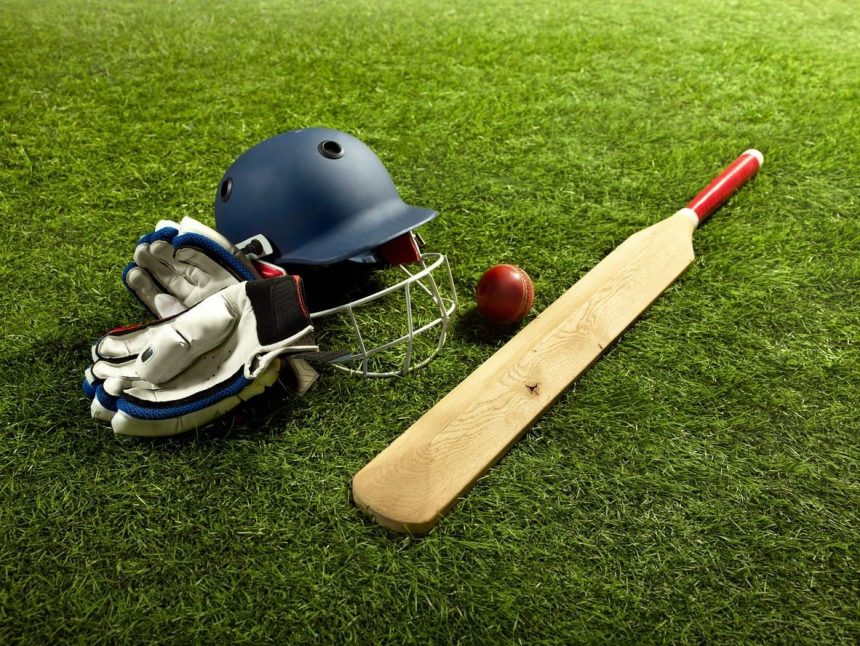
Players use special equipment to play safely and effectively.
| Item | Purpose |
|---|---|
| Bat | Wooden tool used by batters to hit the ball |
| Ball | Hard, leather-covered ball used by bowlers |
| Pads | Protect legs from fast balls |
| Gloves | Protect hands during batting |
| Helmet | Protect head from injury |
| Wicketkeeping gloves | Special gloves for wicketkeeper to catch the ball |
Many beginners don’t realize how important good protective gear is. Even experienced players can get hurt if they don’t wear proper pads or helmets, especially against fast bowlers.
How Does A Team Win In Cricket?
The team that scores the most runs wins. In Test matches, there are two innings per team, while in ODIs and T20s, each side only bats once. If the team batting second passes the first team’s total, they win. If they fall short, they lose. Sometimes matches end in a tie (same runs) or draw (neither side wins, often in Test matches if time runs out).
Main Rules And Ways To Get Out
Cricket has many rules, but the most important are how a batter can be dismissed (gotten out). Here are the main ways:
- Bowled: The bowler hits the stumps with the ball, and the bails fall off.
- Caught: A fielder catches the ball before it touches the ground after the batter hits it.
- Leg Before Wicket (LBW): The ball hits the batter’s leg in front of the stumps, and the umpire decides it would have hit the wicket.
- Run Out: Fielders hit the stumps with the ball while the batters are running, and they haven’t reached the crease.
- Stumped: The wicketkeeper removes the bails while the batter is outside their crease after missing a ball.
- Hit Wicket: The batter accidentally hits their own wicket with the bat or body while playing a shot or starting a run.
- Handled the Ball: The batter touches the ball with their hand without permission.
Example: Lbw
LBW is often confusing for beginners. The key idea is that if the ball would have hit the stumps but the batter’s leg was in the way (and no bat touched the ball), the batter is out. Umpires use their judgment for this decision.
Key Roles In A Cricket Team
Let’s look at the main roles:
- Opening batters: Start the innings and face the new ball.
- Middle-order batters: Play after the openers, often handle pressure situations.
- Bowlers: Can be fast (pace) or spin bowlers. Fast bowlers use speed; spinners use wrist or finger action to turn the ball.
- Wicketkeeper: Catches balls behind the wicket, tries to stump batters.
- All-rounders: Good at both batting and bowling, add balance to the team.
Many beginners miss the importance of the wicketkeeper. A good wicketkeeper can change a game by taking difficult catches or making quick stumpings.
Fielding Positions
Cricket has unique fielding positions with special names. Here are a few common ones:
- Slip: Next to the wicketkeeper, for catches off the edge.
- Gully: Angled behind the batter.
- Point: Square to the batter on the off side.
- Mid-off/Mid-on: Close to the bowler, straight ahead.
- Long on/Long off: Near the boundary, straight down the ground.
- Fine leg/Third man: Behind the batter on the leg/off side.
Field placements can change depending on the bowler and game situation. Smart captains adjust the field to stop runs or get wickets.
The Role Of Umpires And Technology
Two umpires stand on the field to make decisions on outs, runs, and rules. In big matches, a third umpire off the field uses video replays for tricky decisions, especially for run outs or close LBW calls.
Modern cricket uses technology like Hawk-Eye (ball tracking), Snickometer (sound detection), and Hot Spot (heat imaging) to help with close decisions. This makes the game fairer and reduces human error.
Popularity And Global Reach
Cricket is the second most popular sport in the world, after soccer. It’s especially huge in countries like India, Pakistan, Australia, England, South Africa, Sri Lanka, and the West Indies. For example, the 2019 Cricket World Cup final was watched by over 1.6 billion viewers worldwide.
The rise of T20 leagues, such as the Indian Premier League (IPL), has brought new fans and money to the game. Cricket is also growing in countries like Afghanistan, Ireland, and the United States.
Major Cricket Tournaments
Some of the most famous cricket tournaments are:
- ICC Cricket World Cup (ODI and T20 formats)
- The Ashes (England vs Australia Test series)
- Indian Premier League (IPL)
- Big Bash League (Australia)
- Caribbean Premier League
Winning these competitions is a dream for many players.
Cricket Vs. Other Bat-and-ball Sports
Cricket is sometimes compared to baseball or softball, but there are key differences.
| Feature | Cricket | Baseball |
|---|---|---|
| Field Shape | Oval | Diamond |
| Bats | Flat, wide bat | Round bat |
| Balls per over/inning | 6 per over, unlimited overs | 3 strikes or 4 balls per batter |
| How to score | Runs by running and boundaries | Runs by running bases |
| Dismissals | Many types (bowled, caught, LBW, etc.) | Strike out, fly out, tag out |
Understanding these differences helps new fans appreciate what makes cricket unique.
Common Mistakes Beginners Make
- Ignoring the rules: Many new players try to hit every ball hard without learning the rules of batting, bowling, and fielding.
- Poor running: Not understanding when to run or stop leads to easy outs.
- Wrong grip and stance: Holding the bat or ball incorrectly makes playing difficult and less safe.
- Missing protective gear: Skipping pads or helmets can lead to painful injuries.
- Not knowing fielding positions: Standing in the wrong place can give away easy runs.
If you’re starting out, spend time watching matches, learning rules, and practicing basic skills. This builds confidence and enjoyment.
Why Cricket Is Loved Worldwide
Cricket is more than a game—it builds teamwork, teaches patience, and brings communities together. In countries like India or England, cricket matches are major social events. The sport also has space for all body types and skill levels, from fast bowlers to clever spinners and powerful batters.
Cricket’s mix of tradition and innovation—like new T20 leagues and smart technology—keeps it fresh and exciting for old and new fans alike. That’s why cricket continues to grow across the world.
Frequently Asked Questions
What Is A “duck” In Cricket?
A “duck” means a batter gets out without scoring any runs. If it’s the first ball they face and they get out, it’s called a “golden duck. ”
How Long Does A Cricket Match Last?
It depends on the format. Test matches can last up to 5 days, ODIs about 8 hours, and T20s around 3 hours.
Why Do Batters Wear White Clothes In Test Matches?
White clothes help keep players cool in the sun and show the red ball clearly. In shorter formats like ODIs and T20s, teams wear colored uniforms.
What Is An Over In Cricket?
An over is a set of six legal balls bowled by one bowler. After each over, another bowler takes over from the opposite end.
Where Can I Learn More About Cricket Rules?
For a detailed guide, visit the official Wikipedia Cricket Page.
Cricket is a sport full of history, skill, and excitement. Whether you want to play, watch, or just understand conversations about it, knowing the basics will open up a whole new world of fun and community.