What makes cricket so unique among sports is not just the runs, the wickets, or the dramatic finishes. It’s also the complex rules that add layers of strategy and excitement. One rule that often confuses new fans—and sometimes even seasoned viewers—is LBW. You might hear commentators say, “That’s plumb LBW!” or see batsmen shaking their heads after being declared out this way. But what exactly does LBW mean? Why is it so controversial? Let’s break down this rule from the basics to the advanced, so you can understand every LBW decision the next time you watch a match.
What Does Lbw Stand For?
LBW stands for Leg Before Wicket. In cricket, it describes a way a batsman can be given out. If the ball would have hit the stumps but is stopped by the batsman’s body (usually the leg) instead of the bat, the batsman could be declared out LBW. This rule was created to prevent batsmen from using their body to block balls that would otherwise hit the stumps.

Today's Exclusive Deals
Limited-time Exclusive Deals. Check current discount on Amazon.
Check Price on Amazon As an Amazon Associate I earn from qualifying purchases.The LBW rule is one of the oldest in cricket. It first appeared in 1774, but it has changed many times since then. Today, LBW is essential for maintaining a fair balance between bat and ball.
The Basic Lbw Rule Explained
The LBW rule might sound simple, but it has several conditions that must be met before a batsman can be given out. Here’s how it works in plain English:
- The bowler delivers the ball.
- The ball hits the batsman’s body (most often the leg) before it hits the bat.
- The umpire judges that the ball would have hit the stumps if the batsman’s body had not stopped it.
But it’s not as simple as any ball hitting any part of the batsman’s body. Several key points must be considered:
- The ball must pitch (bounce) either in line with the stumps or outside the off stump. If it bounces outside the leg stump, LBW is not possible.
- The batsman must not have hit the ball with the bat first. If the ball hits the bat or glove before the pad or body, LBW does not apply.
- If the batsman is struck outside the line of off stump and is playing a shot, he cannot be out LBW.
- The ball must not have touched another player or umpire before hitting the batsman.

Detailed Conditions For Lbw
To truly understand LBW, it’s important to know all the conditions that must be satisfied. Let’s break them down:
1. Pitching Of The Ball
The ball’s first bounce, known as “pitching,” is crucial. For an LBW decision:
- The ball can pitch in line (between the two sets of stumps).
- Or, it can pitch outside off stump.
- If it pitches outside leg stump, the batsman cannot be given out LBW.
2. Impact With The Batsman
Next, where the ball hits the batsman is checked:
- The ball must hit the batsman in line with the stumps or outside the off stump.
- If the batsman is struck outside the line of off stump and is playing a genuine shot, he is not out LBW.
3. Playing A Shot
A “genuine shot” means the batsman is actually trying to hit the ball with his bat, not just standing in front of the stumps. If he isn’t trying to play a shot and is struck outside off stump, he can be out LBW.
4. Would The Ball Hit The Stumps?
Finally, the umpire must decide if the ball would have hit the stumps had it not been stopped by the batsman’s body.
This is where technology like Hawk-Eye comes in, especially in professional matches, to help umpires see the predicted path of the ball.
The Lbw Decision Process
Umpires have a tough job making LBW decisions, as it often comes down to small margins. Here’s how an LBW appeal is judged:
- The fielding team appeals (“How’s that?”).
- The umpire considers the following:
- Where did the ball pitch?
- Where did it hit the batsman?
- Was a shot attempted?
- Would it have hit the stumps?
- The umpire gives his decision: Out or not out.
Let’s look at a simple comparison of what the umpire checks for LBW:
| Condition | Must Be True for LBW? |
|---|---|
| Ball pitches outside leg stump | No (Cannot be LBW) |
| Ball pitches in line or outside off stump | Yes |
| Batsman hit outside off stump while playing a shot | No (Not out) |
| Batsman hit in line with stumps | Yes |
| Ball would hit stumps | Yes |
Examples To Make It Clear
Example 1:
The ball pitches outside off stump. The batsman misses it, and the ball hits his pad in front of the middle stump. He is not playing a shot. The umpire thinks the ball would hit the stumps. This is LBW.
Example 2:
The ball pitches outside leg stump and hits the batsman’s pad in front of the stumps. No matter what, this cannot be LBW.
Example 3:
The batsman tries to play a shot, but the ball hits his pad outside the line of off stump. He cannot be out LBW.
These examples show why LBW decisions are sometimes hard to understand and often debated.
Why Is Lbw Important In Cricket?
Without the LBW rule, batsmen could block the stumps with their legs and avoid being bowled out. This would make it much harder for bowlers to get wickets and would give batsmen an unfair advantage. LBW keeps the game balanced.
LBW also adds excitement. It’s common to see big appeals, player reviews, and crowd reactions after a close LBW decision. Some of the most memorable moments in cricket come from dramatic LBW calls.
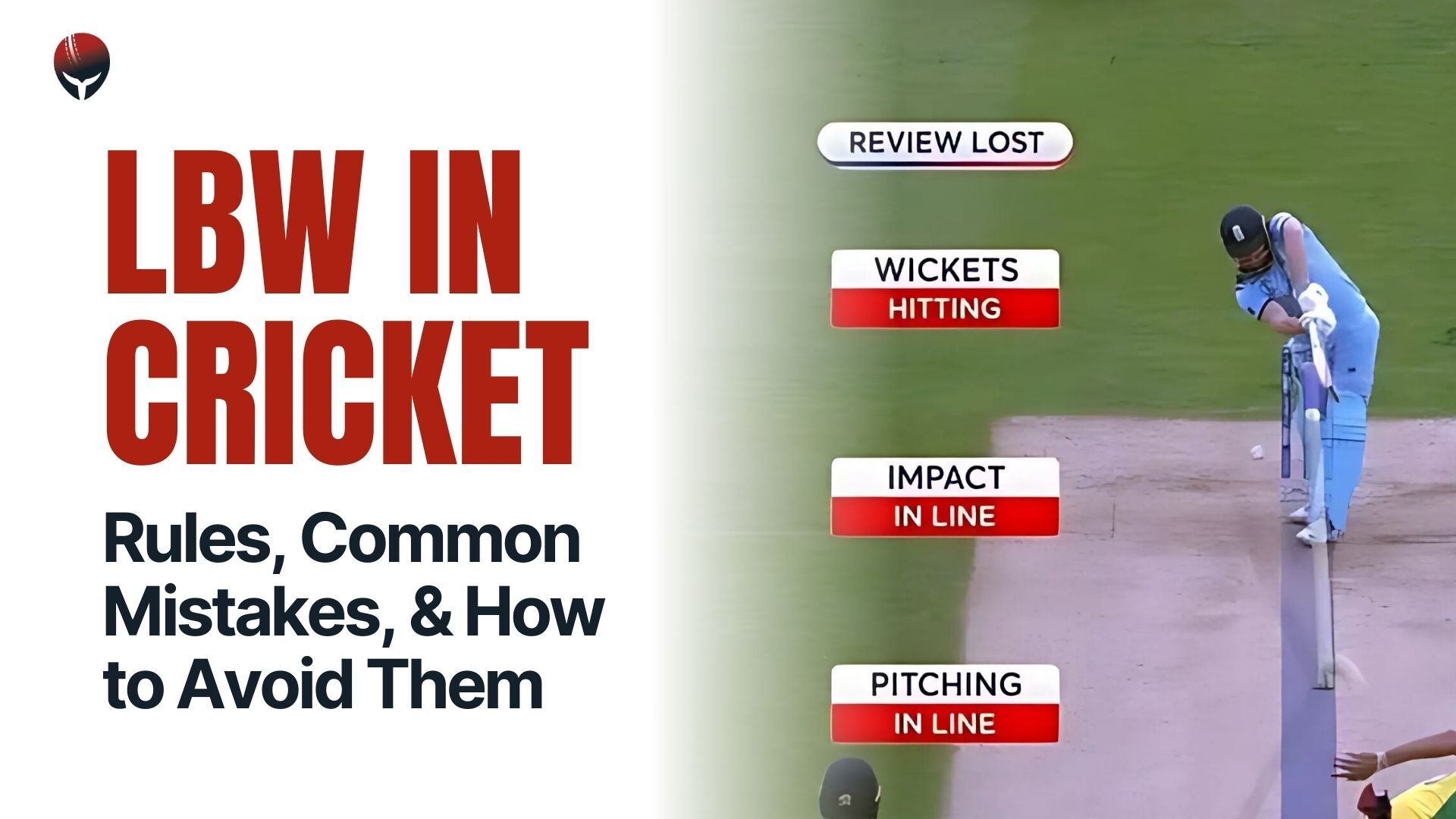
How Technology Has Changed Lbw Decisions
Modern cricket uses technology to help umpires with difficult LBW calls. The main tools are:
- Hawk-Eye: Shows the predicted path of the ball after hitting the batsman.
- DRS (Decision Review System): Teams can challenge the umpire’s decision, and technology reviews the play.
This reduces human error and makes decisions more accurate. However, technology is not perfect—sometimes there’s still doubt, and the umpire’s original call stands.
Here’s a comparison of LBW decision accuracy with and without technology:
| Method | Approx. Accuracy |
|---|---|
| Umpire Only (No Technology) | 85-90% |
| With DRS & Hawk-Eye | 95-98% |
Common Misconceptions About Lbw
Many beginners get confused by LBW because of some common myths:
- LBW only applies to the leg: While it’s called “Leg Before Wicket,” any part of the body (except the hand below the wrist) can be involved.
- If the ball hits the pad, it’s always out: This is false. All the LBW conditions must be met.
- You can’t be LBW on a no-ball: True—if the bowler oversteps, LBW is not possible.
Famous Lbw Moments In Cricket
Some LBW decisions have changed the outcome of matches. For example:
- Sachin Tendulkar’s LBW in the 2011 World Cup semi-final was hotly debated and reviewed using DRS.
- Shane Warne’s “Ball of the Century” in 1993 was not LBW, but many of his wickets came from clever LBW traps.
Famous bowlers like Wasim Akram and James Anderson have used swing and seam to create LBW chances against top batsmen.
How Players Try To Avoid Lbw
Batsmen use several techniques to reduce their risk of being out LBW:
- Bat in front of the pad: Playing shots with the bat in front of the pad gives a better chance of hitting the ball.
- Stay outside the crease: Stepping forward can make it less likely for the ball to hit the pads in line with the stumps.
- Play with soft hands: This allows for better control and minimizes missed shots.
Experienced batsmen also read the bowler’s hand and anticipate swing or spin to avoid getting trapped.

Lbw In Different Formats And Levels
LBW is a universal rule, but its impact can differ:
- Test cricket: Longer matches mean bowlers use LBW as a main weapon, especially on slow, spinning pitches.
- One Day/ T20 cricket: Fast scoring means batsmen take more risks and are more often trapped LBW by yorkers or slower balls.
- Junior/Amateur cricket: LBW is often less strictly enforced, as umpires may give batsmen the benefit of the doubt.
Differences In Lbw Rules: Men’s Vs. Women’s Cricket
The LBW law is the same in men’s and women’s cricket. However, statistics show that:
- In men’s international Test matches, about 18% of wickets are LBW.
- In women’s matches, this number is slightly lower, around 14%.
This difference is mainly due to variations in bowling speeds and playing styles.
Comparing Lbw With Other Ways Of Getting Out
Let’s compare LBW with other common ways a batsman can be dismissed:
| Dismissal Type | Description | Key Difference from LBW |
|---|---|---|
| Bowled | Ball hits the stumps directly | No body or pad involved |
| Caught | Ball is caught after hitting the bat | Bat involvement required |
| Run Out | Batsman is out of his crease when stumps are broken | Running between wickets involved |
| LBW | Ball hits the body/pad, would have hit stumps | No bat contact, body involved |
Tips For Understanding Lbw Decisions As A Viewer
Watching cricket on TV or at the ground? Here are some tips to quickly understand LBW:
- Watch where the ball pitches. If it’s outside leg stump, rule out LBW.
- Check if the batsman tried to play a shot.
- Look for the ball’s direction after hitting the pad—did it seem like it would hit the stumps?
- Use the replay and ball-tracking graphics for a clearer idea.
A key insight: Sometimes, even experts disagree on LBW calls because of the fine margins and the element of human judgment.
Frequently Asked Questions
What Does Lbw Mean In Cricket?
LBW stands for Leg Before Wicket. It’s a rule in cricket where a batsman is out if the ball hits their body (usually the leg) instead of the bat, and the umpire believes the ball would have hit the stumps.
Can A Batsman Be Out Lbw If The Ball Hits Their Glove First?
No, if the ball hits the bat or the glove holding the bat before hitting the pad or body, LBW cannot be given. The first contact must be with the body or pad.
Is Lbw Possible On A No-ball?
No, a batsman cannot be given out LBW if the bowler delivers a no-ball (oversteps the line).
Why Is Lbw Considered Controversial?
LBW decisions can be very close and depend on the umpire’s judgment. Small differences in where the ball pitches or hits the pad can change the decision. Technology helps, but there’s still room for debate.
Where Can I Read The Official Lbw Law?
You can find the official LBW law on the Marylebone Cricket Club (MCC) website: MCC Laws of Cricket.
Understanding LBW makes watching and enjoying cricket much easier. It’s a rule full of details, but learning the basics will help you follow the game, appreciate the tactics, and join in the debates that make cricket so interesting. Next time you see an LBW appeal, you’ll know exactly what’s happening—and maybe even spot something the commentators miss!