
Cricket is a sport deeply connected to the ground it is played on. Unlike games where the field stays mostly the same, cricket’s playing surface—called the pitch—can change everything. Whether you are a player, coach, or fan, understanding the different types of cricket pitches helps you appreciate the strategy and unpredictability of the game. Sometimes, the same team looks unbeatable at home but struggles overseas. Often, the secret lies beneath the batsman’s feet.
Every pitch has its own personality. Some pitches help the bowlers; others let batsmen score freely. Some break up fast, some stay the same for days. Weather, soil, maintenance, and even the curator’s skill change how a pitch behaves. In this article, you’ll learn about all the major types of cricket pitches.

Today's Exclusive Deals
Limited-time Exclusive Deals. Check current discount on Amazon.
Check Price on Amazon As an Amazon Associate I earn from qualifying purchases.We’ll explore how each type affects matches, which pitches suit different playing styles, and why teams sometimes struggle on unfamiliar grounds. Whether you are new to cricket or a lifelong fan, you’ll find new insights here.
What Is A Cricket Pitch?
Before diving into types, it’s important to know what a cricket pitch is. The pitch is the central strip of ground—usually 22 yards (20.12 meters) long and 10 feet (3.05 meters) wide—where all the action happens. It’s where bowlers deliver the ball and batsmen try to score runs. The pitch has two sets of stumps (wickets) at each end. The condition and type of the pitch play a big part in who wins or loses.
Main Types Of Cricket Pitches
Cricket pitches can be grouped in several ways. The most common way is by the soil or surface type. Each surface type creates a very different match experience.
Today's Exclusive Deals
Limited-time Exclusive Deals. Check current discount on Amazon.
Check Price on Amazon As an Amazon Associate I earn from qualifying purchases.1. Hard Pitches
Hard pitches are firm and solid. They’re usually found in countries like Australia, South Africa, and the West Indies.
- Behavior: The ball bounces high and fast. Fast bowlers get extra speed and bounce. Batsmen can trust the bounce, so stroke play is easier.
- Example: The WACA Ground in Perth is famous for its hard, bouncy track. Bowlers like Dennis Lillee and Mitchell Johnson loved bowling here.
Common Features:
- Light brown or reddish color
- Little grass
- Cracks may appear as the match goes on
Who Benefits?
- Fast bowlers: Extra speed, bounce, and carry
- Aggressive batsmen: Can play on the up and hit through the line
Unique Insight:
On very hard pitches, even average pace bowlers can look dangerous. However, spinners may struggle unless the pitch breaks up late in the match.
2. Green Pitches
Green pitches are covered with a layer of fresh grass. The surface is literally green.
- Behavior: The ball seams and swings more. Fast bowlers get movement off the surface. Batting can be very difficult, especially early.
- Example: Many English grounds, like Lord’s or Trent Bridge, are known for green tops, especially in early summer.
Common Features:
- Deep green color
- Moisture present on the first day
- Grass is not mowed too short
Who Benefits?
- Swing and seam bowlers: More movement in the air and off the pitch
- Early bowlers: Best time is the first few hours
Unique Insight:
Green pitches can “die” quickly. If the sun comes out, the grass dries and batting becomes easier after the first session.
Today's Exclusive Deals
Limited-time Exclusive Deals. Check current discount on Amazon.
Check Price on Amazon As an Amazon Associate I earn from qualifying purchases.3. Dusty Pitches
Dusty pitches are dry, loose, and often break up into dust as the game goes on. These are common in India, Pakistan, Bangladesh, and Sri Lanka.
- Behavior: The ball grips and turns a lot, especially for spinners. Batting is tough as the surface breaks up.
- Example: Chennai’s MA Chidambaram Stadium is famous for its dusty, turning pitches.
Common Features:
- Brown, crumbly surface
- Cracks and rough patches develop
- Little or no grass
Who Benefits?
- Spin bowlers: Especially off-spinners and leg-spinners
- Batsmen with good footwork: Can play spinners better
Unique Insight:
On dusty pitches, even part-time spinners can get wickets. The ball stops, grips, and sometimes shoots low, making defense risky.
4. Dead Pitches
Dead pitches offer little help to bowlers. The ball comes on evenly and doesn’t move much.
- Behavior: High-scoring games. The pitch stays the same for days. Bowling is hard work.
- Example: Many matches in the UAE, especially in Dubai or Abu Dhabi, are played on dead pitches.
Common Features:
- Flat, rolled surface
- No grass, little moisture
- No cracks or roughness
Who Benefits?
- Batsmen: Can trust the bounce, play long innings
- Spin bowlers late in the game: Sometimes get help when the pitch wears
Unique Insight:
Dead pitches can make Test matches boring, with many draws. Teams often score 500+ runs in an innings.
5. Matting Pitches
These are artificial pitches made by rolling out a mat—usually made of coir, jute, or synthetic material—over a hard surface.
- Behavior: The ball bounces more and can skid. Traditional in some Asian and African countries.
- Example: Many club matches in India and Africa use matting pitches, especially where turf is hard to maintain.
Common Features:
- Mat laid on concrete or clay
- Even bounce, but can be unpredictable if mat is loose
- Used for practice and lower-level games
Who Benefits?
- Batsmen: Can play shots if bounce is consistent
- Fast bowlers: Extra bounce if mat is tight
Unique Insight:
Players who learn on matting pitches often play horizontal bat shots well, as the bounce is higher than on turf.
6. Artificial (synthetic) Pitches
These are made entirely from artificial materials—rubber, plastic, or synthetic turf.
- Behavior: Consistent bounce and pace. Weather doesn’t affect them much.
- Example: Used in schools and parks worldwide, especially where maintaining grass is expensive.
Common Features:
- Bright green or blue color
- Laid over concrete or firm base
- Needs little maintenance
Who Benefits?
- All players: Great for training and junior cricket
- Bowlers: Can focus on line and length without worrying about pitch changes
Unique Insight:
While good for beginners, synthetic pitches rarely match the challenge of natural turf. Players can find it harder to adapt to grass pitches later.

Pitch Types By Playing Conditions
Beyond the surface, pitches are also classified by how they behave during a match. These categories matter a lot in Test and first-class cricket.
1. Batting-friendly (flat) Pitch
- Description: Offers little to no help to bowlers. Easy for batsmen to score runs.
- Example: Many ODI and T20 matches are played on flat pitches to encourage high scores.
- Risks: Can lead to dull games if bowlers can’t take wickets.
2. Bowling-friendly Pitch
- Description: Favors bowlers, either fast or spin, depending on the surface.
- Example: Green pitches in England (fast bowlers), dusty pitches in India (spinners).
- Risks: Can create very short matches if conditions are extreme.
3. Sporting Pitch
- Description: Offers a fair contest. Early help for bowlers, then settles for batsmen, and sometimes helps spinners at the end.
- Example: Some pitches in Australia are known for having something for everyone.
4. Unpredictable Pitch
- Description: Behaves differently session to session. The bounce and movement change quickly.
- Example: Pitches affected by rain or poor maintenance.
- Risks: Can be dangerous for batsmen if the bounce is uneven.
Comparison Of Key Pitch Types
Understanding the real differences between pitch types is easier with a side-by-side look.
| Pitch Type | Best For | Main Challenge | Famous Grounds |
|---|---|---|---|
| Hard | Fast bowlers | High bounce, fast scoring | WACA, Perth |
| Green | Seam & swing bowlers | Unpredictable early movement | Lords, Trent Bridge |
| Dusty | Spinners | Variable bounce, turn | Chennai, Dhaka |
| Dead | Batsmen | Little help for bowlers | Dubai, Rawalpindi |
| Matting | All-rounders | Unpredictable bounce if loose | Club grounds |
| Artificial | Training | Not like real turf | Schools, parks |
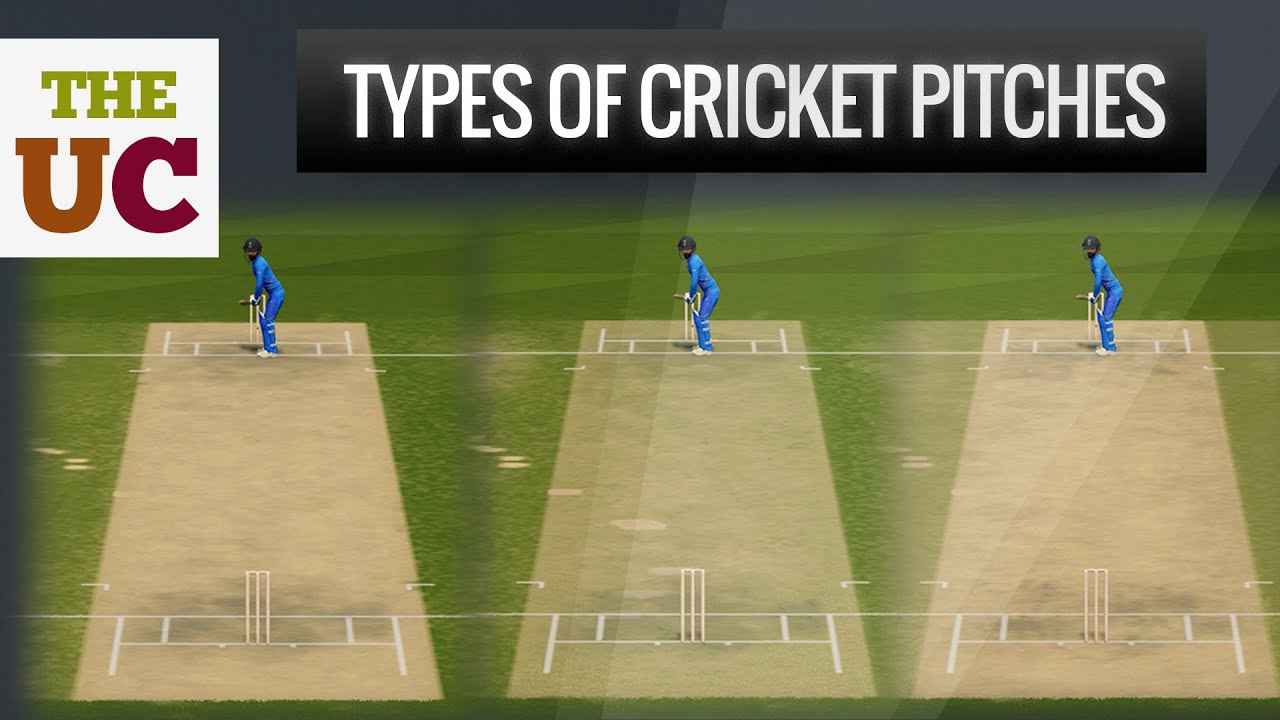
How Pitches Change During A Match
One unique thing about cricket pitches is that they change during the match. The same pitch can help bowlers on Day 1, batsmen on Day 2, and spinners on Day 4 and 5.
| Match Day | Pitch Condition | Who Benefits |
|---|---|---|
| Day 1 | Fresh, sometimes damp | Fast bowlers |
| Day 2 | Settling down, good bounce | Batsmen |
| Day 3-4 | Drying, cracks appear | Spinners, smart batsmen |
| Day 5 | Worn out, uneven bounce | Spinners, fast bowlers with reverse swing |
How Groundsmen Prepare Different Pitches
Groundsmen (curators) play a crucial role. They use different soils, grasses, and rolling techniques to create a certain type of pitch. Weather is also a big factor.
- Hard pitches: Use clay-rich soil, heavy rolling, little watering.
- Green pitches: Leave grass longer, water before the match, avoid too much rolling.
- Dusty pitches: Use sandy soil, minimal grass, light rolling, allow surface to dry.
- Dead pitches: Heavy rolling, minimal grass, keep surface flat and firm.
A lesser-known fact: Even the type of grass affects movement. Ryegrass, common in England, helps seam bowlers more than Bermuda grass, used in the Caribbean.
Impact Of Pitch Type On Strategy
Team selection and tactics change based on pitch type.
- On a green pitch, teams prefer extra fast bowlers.
- On a dusty pitch, they pick more spinners and batsmen who use their feet well.
- On a dead pitch, all-rounders and patient batsmen are key.
- On hard pitches, aggressive fast bowlers and back-foot batsmen thrive.
One non-obvious insight: Captains often choose to bowl first on green tops but bat first on dry, dusty surfaces to avoid batting last when the pitch is at its worst.
Modern Trends And Technology
Cricket boards are now using technology to study pitches. Tools like moisture meters, soil hardness testers, and even AI models help predict how a pitch will behave. This helps teams prepare better and brings more balance to the game.
Some new stadiums, especially in the USA and Middle East, use drop-in pitches—pre-made pitches transported into the ground. These can be tailored for different formats, like T20 or Test cricket. For more on drop-in pitches and technology, see Wikipedia.

Frequently Asked Questions
What Is The Best Type Of Pitch For Test Cricket?
A sporting pitch is ideal for Test cricket. It gives something to both bowlers and batsmen. Early movement for fast bowlers, good batting conditions in the middle, and spin later. This keeps the game fair and exciting.
Why Do Indian Pitches Help Spinners More?
Indian pitches are often dry and dusty. The hot climate and soil type mean less grass and more cracks. The ball grips and turns more, helping spinners. Fast bowlers get less bounce and movement here.
Can A Pitch Type Change During A Game?
Yes, pitches often change over time. Sun, foot traffic, and wear make pitches slower, drier, and more helpful to spinners as the match goes on. Smart teams watch for these changes and adjust their tactics.
What Is A Drop-in Pitch?
A drop-in pitch is made away from the stadium and placed in the ground before a match. This allows stadiums to host different sports or tailor pitches for specific needs. They are common in Australia and some new stadiums.
How Does Rain Affect A Cricket Pitch?
Rain can add moisture, making pitches greener and helping fast bowlers. But if rain stops play and the sun comes out, the pitch can become sticky, slow, or even dangerous for batsmen due to uneven bounce.
Cricket’s magic lies in its variety, and the pitch is at the heart of that. Next time you watch a match, look at the pitch closely. It might just tell you who will win.

