
Playing tennis is more than just hitting a ball back and forth over a net. It’s a mix of skill, strategy, and physical ability. Many people start with the basics, but to truly improve your tennis skills, you must go deeper.
Whether you dream of winning matches, playing with friends, or simply enjoying a good workout, improving your tennis skills takes planning, practice, and patience. Let’s explore the best ways to become a better tennis player, from building strong fundamentals to mastering mental strength.

Today's Exclusive Deals
Limited-time Exclusive Deals. Check current discount on Amazon.
Check Price on Amazon As an Amazon Associate I earn from qualifying purchases.Mastering The Basics: Footwork, Grip, And Stance
Great tennis starts with strong fundamentals. Even top players spend hours perfecting basic skills. If you want to improve, start with your footwork, grip, and stance.
- Footwork: Quick, controlled movement lets you reach the ball and recover after each shot. Practice side-stepping, split steps, and small adjustment steps. Good footwork means you’re always ready for the next shot, not off-balance or reaching.
- Grip: Your grip affects how you control the racket and spin the ball. Learn the main grips: Eastern, Continental, and Western. For beginners, the Eastern grip works well for forehands, while the Continental grip is best for serves and volleys. Experiment with grips to find what feels comfortable and gives you control.
- Stance: Your stance (open, closed, or neutral) changes your power and balance. An open stance helps with quick recovery, while a closed stance is good for strong, controlled shots. Practice both and use them depending on the situation.
These basics are easy to overlook, but they form the foundation for everything else in tennis. Regularly check your footwork, grip, and stance in training sessions.
Developing Strong Strokes: Forehand, Backhand, And Serve
A consistent, reliable stroke gives you confidence in every match. Focus on three main areas: the forehand, backhand, and serve.
Today's Exclusive Deals
Limited-time Exclusive Deals. Check current discount on Amazon.
Check Price on Amazon As an Amazon Associate I earn from qualifying purchases.Forehand
The forehand is the most common stroke and often your strongest shot. Start by practicing the full swing—from backswing, contact, to follow-through. Keep your eye on the ball, step into the shot, and finish with your racket high. Use different targets on the court to improve your aim and placement.
Backhand
Many beginners struggle with the backhand. There are two main styles: one-handed and two-handed. The two-handed backhand offers more stability and power, especially for younger or less strong players. The one-handed backhand gives better reach and variety. Practice both if you can, but focus on whichever style feels most natural. Make sure to rotate your upper body and finish your swing.
Serve
A strong serve is a big advantage. Start by learning the toss—it should be high and just in front of your hitting shoulder. Use your legs to push up and snap your wrist at contact for power. Aim for consistency first, then add speed and spin. Practice different types of serves: flat, slice, and kick to keep opponents guessing.

Improving Consistency And Accuracy
Consistency is what separates good players from great ones. You need to keep the ball in play, even under pressure. Here’s how to build your consistency and accuracy:
Today's Exclusive Deals
Limited-time Exclusive Deals. Check current discount on Amazon.
Check Price on Amazon As an Amazon Associate I earn from qualifying purchases.- Hit many balls: Use a ball machine or rally with a partner. Try to hit 50–100 balls in a row without making mistakes.
- Target practice: Place cones or markers on the court and aim for them. This sharpens your placement and forces you to focus.
- Control over power: Many players try to hit too hard. Focus on smooth, controlled swings first. Power comes naturally as your technique improves.
Even advanced players make unforced errors when they lose focus. Practicing for accuracy, not just speed, will help you win more points.
Physical Conditioning And Fitness
Tennis is a physically demanding sport. Fast reactions, endurance, and strength are all important. A complete fitness routine off the court can boost your on-court performance.
Key Areas To Train
- Cardio: Running, cycling, or swimming helps you stay strong during long matches.
- Strength: Focus on legs, core, and arms. Squats, lunges, and planks build muscle and prevent injury.
- Flexibility: Stretching improves your reach and helps avoid muscle strains. Yoga or dynamic stretches work well.
- Agility: Use ladder drills or cone drills to improve quick direction changes.
Example Weekly Training Plan
| Day | Activity | Duration |
|---|---|---|
| Monday | On-court drills + cardio | 90 minutes |
| Tuesday | Strength training | 45 minutes |
| Wednesday | Match play or rallying | 60 minutes |
| Thursday | Agility & flexibility | 45 minutes |
| Friday | Rest or light activity | – |
Mental Strength And Focus
Tennis is as much a mental game as a physical one. You need strong focus, confidence, and the ability to stay calm under pressure.
- Stay present: Don’t think about past mistakes or future points. Focus on the current shot.
- Positive self-talk: Replace negative thoughts with encouraging ones. For example, if you miss a shot, say “I’ll get the next one” instead of “I’m terrible.”
- Routine: Develop a simple pre-serve or pre-return routine. This helps you reset and concentrate before each point.
Visualization also helps. Imagine yourself making perfect shots or winning key points. Many professionals use mental imagery before big matches.
Tactical Awareness: Playing Smart Tennis
Knowing where to hit the ball, when to attack, and how to defend is vital. Tennis is like chess—you need to outthink your opponent.
Understanding Court Position
Always return to the center baseline after each shot (unless you’re at the net). This position gives you the best chance to reach any ball. If you’re pulled wide, recover quickly.
Shot Selection
Use a mix of shots: cross-court, down-the-line, lobs, and drop shots. Don’t let your opponent get comfortable with your patterns.
Reading Opponents
Watch how your opponent moves and what shots they prefer. If they have a weak backhand, target it. If they struggle with high balls, use topspin.
Example: Tactical Choices Table
| Situation | Best Shot | Why? |
|---|---|---|
| Opponent at net | Lob or passing shot | Forces them to move or stretches them |
| Opponent far from baseline | Drop shot | Brings them forward suddenly |
| Opponent with weak backhand | Cross-court to backhand | Targets their weakness |
Practicing With Purpose
Not all practice is equal. Many people spend hours on court but see little progress. To improve quickly, practice with a clear goal.
- Set specific goals: For example, “I will hit 20 serves in a row into the service box.”
- Variety: Mix drills, match play, and games. This keeps practice fun and builds different skills.
- Track progress: Keep a simple journal. Write down what you worked on, what went well, and what needs improvement.
Deliberate practice, where you focus on one thing at a time, leads to faster improvement.
Using Video Analysis
One of the fastest ways to improve is to watch yourself play. Video analysis helps you see mistakes you don’t notice in real time.
- Record your practice sessions or matches.
- Review the videos to check your technique, footwork, and shot selection.
- Compare your form to professional players.
Many tennis apps offer slow-motion and side-by-side comparison features. Even recording with your phone is enough to spot major issues.
Drills To Build Specific Skills
Different drills help you target weaknesses and build strengths. Here are some practical examples:
- Consistency drill: Rally with a partner and try to keep the ball in play for as many shots as possible. Set targets (20, 30, 50 shots).
- Serve accuracy: Place cones in the service box and aim for them. Try to hit each cone three times in a row.
- Volley reflexes: Stand close to the net while your partner feeds balls quickly. Focus on quick reaction and soft hands.
- Footwork ladder: Use an agility ladder to practice quick steps and changes of direction.
- Cross-court/backhand drill: Rally cross-court only using backhands to improve consistency and strength on your weaker side.
You can create your own drills based on what you want to improve. Always start slow, then add speed as you get better.
Working With A Coach Or Hitting Partner
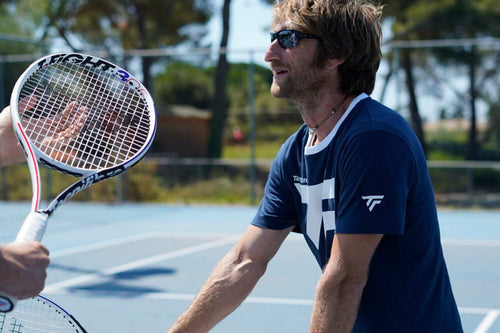
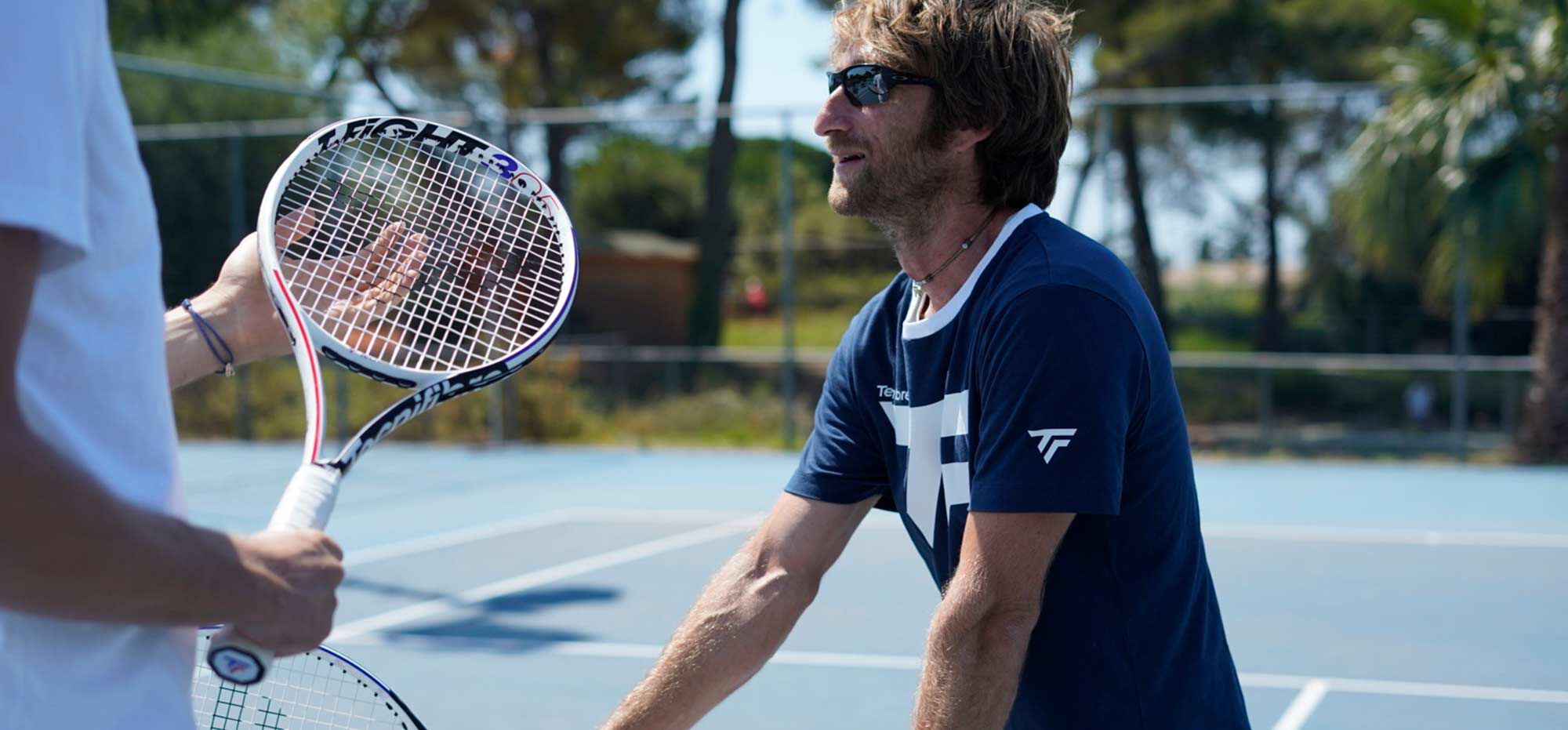
A coach provides feedback and spots issues you can’t see yourself. If you can’t afford a coach, a regular hitting partner is still valuable.
- Coaches give instant corrections and design personalized drills.
- Hitting partners help you practice real match situations.
- Both can motivate you and keep you accountable.
Many clubs offer group lessons, which cost less than private coaching. Don’t be afraid to ask better players for advice or to rally with you.
Playing Matches And Joining Tournaments
You can only improve so much in practice. Matches test your skills, nerves, and tactics under real pressure.
- Start with friendly matches against people of similar skill.
- Join local leagues or tournaments for more experience.
- Learn from every match, win or lose. Afterward, think about what worked and what didn’t.
Match play exposes weaknesses and teaches you how to handle stress. The more you play, the more comfortable you’ll become.
Nutrition, Hydration, And Recovery
Good performance doesn’t just come from practice. How you eat, drink, and rest matters too.
- Nutrition: Eat balanced meals with plenty of carbohydrates, protein, and healthy fats. Carbs fuel your muscles, while protein helps recovery.
- Hydration: Drink water before, during, and after play. Even small dehydration can hurt your focus and endurance.
- Recovery: Take rest days, stretch, and get enough sleep. Overtraining leads to injuries and poor performance.
A simple rule is to listen to your body. If you feel tired or sore, allow time to recover.
Using Technology And Tools
Modern tennis uses technology to help players improve faster.
- Ball machines: Practice alone and hit many balls in a short time.
- Apps: Track your stats, record your sessions, and analyze your game.
- Wearables: Smart watches or trackers monitor your heart rate, steps, and movement patterns.
For example, the Zepp Tennis Sensor attaches to your racket and gives instant feedback on swing speed, spin, and consistency.
Learning From The Pros
Watching professional players gives you new ideas and inspiration. Study their technique, movement, and tactics.
- Watch matches and focus on one player’s footwork or serve.
- Notice how they adjust strategies when under pressure.
- Many pros share tips and training videos online.
Try to copy small details from your favorite players. Even small changes in grip or stance can make a big difference.
Common Mistakes Beginners Make
Learning tennis is a journey, but beginners often repeat the same mistakes. Avoid these to improve faster:
- Ignoring footwork: Many players focus only on hitting and forget about moving their feet. Good footwork is the base of every shot.
- Swinging too hard: Power without control leads to errors. Start slow and build speed only when your technique is solid.
- Not watching the ball: Taking your eyes off the ball leads to mistimed shots. Keep your focus on the ball until contact.
- Skipping warm-ups: Jumping straight into play increases the risk of injury. Always warm up your body and practice basic swings first.
- Not practicing serves: Many players avoid practicing serves because it’s hard and repetitive, but a good serve can win you many free points.
Recognizing and correcting these mistakes early saves you time and frustration.
Comparing Tennis Improvement Methods
Improving at tennis can come from many sources—private lessons, group classes, online tutorials, and solo practice. Here’s how they compare:
| Method | Cost | Effectiveness | Best For |
|---|---|---|---|
| Private Coach | High | Very high | Personalized feedback |
| Group Lessons | Medium | High | Social learning, fun |
| Online Videos | Low | Medium | Self-motivated learners |
| Solo Drills | Free | Medium | Technique and consistency |
Mixing different methods is usually the best approach. For example, take a lesson once a week, practice drills on other days, and use online resources for extra tips.
Two Non-obvious Insights For Faster Tennis Improvement
Most beginners focus on hitting harder or playing more matches. But there are a couple of less obvious secrets to improving faster:
- Practice transitions between shots: In real matches, you rarely hit the same shot twice. Practice moving quickly from baseline to net, from defense to attack, or switching grips between forehand and backhand. This helps you react better during unpredictable points.
- Train your eyes, not just your hands: Use exercises that develop your visual tracking, such as following the ball with your eyes without moving your head or reacting to colored balls in random order. This improves your reaction time and decision-making, not just your swing.
These skills are often ignored in regular practice but can make a big difference, especially at higher levels.
Frequently Asked Questions
What Is The Fastest Way To Improve At Tennis?
The fastest way is to combine regular, focused practice with feedback from a coach or experienced player. Deliberate practice—working on specific weaknesses—leads to faster progress than just playing matches. Also, watching videos of yourself or professionals can help you spot mistakes quickly.
How Often Should I Practice Tennis To See Improvement?
Aim for at least 2–3 sessions per week. This allows you to build muscle memory and stay fit without overtraining. If you want to improve faster, add fitness and mental training on off days.
Should I Focus On Technique Or Fitness First?
Both are important, but good technique comes first. Without solid strokes and footwork, fitness alone won’t help much. However, basic fitness makes it easier to practice longer and avoid injuries.
How Do I Find A Good Tennis Coach?
Look for certified coaches at your local club or sports center. Ask about their experience, coaching style, and if they have worked with players at your level. Try a lesson to see if their teaching matches your learning style. You can also check sites like the USTA for guidance.
Can Adults Learn Tennis Or Is It Too Late?
It’s never too late to start tennis. Many adults pick up the sport in their 30s, 40s, or even later. Progress may be slower than for children, but with patience and regular practice, adults can improve their skills, fitness, and enjoy the social and health benefits of tennis.
Improving your tennis skills is a journey. It takes time, effort, and a willingness to learn. By working on your fundamentals, practicing with purpose, and looking for ways to improve both physically and mentally, you’ll see progress on the court.
Remember, the best players are always learning—so keep hitting, keep moving, and most importantly, keep enjoying the game.

