Tennis is a sport that captures the attention of millions around the world. Whether you watch Grand Slam tournaments or play with friends at your local club, you will notice two main formats: singles and doubles. The difference between these two versions is more than just the number of players on the court. Rules, strategies, movement, and even the overall feeling of the game can change dramatically. Many new tennis fans or players are curious about what truly separates singles from doubles. This article will walk you through every major difference, give real examples, and help you understand which format might suit your style or interests.
Basic Structure: Singles Vs Doubles
At first glance, the most obvious difference is the number of players. In singles, one player faces another (1 vs 1). In doubles, two players team up against another pair (2 vs 2). But the differences go much deeper.

Today's Exclusive Deals
Limited-time Exclusive Deals. Check current discount on Amazon.
Check Price on Amazon As an Amazon Associate I earn from qualifying purchases.Court Dimensions
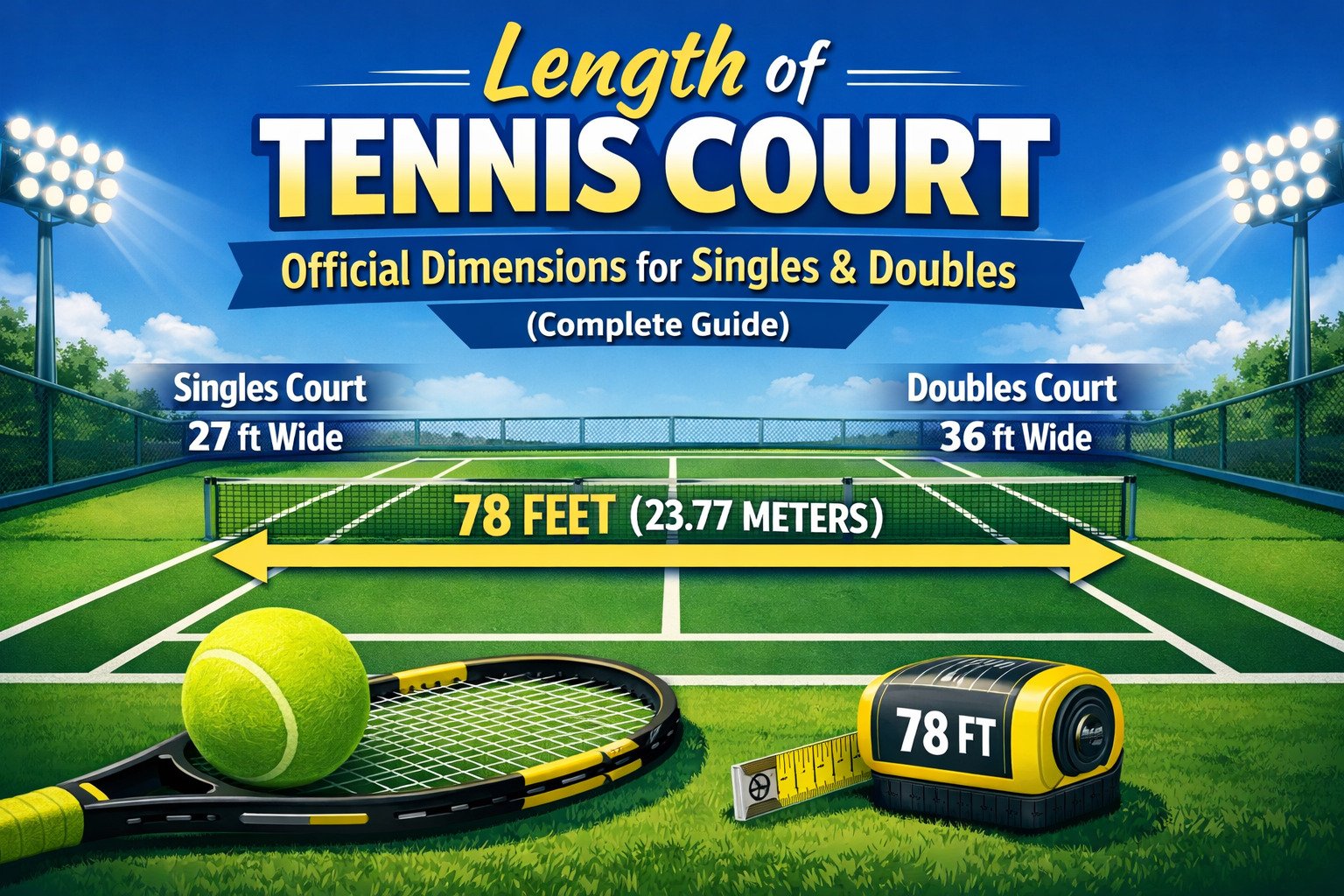
The tennis court changes size depending on the format. In singles, the court is narrower. The doubles format uses the full width, including the side alleys. Here’s a clear comparison:
| Singles | Doubles | |
|---|---|---|
| Court Width | 8.23 meters (27 ft) | 10.97 meters (36 ft) |
| Court Length | 23.77 meters (78 ft) | 23.77 meters (78 ft) |
| Alleys Used? | No | Yes |
In doubles, the extra alleys (the side strips) are in play. This seems like a small change, but it alters the tactics and movement in a big way.
Team Structure
Singles is all about individual effort. You rely only on yourself. Doubles brings a team dynamic, requiring communication, trust, and coordinated movement. Players often develop special signals and strategies, which are not part of singles.
Serving: Differences In Rules And Tactics
Serving is a key part of tennis, but the rules and strategies change depending on the format.
Service Order
In singles, the serve alternates between the two players after each game. In doubles, all four players take turns serving, following a fixed rotation:
- Team A Player 1 serves the first game.
- Team B Player 1 serves the second game.
- Team A Player 2 serves the third game.
- Team B Player 2 serves the fourth game.
- The rotation repeats.
This sequence means that in doubles, you might not serve again for several games, which affects rhythm and momentum.
Serving Tactics
In singles, the server usually aims to serve wide or down the T (center line), trying to move the opponent out of position. Variety and placement are important.
In doubles, the presence of a net player changes everything. Servers often use more body serves (aiming at the receiver’s body) to jam them. The net player can also poach (move across to intercept volleys), so servers may use signals to coordinate.
A common doubles tactic is the “I-formation,” where the net player crouches at the center line, ready to move left or right based on the serve.
Receiving And Return Strategies
Returning serve is challenging in both formats, but the approach differs.
Singles Receiving
The receiver has the entire court to cover, so anticipation, speed, and reading the server’s body language are vital. Players often stand well behind the baseline to buy more time.
Doubles Receiving
In doubles, the receiver covers a smaller area, but the net player is close, ready to intercept weak returns. This means:
- Returns must be low and accurate, avoiding the net player.
- Lob returns (high balls over the net player) are more common.
- Fast reactions are needed, especially on the second serve.
Many beginners don’t realize that in doubles, a strong return aimed at the feet of the net player can be highly effective.
Movement And Positioning
Movement on the court is one of the biggest differences between singles and doubles.
Singles Movement
Singles demands covering a large area. Players need:
- Excellent side-to-side movement (lateral quickness)
- Ability to chase deep balls
- Stamina for long rallies
Players often use a “baseline” strategy, staying behind the baseline and controlling the rally with groundstrokes.
Doubles Movement
In doubles, the focus shifts:
- Players cover less ground individually, but must move in sync with their partner.
- Net play is more common. Quick reflexes and volleys are crucial.
- Poaching (crossing over to intercept a ball) is a key skill.
A common positioning system in doubles is the “two-up” formation, where both partners move to the net after the serve or return.
| Aspect | Singles | Doubles |
|---|---|---|
| Primary Position | Baseline | Net & Baseline mix |
| Movement | Side-to-side, back & forth | Diagonal, lateral, poaching |
| Common Error | Getting out of position | Poor coordination with partner |
Scoring And Rules: Key Contrasts
While the basic scoring system (15, 30, 40, game) is the same, there are some unique rules in doubles.
No-ad Scoring
Many doubles matches, especially at club and recreational levels, use no-ad scoring. This means at deuce (40-40), the next point wins the game. In singles, traditional “advantage” scoring is more common, requiring two points to win after deuce.
Serving Rules
A serve that touches the net but lands in the correct service box is called a let. In both formats, the serve is replayed. However, in some fast-paced doubles events, “no-let” rules are used, where play continues even if the ball touches the net.
Mixed Doubles
A special version of doubles is mixed doubles, where teams are made up of one man and one woman. This format adds another layer of strategy and is featured in major tournaments like Wimbledon.
Strategy And Tactics
Singles and doubles require very different mindsets and approaches.
Singles Strategy
Success in singles often comes down to:
- Consistency: Reducing unforced errors.
- Patience: Waiting for the right moment to attack.
- Shot selection: Using the full court, changing direction, and mixing pace.
- Mental toughness: Managing pressure and momentum swings alone.
Singles players often build points slowly and construct rallies to open up the court.
Doubles Strategy
Doubles is more about:
- Teamwork: Communication is vital. Partners must call shots and plan moves together.
- Net play: Volleys, overheads, and quick exchanges dominate.
- Poaching: Moving across to intercept balls and surprise opponents.
- Serve-and-volley: Serving and immediately moving to the net, a classic doubles tactic.
- Positioning: Staying in the right place to cover gaps.
A non-obvious insight: Doubles teams often win not with outright winners, but by forcing errors through smart positioning and pressure at the net.
Physical And Mental Demands
Though both formats require fitness and focus, the demands can be quite different.
Singles
- Endurance: Matches can last over three hours. Players need stamina for long rallies and quick recovery.
- Mental focus: No teammate to lean on—handling stress is a solo task.
- Injury risk: More running means higher risk of overuse injuries.
Doubles
- Reflexes: Quick reactions at the net are crucial.
- Short bursts: Points are often shorter, but very intense.
- Team support: Players can motivate and help each other mentally.
An insight many miss: Doubles can be less physically exhausting per point, but the speed at the net demands excellent hand-eye coordination.
Equipment And Gear
On the surface, equipment is similar, but there are subtle preferences.
- Rackets: Some doubles players prefer rackets with a larger head size for more volley control. Singles players might choose rackets that help with baseline power.
- Shoes: Both formats need non-marking tennis shoes, but doubles players may choose shoes with extra support for lateral (side-to-side) movement.
- Strings: Doubles players often favor strings that give more feel at the net.
Professional Tour: Singles And Doubles Careers
Most tennis fans know singles stars like Roger Federer or Serena Williams. But doubles has its own legends, such as the Bryan brothers (Bob and Mike Bryan), who dominated men’s doubles for over a decade.
Earnings And Fame
Singles champions usually earn more prize money and sponsorships. Doubles players can have long, successful careers but usually do not gain the same level of global fame. For example, at the 2023 US Open, the singles winner took home $3 million, while the doubles team split $700,000.
Skill Sets
Top doubles teams have unique skills:
- Quick hands at the net
- Sharp reflexes
- Excellent teamwork
Singles stars can sometimes struggle in doubles if they don’t adjust their tactics.
Famous Matches And Examples
Some matches have highlighted the key differences between singles and doubles.
- In singles, the 2008 Wimbledon final between Rafael Nadal and Roger Federer is considered one of the best ever, showcasing endurance, skill, and mental toughness.
- In doubles, the Bryan brothers’ matches show how teamwork and net play can dominate.
A unique example: Some singles players, like Martina Navratilova, have excelled in both formats, using different tactics and strengths.
Social And Recreational Differences
At the club level, doubles is often more popular for social play, especially among older players. Reasons include:
- Easier on the body: Less running means fewer injuries.
- More social: Four people on court means more interaction.
- Faster games: Shorter points and quicker matches.
Singles is often chosen by those who want a tougher workout or to test their individual skills.
Common Mistakes And How To Avoid Them
Many beginners struggle when switching between singles and doubles. Here are some common errors:
- Using singles tactics in doubles: For example, staying at the baseline after serving in doubles, which leaves the net open.
- Poor communication in doubles: Not calling shots or not signaling with your partner.
- Positioning mistakes: Leaving gaps between players in doubles, or not recovering to the center in singles.
- Ignoring the alleys: In doubles, forgetting that the alleys are in play leads to easy winners for opponents.
A practical tip: Watch professional matches in both formats to see how the tactics change. Pay attention to how doubles teams move together and cover the court.
When Should You Play Singles Or Doubles?
Choosing the right format depends on your goals and personality.
Play Singles If:
- You enjoy running and want a tough physical workout.
- You like individual competition and testing yourself.
- You want to develop all-around tennis skills.
Play Doubles If:
- You enjoy teamwork and communication.
- You want a social, fun experience.
- You prefer fast-paced action at the net.
Many players enjoy both, switching formats depending on mood, fitness, or the number of people available.
How To Improve In Each Format
Improvement requires different focus areas:
For Singles
- Work on fitness and endurance.
- Practice baseline consistency—hitting many balls in a row without errors.
- Develop a strong serve and return.
- Watch top singles matches to study tactics.
For Doubles
- Practice volleys and net play.
- Work on communication: Use signals and talk with your partner.
- Learn to poach and cover the court together.
- Play with different partners to adapt to various styles.
One advanced tip: In doubles, mastering the “Australian formation” (where both players start on the same side) can surprise opponents and win key points.

Data And Statistics: Singles Vs Doubles
Looking at numbers can reveal even more about the differences:
- The average singles rally lasts 4-5 shots in men’s tennis, but only 2-3 shots in doubles.
- In doubles, over 70% of points are won at the net; in singles, less than 30% are.
- According to the International Tennis Federation, over 60% of club-level matches are doubles, especially among players over 50.
Here’s a summary of match characteristics:
| Feature | Singles | Doubles |
|---|---|---|
| Average Rally Length | 4–5 shots | 2–3 shots |
| Points won at Net | <30% | >70% |
| Physical Intensity | High endurance | Short bursts |
| Popularity (Club Level) | ~40% | ~60% |
Unique Rules And Fun Facts
Singles and doubles each have special rules and quirks.
- In doubles, if your partner touches the net during a point, you lose the point—even if you didn’t hit the ball.
- In some social doubles formats, the “Australian deuce court” rule is used, where players switch sides after every point to practice both deuce and ad sides.
- At the Olympics, both singles and doubles medals are awarded. Some players, like Venus Williams, have won gold in both.
Watching And Learning From The Pros
If you want to see the differences in action, watch both singles and doubles matches at major tournaments. The speed and style of play are clearly different. You can find highlights and analysis on the Wikipedia tennis page for further learning.
Frequently Asked Questions
What Is The Main Difference Between Singles And Doubles In Tennis?
The main difference is the number of players: singles is one-on-one, while doubles is two-on-two. The court is also wider in doubles, and teamwork becomes a major factor.
Can A Singles Player Easily Switch To Doubles?
Not always. Singles players may struggle with doubles tactics, such as net play, poaching, and communication. They need to adjust their positioning and focus more on teamwork.
Are Doubles Matches Shorter Than Singles Matches?
Generally, yes. Doubles points are faster, and many doubles events use no-ad scoring, which speeds up the match. However, doubles can still be intense and competitive.
Why Is Doubles More Popular In Social Clubs?
Doubles is less physically demanding, more social, and allows more people to play at once. It’s especially popular among older players or those looking for a fun, team-based experience.
Are There Famous Players Known Mainly For Doubles?
Yes. The Bryan brothers, Leander Paes, and Martina Navratilova are legends in doubles. They have won many Grand Slam titles with their partners and are famous for their teamwork and skills at the net.
Tennis offers something for everyone, whether you love the solo battle of singles or the fast, strategic teamwork of doubles. Understanding the differences can help you enjoy and improve your game, no matter which format you choose.