
Rugby is a game full of energy, teamwork, and unique terms. One word that often confuses new fans is maul. You might hear commentators say, “The forwards are in a maul!” or see players locked together, pushing and driving across the field. But what does this really mean? Understanding the maul is key to appreciating how rugby works and what makes it exciting.
What Is A Maul In Rugby?
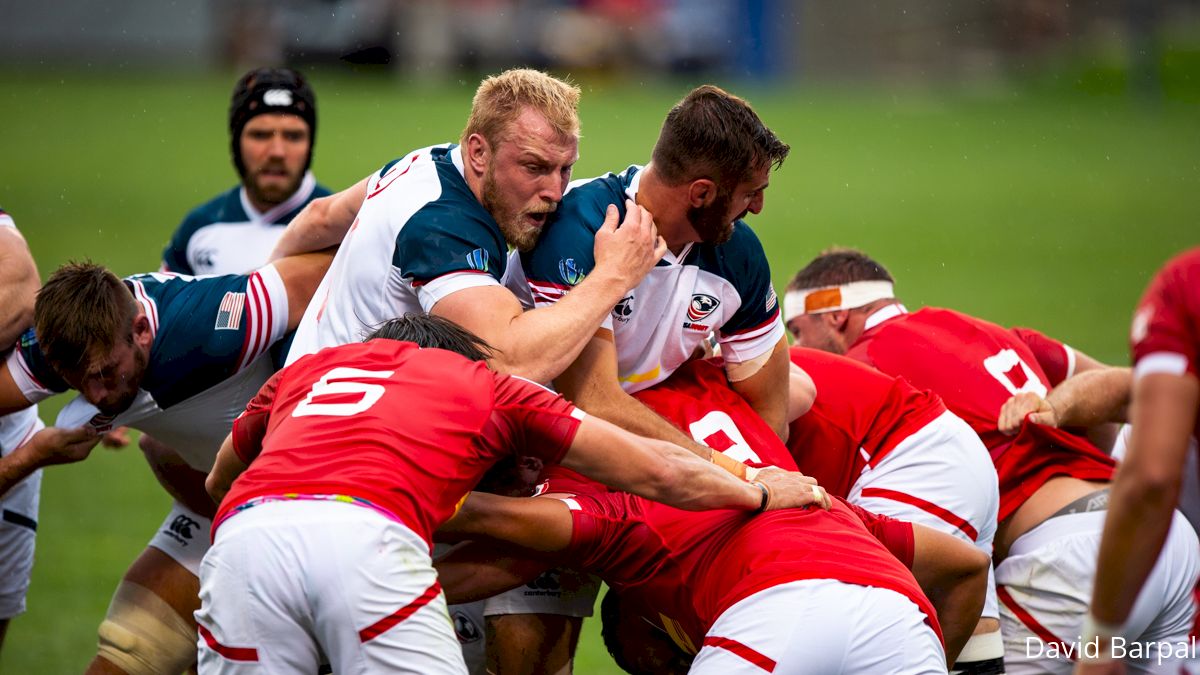
A maul happens when a player carrying the ball is held by one or more opponents, and one or more teammates bind onto the ball carrier. All players must be on their feet and moving towards a goal line. The ball stays off the ground during a maul. You will see groups of players pushing, trying to drive the maul forward or stop it.

Today's Exclusive Deals
Limited-time Exclusive Deals. Check current discount on Amazon.
Check Price on Amazon As an Amazon Associate I earn from qualifying purchases.A maul is different from a ruck, where the ball is on the ground and players compete by pushing over it. In a maul, the ball is kept in the hands, and the players involved stay upright.
How A Maul Starts
A maul usually begins after a player is tackled but remains standing. For example, after catching a pass, a player is grabbed by defenders. Then, teammates join in, binding onto the ball carrier. Once one or more opponents, plus one or more teammates, are bound together on their feet and the ball carrier is upright, the maul is formed.
Mauls often start from:
- Lineouts (when the ball is thrown in from the sideline)
- Kick returns
- Open play, when players join a held-up ball carrier
Key Rules Of A Maul
Understanding the rules helps you see why mauls are so strategic.
- Only players on their feet can join.
- The ball must be off the ground.
- The maul must keep moving. If it stops and does not restart, the referee will stop the play.
- Joining the maul must be from behind the last teammate (the “hindmost foot”).
- Players cannot collapse the maul on purpose; this is dangerous and illegal.
Referees watch mauls closely for safety and fairness. Breaking these rules can lead to penalties.
Why Teams Use Mauls
Teams use mauls for several reasons:
- To gain ground while keeping possession.
- To tire out defenders.
- To create space for quick attacks.
- To set up scoring opportunities near the try line.
Mauls are especially common after lineouts, where teams can organize their strongest players to drive forward together.
The Structure Of A Maul
A maul looks chaotic, but there’s a clear structure.
- Ball Carrier: The player holding the ball, usually at the back.
- Support Players: Teammates bind onto the ball carrier or each other, forming a “pack.”
- Opponents: Defenders bind on and try to stop the maul from advancing.
Here’s a simple comparison of maul vs. ruck:
| Aspect | Maul | Ruck |
|---|---|---|
| Ball Position | Held above ground | On the ground |
| Players’ Stance | Standing | Leaning over the ball |
| How it Starts | Ball carrier held upright | Ball on ground after tackle |
Common Maul Tactics
Teams use tactics to make their mauls strong and effective.
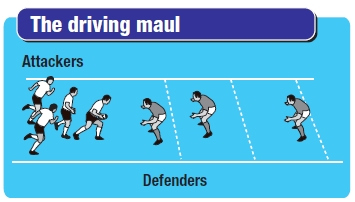
- Driving Maul: The pack pushes forward in a group, trying to move the maul up the field.
- Peeling Off: Sometimes, the ball carrier will break away from the maul with support to surprise defenders.
- Rolling Maul: The maul moves slightly to one side, making it hard for defenders to stop.
Success in mauling is about teamwork, timing, and power.

When Is A Maul Successful Or Unsuccessful?
A maul is successful if:
- The ball moves forward and creates space or leads to a try.
- The team keeps possession and gains ground.
A maul is unsuccessful if:
- The ball does not move and the referee calls a “turnover.”
- The ball becomes unplayable.
- The team commits a penalty (e.g., joining from the side).
Here are some outcomes of a maul:
| Outcome | Description |
|---|---|
| Forward Progress | Team gains meters and keeps ball |
| Stalemate | Maul stops, referee gives a scrum |
| Penalty | Team breaks rules, opponent gets free kick |
| Turnover | Defenders hold maul up, win possession |
Examples From Professional Rugby
Some of the best rugby teams use mauls as a weapon. For example, the South African Springboks are famous for their powerful mauls, often scoring tries from lineouts near the try line. In the 2019 Rugby World Cup, their mauling strength helped them win several matches.
Another example is the England national team, who often use well-organized mauls to control the game and build pressure on opponents.
Common Mistakes In Mauling
New players and teams often make errors in the maul:
- Joining from the side, which leads to penalties.
- Not staying on their feet, causing dangerous play.
- Letting the maul stop moving, which gives the ball to the other team.
- Not protecting the ball carrier, leading to turnovers.
A smart team trains to avoid these problems and use the maul as a safe, effective tool.
Non-obvious Insights About Mauls
- Mauls are about patience, not just power. Some beginners think only strength matters, but timing and coordination are just as important. Teams must move together as one unit, not as individuals.
- Referee communication is key. Teams who talk to referees and show they are trying to play safely often get the benefit of the doubt in close calls. Good communication can prevent unnecessary penalties.
Key Data About Mauls
- In the 2023 Six Nations, about 18% of tries came from driving mauls.
- The average maul lasts 5-8 seconds before the ball is played.
- Teams with strong mauls can keep the ball for over 70% of maul situations.
These numbers show why coaches invest time in training mauls at every level.
Safety And The Maul
Mauls can be dangerous if players collapse or join carelessly. Rugby laws are strict about safety, and referees stop play quickly if things get risky. Players wear mouthguards and sometimes headgear for protection, but technique and discipline are most important.
Anyone learning rugby should practice mauls with experienced coaches and always follow the rules.
For more details on rugby laws and mauls, check the official World Rugby explanation.
Frequently Asked Questions
What Is The Main Purpose Of A Maul In Rugby?
The main purpose is to move the ball forward while keeping possession. Teams use the maul to break defensive lines, create scoring chances, and control the game’s pace.
How Is A Maul Different From A Ruck?
A maul happens when the ball carrier is held upright, and the ball is above the ground. A ruck starts when the ball is on the ground after a tackle, and players try to win it by pushing over.
Can A Maul Happen Anywhere On The Field?
Yes, a maul can form anywhere, but it’s most common near the sideline after a lineout or when a player is held up during open play.
Is Collapsing A Maul Ever Allowed?
No, deliberately collapsing a maul is always illegal because it can cause injury. Players must stay on their feet, or the referee will give a penalty.
Who Are The Best Teams At Mauling?
Traditionally, teams like the South African Springboks, England, and New Zealand All Blacks are known for strong mauls. Their forwards train hard to master this skill.
Understanding the maul makes watching rugby more enjoyable. Next time you see a maul on the field, you’ll know what’s happening, why teams use it, and what makes it so important in the world of rugby.

