
Transporting a kayak seems simple at first, but once you try moving a long, heavy, and often awkward boat, you realize it takes much more planning. Whether you’re heading out for a river adventure, a peaceful lake paddle, or a sea kayaking trip, getting your kayak safely to the water is the first challenge.
Damaging your kayak, car, or hurting yourself is easy if you don’t know the right way. With the right techniques, tools, and preparation, you can transport your kayak safely, avoid fines, and have a stress-free start to your trip. This guide explains everything you need to know—step by step.

Today's Exclusive Deals
Limited-time Exclusive Deals. Check current discount on Amazon.
Check Price on Amazon As an Amazon Associate I earn from qualifying purchases.Understanding Kayak Transport Basics
Before you start, it’s important to know why kayak transport is different from moving other gear. Kayaks are long, often over 3 meters (10 feet), and can weigh 20–40 kg (44–88 lbs). Their shape makes them tricky to tie down. Wind can catch them, and they are not designed to rest flat on hard surfaces for long. Ignoring these facts can cause damage, accidents, or legal trouble.
Many beginners miss one key point: your car’s roof and rack system must handle the kayak’s weight and length. Check your car manual and roof rack specifications before planning any trip. Some countries and states have laws about overhanging loads, so always check local transport rules.
Choosing The Right Vehicle And Rack System
Your vehicle type and roof rack system make a huge difference in how easy and safe it is to transport your kayak. Not all cars can carry a kayak the same way.
| Vehicle Type | Recommended Method | Capacity |
|---|---|---|
| Sedan/Hatchback | Roof rack + pads/straps | 1 kayak (sometimes 2 small ones) |
| SUV | Roof rack, crossbars, or trailer | 2–3 kayaks |
| Pickup Truck | Bed extender or roof rack | 1–3 kayaks |
| Van | Roof rack or inside (if space) | 1–2 kayaks |
Crossbars are a must for most roof racks. Foam blocks or cradles can help protect both the kayak and your car. If you don’t have a roof rack, foam pads and straps can work for short trips, but they’re not as secure for highways.
Different Methods For Transporting A Kayak
1. Car Roof Rack
This is the most common way for a single kayak. A quality roof rack supports the weight, and special kayak cradles or saddles hold the boat in place.
- Use bow and stern lines to prevent the kayak from shifting at high speeds.
- Always check that the rack is tightly fixed to your car.
- Don’t overload your roof: Check your car’s roof weight limit.
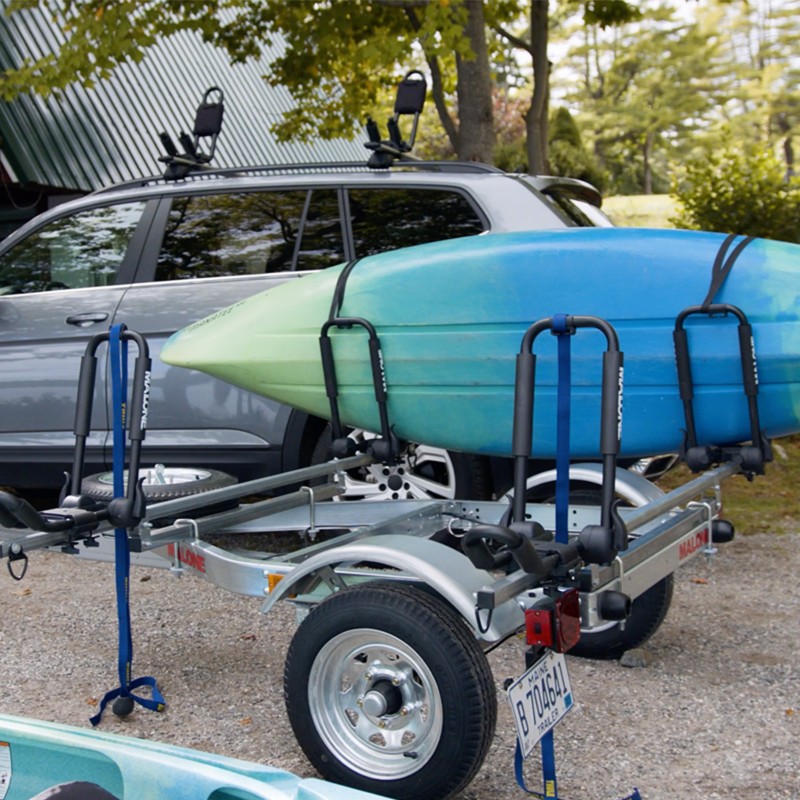
2. Kayak Trailers
For multiple kayaks or long trips, a trailer is often safer and easier. Kayak trailers can carry 2–6 kayaks, depending on the size.
- Trailers need a tow hitch and can make parking harder.
- They’re great for clubs or families with several boats.
3. Pickup Truck Bed
With a pickup, you can place the kayak in the truck bed. Use a bed extender for longer kayaks. Secure with straps and a red flag if the kayak sticks out.
- Always tie down the kayak at both ends.
- Check local rules for overhanging loads.
4. Inside A Van
Some smaller kayaks fit inside a van with the seats down. Use soft padding and secure the kayak to prevent movement.
- Don’t block your view or access to controls.
- Not for longer kayaks.
5. Inflatable Kayaks
Inflatable kayaks fold up and fit in a car trunk or back seat. This is the easiest transport method but only works with inflatables.
Pro tip: Many paddlers forget to check for sharp objects inside their vehicle that can damage the kayak’s hull.
Loading A Kayak Onto Your Vehicle
Lifting a kayak safely is just as important as securing it. Kayaks are heavy and unwieldy. Lifting alone risks injury or dropping the boat.
Lifting Techniques
- Team Lift: Two people should lift from each end, keeping the kayak level.
- Solo Lift: For lighter kayaks, use the “clean and jerk” method—squat, lift with legs, rest the kayak on your thighs, then lift over your head.
- Lift-Assist Devices: Tools like rollers, load-assist bars, or kayak lift systems can help solo paddlers.
Common mistake: Dragging the kayak on the ground scratches and damages the hull.
Positioning
- Place the kayak hull (bottom) down on flat racks, or on its side in J-cradles.
- Center the kayak on the rack—overhang should be equal front and back.
Securing The Kayak Properly
Many transport accidents happen because the kayak is not strapped securely. Use strong cam straps (never bungee cords) and tie-downs.
| Securing Method | Best For | Common Issues |
|---|---|---|
| Cam Straps | All kayaks | Can loosen if not threaded correctly |
| Bow & Stern Lines | Long or highway trips | May whistle if not tight |
| Ratcheting Straps | Heavy kayaks | Can damage kayak if overtightened |
Securing Steps:
- Run straps over the kayak and through the roof rack bars.
- Tighten until snug, but not crushing the kayak.
- Tie off loose strap ends.
- Attach bow and stern lines from kayak ends to car bumpers/tow points.
Non-obvious insight: Always check your kayak after driving a few kilometers. Straps can loosen as the car moves and the kayak shifts.
Transporting Multiple Kayaks
Carrying more than one kayak increases the challenge. Use a wider roof rack, stackers, or a trailer.
- Stackers let you carry kayaks on their sides.
- Use extra straps between kayaks and the rack.
- Avoid stacking more than recommended—overloading is unsafe and illegal.
Practical example: Two sea kayaks on a small sedan’s roof are unsafe. Consider a trailer or use two vehicles.

Legal And Safety Considerations
Transporting a kayak is not just about the gear—it’s also about the law. Many countries have rules on overhang, tie-downs, and visibility.
- Kayaks must not extend dangerously past the car’s front or rear (often 1 meter in front, 1.5 meters behind).
- Use a red flag or bright cloth on any overhanging end.
- Some states require extra lights at night.
- Police may fine you for insecure loads or dangerous overhangs.
Data point: In the US, fines for unsafe loads can reach $200–$500 depending on the state.
Extra tip: Take a photo of your loaded kayak before you drive. If you’re stopped, you can show how you secured it.
Tips For Long-distance Transport
Going far? Highway speeds, wind, and rain can all affect your kayak and car.
- Stop every 50–100 km to check straps and kayak position.
- Remove loose items from the kayak (paddles, seats) before transport.
- Use cockpit covers to stop rain or debris from getting inside.
- Watch your speed—high speeds increase wind pressure on the kayak.
Example: On a 300 km road trip, straps can loosen from vibration and weather changes. Checking and re-tightening prevents accidents.
Common Mistakes To Avoid
Even experienced paddlers make transport mistakes. Here are some to watch for:
- Using old or frayed straps: They can snap and send your kayak flying.
- Failing to use bow/stern lines: Wind can lift the kayak, especially at highway speeds.
- Not checking height limits: Kayak on a car can hit garage doors or low bridges.
- Ignoring roof weight limits: Overloading can damage your car and risk fines.
- Leaving accessories in the kayak: They can fall out, get lost, or damage the car.
Tools And Accessories That Make Transport Easier
Investing in the right accessories can save time and protect your kayak.
- Foam pads: Protect car roof and kayak hull.
- Kayak cradles/saddles: Hold kayak securely in place.
- Load assist arms/rollers: Help solo paddlers load heavy kayaks.
- Locking straps: Prevent theft if you stop on the way.
- Cockpit cover: Keeps water and insects out.
Non-obvious insight: A simple pool noodle, cut lengthwise, can work as emergency padding for last-minute kayak transport.

Preparing Your Kayak For Transport
Don’t just throw the kayak on the car and go. A few simple steps can prevent damage.
- Rinse off sand, salt, or mud—debris can scratch both kayak and car.
- Remove or secure seats, pedals, or other loose gear.
- Dry the kayak—water adds weight and can drip into your car.
- Check hatches and compartments are closed tight.
What To Do When You Arrive
Unloading is as important as loading. Use the same safe lifting techniques to avoid injury.
- Place the kayak on soft ground or grass.
- Check for new scratches or cracks.
- If possible, let the kayak dry fully before storing.
Summary Table: Transport Methods Vs. Best Use
Here’s a quick reference for choosing the right transport method.
| Method | Best For | Limitations |
|---|---|---|
| Roof Rack | 1–2 kayaks, short-medium trips | Hard for tall vehicles, weight limit |
| Trailer | 3+ kayaks, long trips | Needs tow hitch, parking space |
| Pickup Bed | Short kayaks or with bed extender | Overhang rules, limited space |
| Inside Van | Short or inflatable kayaks | Space and access limits |
| Inflatable Kayak | Solo paddlers, small cars | Not for serious whitewater or sea use |
Final Thoughts
Transporting a kayak doesn’t have to be stressful or risky. With the right preparation, equipment, and attention to detail, you can get your kayak to the water safely every time. Remember to always check your vehicle’s capacity, use the right straps, and follow local laws.
Small mistakes—like loose straps or ignoring overhang rules—can cause big problems. Take your time, double-check everything, and you’ll start your kayaking trip with confidence.
If you want to see more detailed kayak transport options and legal requirements, visit the Wikipedia Kayak page.
Frequently Asked Questions
How Many Kayaks Can I Safely Carry On My Car Roof?
Most car roofs with a proper rack can hold one to two kayaks. Using stackers or a trailer allows for more, but never exceed your roof rack and vehicle’s weight limit.
Do I Need Special Straps To Secure My Kayak?
Yes, use cam straps or ratchet straps made for roof racks. Avoid ropes or bungee cords, as they can loosen or break during transport.
What Is The Legal Overhang Limit For Kayaks?
In most places, the kayak should not stick out more than 1 meter at the front or 1. 5 meters at the back of your car. Always use a red flag or bright marker on any overhanging end.
Can I Transport A Kayak Without A Roof Rack?
For short distances, you can use foam pads and straps, but a roof rack is much safer for long trips or highway speeds.
How Often Should I Check The Kayak During Transport?
Stop and check the straps and kayak position every 50–100 km, and always after sharp turns or sudden stops. This helps prevent accidents and keeps your kayak secure.