Paddle boarding is one of the fastest-growing water sports in the world. If you own an inflatable stand-up paddle board (SUP), there’s one tool you cannot ignore: the paddle board pump. While it may seem like a simple accessory, the pump is essential for getting your board ready for the water. Choosing the right pump can make the difference between an easy start to your adventure and a frustrating workout before you even begin. Let’s explore what a paddle board pump is, how it works, the different types, what features matter, and why it deserves more attention than most beginners give it.
What Is A Paddle Board Pump?
A paddle board pump is a device used to inflate or deflate an inflatable paddle board. Most modern paddle boards are inflatable because they’re easier to carry and store than solid boards. However, they need to be filled with air to become stiff and usable on the water. The pump forces air into the board until it reaches the correct pressure, measured in pounds per square inch (PSI).

Today's Exclusive Deals
Limited-time Exclusive Deals. Check current discount on Amazon.
Check Price on Amazon As an Amazon Associate I earn from qualifying purchases.There are manual and electric paddle board pumps, each with their own benefits and drawbacks. The goal of every pump is the same: to fill your board with the right amount of air, so it performs well and supports your weight. Without enough air, a board can feel soft and slow, or even sink. Too much pressure, and it might burst.
Types Of Paddle Board Pumps
Choosing the right type of pump is key to an enjoyable paddle boarding experience. Here’s a look at the main options:
Manual Pumps
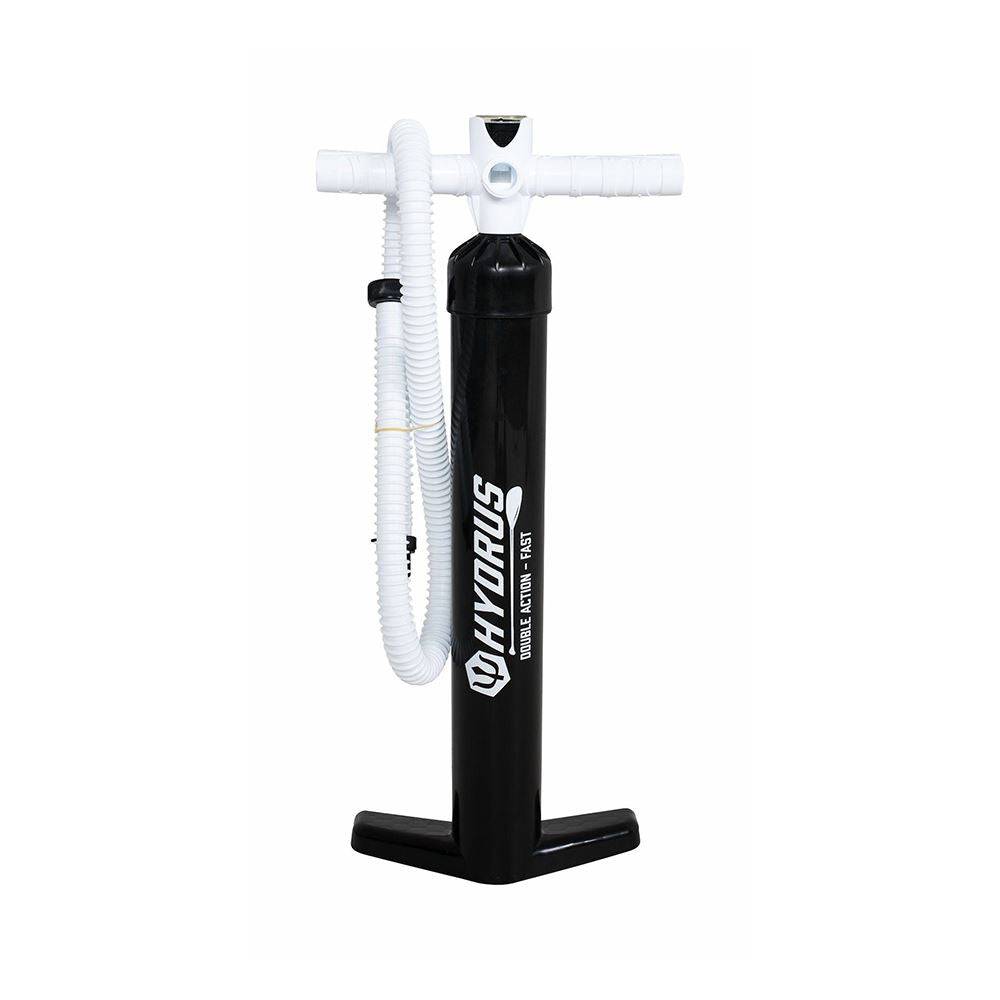
Manual pumps are powered by your own effort. They come in two main designs: single-action and double-action.
- Single-action pumps push air into the board only when you press down.
- Double-action pumps push air both when you press down and when you pull up, filling the board faster.
Manual pumps are reliable because they don’t need electricity or batteries. They’re also lightweight and easy to carry.
Example: Double-action Hand Pump
Most inflatable SUPs include a double-action hand pump. With this pump, you can fill a regular-sized board (10–12 feet) in about 7–10 minutes, depending on your strength. Some double-action pumps have a switch to turn off the upstroke once the pressure gets high, making it easier to finish inflating.
Electric Pumps
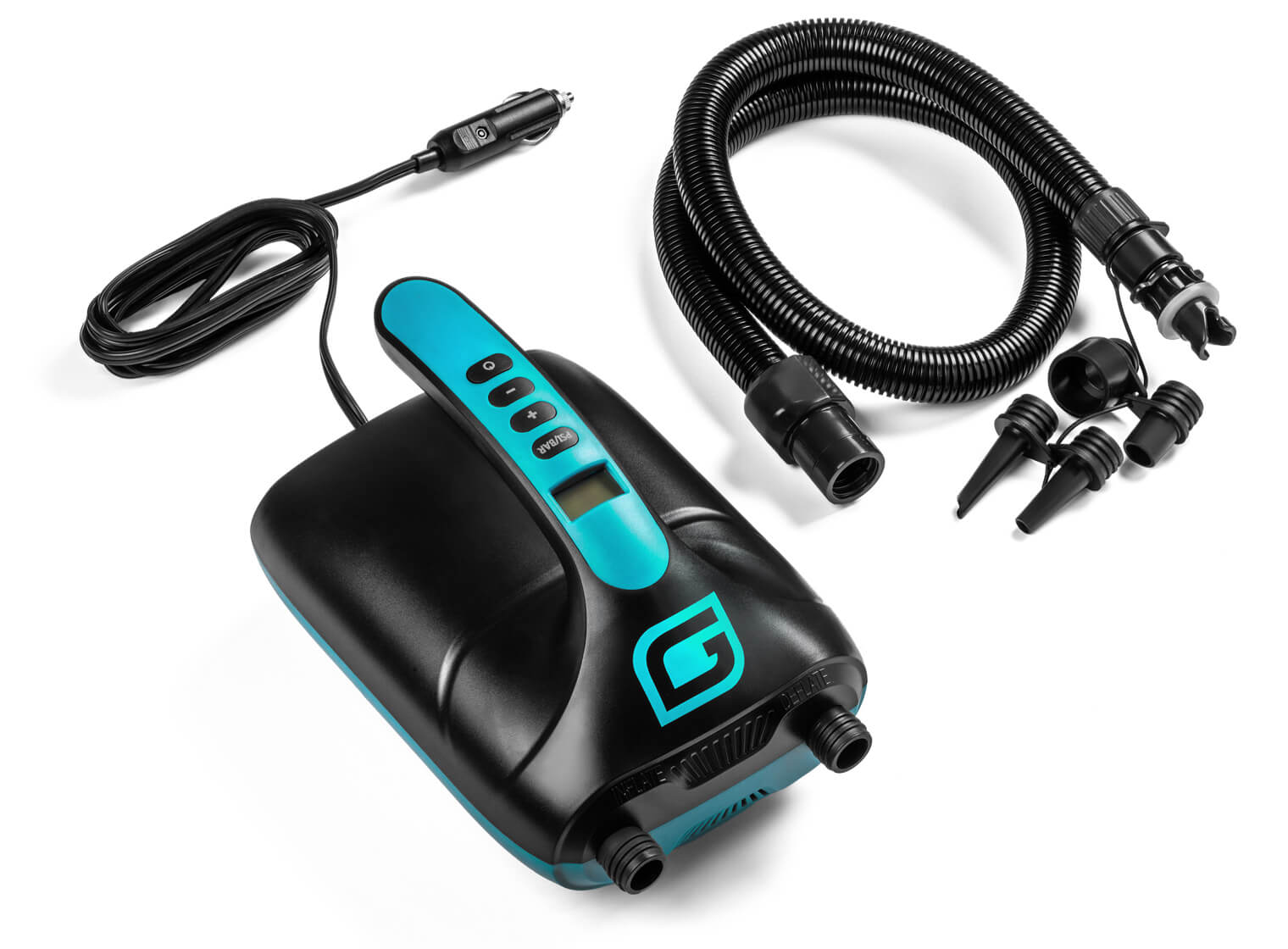
Electric paddle board pumps use a motor to do the work for you. You plug them into your car’s 12V outlet, a portable battery, or a wall socket. They’re much faster than manual pumps, especially for high-pressure boards (often up to 15 PSI or more).
Electric pumps usually have two stages:
- The first stage fills the board quickly with high volume, low pressure.
- The second stage switches to high pressure to reach the final PSI.
Most electric pumps also have an automatic shutoff feature, so they stop when the set pressure is reached.
Example: 12v Electric Pump
A 12V electric pump can inflate a standard SUP in 5–8 minutes with almost no effort. Some models can inflate multiple boards in a row before needing a cooldown.
Integrated Pumps
Some newer paddle boards have built-in pumps. These are less common but offer ultimate convenience. You step on a foot pedal or use your body weight to pump as you carry the board to the water. These pumps are usually not as powerful as separate pumps and are better for quick top-ups.
How A Paddle Board Pump Works
All paddle board pumps work on the principle of moving air from outside into the board. When you press the handle or turn on the motor, air is forced through a hose and into a valve on the board. The valve has a one-way system to prevent air from escaping.
Most pumps have a pressure gauge, which is essential for knowing when you’ve reached the right PSI. Inflating a paddle board usually requires between 12 and 20 PSI, depending on the model and rider’s weight.
Here’s a simple step-by-step process:
- Attach the hose to the pump and the board’s valve.
- Make sure the valve pin is in the correct position (usually “up” for inflating).
- Start pumping—either by hand or by turning on the electric pump.
- Watch the pressure gauge as the board fills.
- Stop when you reach the desired PSI.
- Remove the hose quickly and close the valve.
Key Features To Consider When Choosing A Paddle Board Pump
Not all pumps are equal. The best pump for you depends on your needs, budget, and how often you paddle board. Here are some important features to think about:
1. Pump Type (manual Or Electric)
If you paddle close to your car and want to save energy for the water, electric might be best. If you need a backup or travel light, manual pumps are more reliable.
2. Maximum Pressure
Check that the pump can reach the PSI your board needs. Some cheaper pumps only go up to 10 or 12 PSI, which is not enough for most adult boards.
3. Volume Per Stroke
A higher volume per pump stroke means faster inflation. This is often measured in liters. Double-action pumps move more air with each stroke than single-action pumps.
4. Durability
Look for sturdy materials like reinforced plastic or metal handles. Cheaper pumps can break after a few uses, especially at high pressure.
5. Pressure Gauge Accuracy
A clear, accurate gauge helps you avoid under-inflating (which makes the board soft) or over-inflating (which risks damage).
6. Portability
If you hike to remote spots, you’ll need a light, compact pump. Some electric pumps are surprisingly small and fit in a backpack.
7. Power Source (for Electric Pumps)
Check if the pump works with your car, a portable battery, or wall socket. Some models offer adapters for all three.
8. Cooling System (for Electric Pumps)
A good cooling system lets you inflate several boards in a row without overheating. If you paddle with friends or family, this is important.
Common Mistakes When Using A Paddle Board Pump
Even experienced paddlers make simple mistakes that can lead to frustration or equipment damage. Here are a few to avoid:
- Not checking the valve position. If the valve is set to deflate, the air will escape as soon as you remove the hose.
- Ignoring the pressure gauge. Some boards feel “full” before they reach the right PSI. Always check the gauge.
- Over-inflating. Too much air can damage the seams or burst the board.
- Forgetting the O-ring. The hose connection often has a small rubber ring. If it’s missing, you’ll lose air and pumping takes much longer.
- Using the wrong adapter. Not all pumps fit all boards. Double-check your hose and adapters before heading out.
Comparing Manual And Electric Paddle Board Pumps
To help you see the difference, here’s a comparison of the main features:
| Feature | Manual Pump | Electric Pump |
|---|---|---|
| Inflation Time | 7–10 minutes | 5–8 minutes |
| Effort Required | High | Low |
| Portability | Very portable | Portable, but heavier |
| Reliability | Can’t break easily | May overheat or fail |
| Power Source | Human power | Electricity (car, battery) |
| Price Range | Low to medium | Medium to high |
How To Use A Paddle Board Pump Efficiently
Getting your board ready doesn’t have to be a struggle. Here’s how to make pumping quicker and easier:
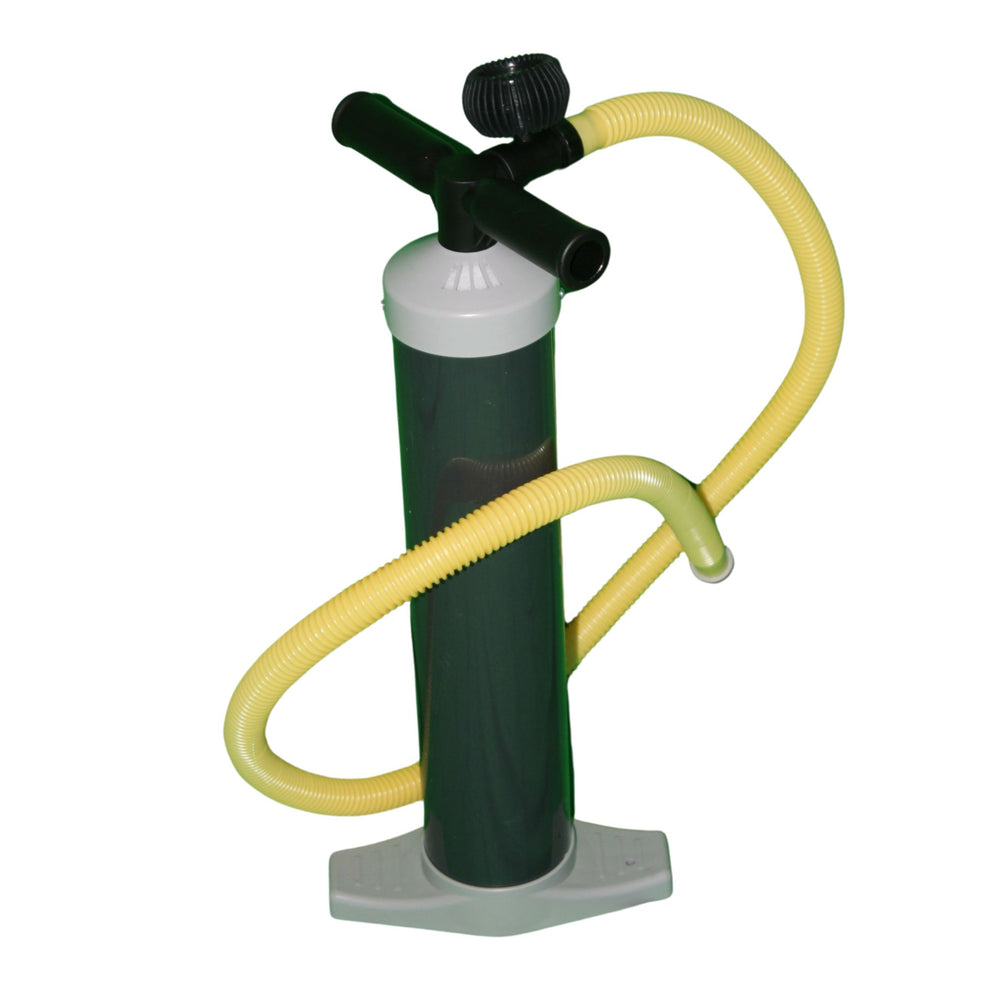
- Warm up your pump. For manual pumps, a few slow strokes help the seals work better.
- Use your body weight. Stand with feet apart and use your legs, not just your arms.
- Switch modes if possible. Some pumps let you change from double-action to single-action for high pressure.
- Take breaks if needed. If you feel tired, pause for a moment—especially in hot weather.
- Store your pump out of sun and sand. This keeps the seals from drying out and the gauge from fogging.
Paddle Board Pump Maintenance Tips
A well-maintained pump lasts for years and works when you need it. Here are some tips:
- Clean after use. Rinse off sand and saltwater.
- Check the hose and seals. Look for cracks, leaks, or missing O-rings.
- Store dry and cool. Avoid leaving the pump in a hot car or wet bag.
- Lubricate moving parts. A little silicone spray keeps the pump running smoothly.
- Test before trips. Inflate your board at home to check for any problems.
Data: Inflation Times For Different Board Sizes
To give you an idea of how long it takes to inflate various boards, see the chart below:
| Board Size | Manual Pump Time | Electric Pump Time | Recommended PSI |
|---|---|---|---|
| 10’6” x 32” | 7 minutes | 5 minutes | 15 PSI |
| 11’ x 33” | 8 minutes | 6 minutes | 16 PSI |
| 12’6” x 34” | 10 minutes | 8 minutes | 18 PSI |
Notice that larger boards take longer to inflate, and may require a more powerful pump.
Non-obvious Insights For Beginners
Many beginners overlook a few key details:
- PSI matters more than you think. A board at 10 PSI may look full, but it will bend under your weight. Always inflate to the recommended pressure for best performance.
- Your pump is part of your safety gear. A poor-quality or broken pump can leave you stranded if your board loses air or you need to top up pressure before a long day on the water.
- No single pump fits every board. Some brands use different valve types, so always check your adapter before travel.
When To Replace Your Paddle Board Pump
Like all gear, pumps wear out. If you notice these signs, it’s time for a new one:
- The handle is cracked or loose.
- The hose leaks or pops off.
- The gauge gives false readings.
- You need much more effort than before for the same result.
- The electric pump shuts off before reaching full pressure.
Don’t wait for total failure. A good pump is affordable and can save your board from damage.
Paddle Board Pump Accessories
There are a few extras that can make your pumping experience better:
- Pressure release valve: Prevents over-inflation automatically.
- Inline pressure gauge: Lets you read pressure even if your pump’s gauge is hard to see.
- Valve adapters: Useful if you have different brands of boards or want to use an air compressor.
- Battery pack: For electric pumps away from your car.
Environmental Impact: Why Proper Inflation Matters
A well-inflated board glides more easily, meaning you use less energy and disturb the water less. Under-inflated boards create more drag, which can tire you out and make you less likely to respect wildlife or natural areas. Also, a high-quality pump lasts longer and reduces plastic waste.
For more background on the development of inflatable paddle boards and related technology, you can visit the Wikipedia page on Standup Paddleboarding.
Frequently Asked Questions
What Is The Ideal Psi For An Inflatable Paddle Board?
The ideal PSI depends on your board’s size and manufacturer, but most adult boards recommend 12–18 PSI. Always check your board’s label or manual. Inflating to the right PSI improves stability and speed.
Can I Use A Regular Air Pump For My Paddle Board?
Not always. Most paddle boards use a high-pressure valve (like a Halkey-Roberts or Bravo valve) that doesn’t fit bicycle or car tire pumps. Use a SUP-specific pump with the correct adapter.
How Long Does It Take To Inflate A Paddle Board?
With a manual pump, it usually takes 7–10 minutes. An electric pump can do the job in 5–8 minutes, depending on the board’s size and the pump’s power.
What Should I Do If My Pump Is Not Inflating The Board?
Check the valve position, the hose connection, and the O-ring. Also, look for leaks in the hose or cracks in the pump body. Sometimes, sand or salt can block the valve—rinse it with clean water.
Is It Safe To Leave My Board Inflated?
Yes, but avoid leaving it in direct sun or inside a hot car, as air expands with heat. If you leave it inflated for a long time, check the pressure before each use and top up as needed.
A reliable paddle board pump is more than just a tool—it’s your ticket to a stress-free day on the water. Choose wisely, keep it in good shape, and you’ll spend less time on the shore and more time enjoying the water.