Paddle boarding is a fantastic way to enjoy the water, relax, and get some exercise at the same time. If you own an inflatable paddle board, though, you know there’s one important step before hitting the water: pumping up your board. Many beginners wonder, “How long does it take to pump up a paddle board?” The answer is not always simple, as the time can vary depending on several factors. Understanding these factors can save you time and energy, and help you enjoy your paddle boarding experience even more.
Let’s dive deep into the real-world details: what affects inflation time, how different pumps and boards compare, tips to inflate faster, and the small things most people forget that can make a big difference. By the end of this guide, you’ll know exactly what to expect and how to speed up your setup process.
Today's Exclusive Deals
Limited-time Exclusive Deals. Check current discount on Amazon.
Check Price on Amazon As an Amazon Associate I earn from qualifying purchases.What Influences Paddle Board Inflation Time?
The time it takes to pump up a paddle board is not the same for everyone. Several things play a role in how quickly you can get your board ready:
- Type of Pump: Manual, double action, or electric pumps all work at different speeds.
- Board Size and Volume: Larger and thicker boards hold more air, so they take longer.
- Target PSI: The higher the pressure your board needs, the more time and effort it takes.
- User’s Strength and Stamina: Physical fitness and experience can speed up or slow down pumping.
- Pump Quality and Condition: Well-maintained, high-quality pumps work faster.
- Weather and Temperature: Hotter weather can slightly expand air, but not enough to skip proper inflation.
- Technique: Using the right method helps avoid wasted energy.
Missing just one of these details can add minutes to your setup or leave your board under-inflated. Many first-timers are surprised how much effort is required, especially with manual pumps.
Comparing Pump Types: Manual Vs Electric
The kind of pump you use is the single biggest factor in inflation time. Here’s how manual and electric pumps stack up:
| Pump Type | Average Time (Minutes) | User Effort | Common Pros | Common Cons |
|---|---|---|---|---|
| Single Action Manual | 10-15 | High | Simple, no power needed | Slow, tiring |
| Double Action Manual | 6-10 | Medium-High | Faster, less effort | Still physical |
| Electric Pump | 8-12 | Very Low | Easy, no sweat | Needs power source |
Manual pumps are the most common because they come in the box with many inflatable paddle boards. Single-action pumps push air into the board only on the down stroke, while double-action pumps fill on both the up and down strokes, cutting time and effort.
Electric pumps are becoming more popular. They plug into your car or use a battery and do all the work for you, though they may be a bit slower than a very fast, strong user with a double-action pump.
Board Size, Shape, And Psi: What Do They Change?
Not all paddle boards are the same size or shape. A wider, thicker, or longer board will take more time to inflate because it holds more air. The volume of a board is measured in liters. Most adult boards range from 220 to 350 liters.
Here’s a quick look at how board size changes inflation time:
| Board Size | Volume (Liters) | Average Inflation Time |
|---|---|---|
| Kids/Small Adult | 150-220 | 5-8 minutes |
| Standard Adult | 220-300 | 8-12 minutes |
| Large/Touring/Race | 300-400+ | 12-18 minutes |
Target PSI matters too. Most paddle boards need 12–15 PSI (pounds per square inch), but some race boards or specialty boards go up to 20 PSI. The higher the PSI, the harder the last few minutes of pumping become. Many beginners stop too soon, leaving the board soft and harder to paddle.
Step-by-step: How To Pump Up A Paddle Board Faster
You can save energy and time by following a few smart steps. Here’s an effective way to inflate your board, with tips that even some experienced paddlers miss:
1. Choose A Flat, Clean Surface
Set your board down flat. Avoid sharp rocks or hot sand, which can damage the material or make pumping harder.
2. Connect The Pump Properly
Insert the pump hose into the valve securely. Make sure the valve is in the “inflate” position (usually a spring-loaded pin).
3. Start With Double Action (if Available)
Use the double-action setting on your pump for the first part of inflation. This fills the board much faster with less effort.
4. Switch To Single Action For High Pressure
Once pumping becomes harder (usually at 7–8 PSI), switch to single-action. This makes it easier to reach the final PSI without as much struggle.
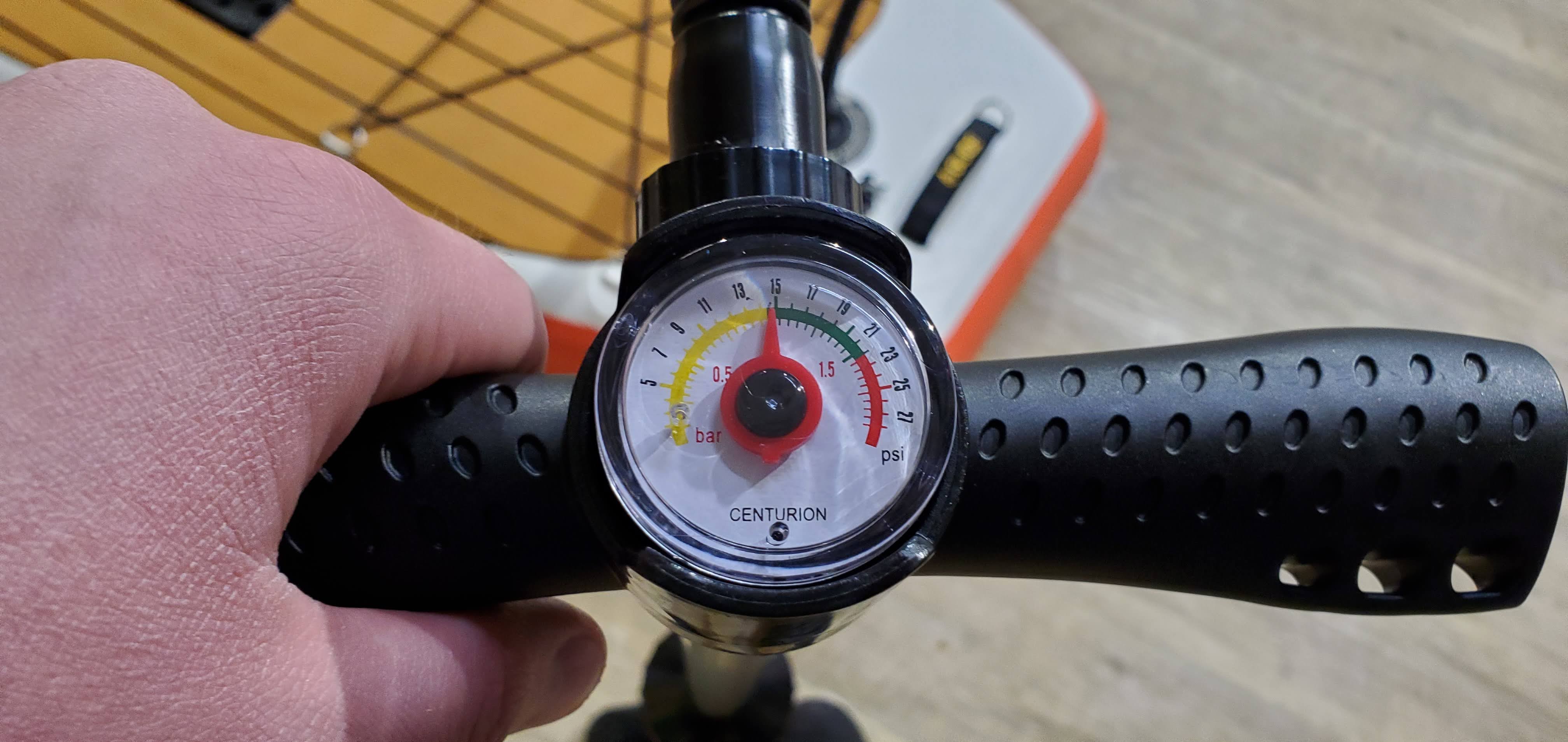
5. Watch The Pressure Gauge
Don’t guess. Use the built-in gauge to reach the correct PSI. Under-inflation causes poor performance; over-inflation risks damage.
6. Finish With Quick Bursts
For the last few pumps, use quick, strong bursts. This helps seat the valve and maximizes air in the board.
7. Secure The Valve Cap
Always close the valve cap tightly. A loose cap can lead to slow leaks.
Pro Tip:
If you’re using an electric pump, set the target PSI and let it run while you prepare the rest of your gear. Some paddlers top off the last 1–2 PSI with a manual pump for extra firmness, since many electric pumps slow down at higher pressures.

Real-world Examples: User Experiences And Mistakes
Let’s look at a few practical examples, showing how different choices change your setup time:
- Beginner with Manual Pump (Standard Board, 12 PSI):
Takes about 12 minutes. First time users often pause for breath, and may under-inflate by stopping at 9–10 PSI.
- Experienced User with Double-Action Pump:
Can finish in 7–8 minutes by pumping quickly and switching modes at the right time.
- Electric Pump User (Large Touring Board, 15 PSI):
Inflation time is around 14 minutes, but requires almost no physical effort.
- Two Boards, One Pump:
If you have two boards and only one manual pump, expect the second inflation to take longer due to fatigue. With two people, you can switch and rest.
Common Mistake:
Many people forget to check the gauge and stop pumping when the board “feels firm. ” This usually means it is 2–3 PSI under the recommended pressure. The board will flex too much under your weight, making it slow and hard to turn.
How To Make Inflation Easier And Faster
A few clever tricks can shave minutes off your setup and make pumping less tiring:
- Warm Up First:
Stretch Your Arms And Back. Pumping Is A Workout!
- Use Your Legs:
Stand over the pump, bend your knees, and use leg power. Your legs are stronger than your arms.
- Pump in Short Sessions:
If you get tired, pause for 10 seconds. Quick breaks can help you finish faster overall.
- Upgrade Your Pump:
Investing in a quality double-action or electric pump can cut your inflation time in half.
- Maintain Your Pump:
Lubricate the pump piston with a little silicone spray and check the hose for cracks.
Insider Insight:
Some experienced paddlers inflate the board a little less (by 1 PSI) on very hot days, because air expands slightly in direct sunlight. This prevents over-inflation as the board sits on the beach.

How Long Should It Really Take? Honest Timelines
For most people, inflating a standard adult paddle board (10’6” length, 32” width, 6” thick, 220–300 liters) with the included manual pump takes 8–12 minutes. Electric pumps take about the same time, but you don’t get tired.
Here’s a summary of typical times for different setups:
| Setup | Inflation Time |
|---|---|
| Manual Single-Action Pump | 10–15 minutes |
| Manual Double-Action Pump | 6–10 minutes |
| Electric Pump | 8–12 minutes |
| Dual Electric Pump (two at once) | 8–14 minutes |
If you’re much faster or slower than these times, check your pump, your technique, or your board’s volume. With practice, most people can cut their time by 2–3 minutes as they get used to the process.
When Should You Inflate Your Board?
A question many forget to ask: Should you inflate your board at home or at the water? The answer depends on your transport and the distance to the water.
- If you have a small car, it’s easier to carry the board deflated and pump at the water’s edge.
- If you live close and can walk with an inflated board, it saves time at the beach.
- On hot days, avoid leaving an inflated board in a hot car, as this can increase internal pressure and risk damage.
Some advanced paddlers keep their boards inflated for several days during a trip, checking pressure each day to compensate for temperature changes. Always check local rules, as some beaches require boards to be deflated when not in use.
Frequently Asked Questions
How Do I Know When My Paddle Board Is Fully Inflated?
Use the pump’s pressure gauge. Most boards should be at 12–15 PSI. The board should feel rock hard, not soft, when you press with your thumb. Don’t rely on feel alone; always check the number.
Is It Bad To Over-inflate A Paddle Board?
Yes. Over-inflating can damage the seams or cause the board to burst, especially on hot days. Stick to the recommended PSI in your board’s manual.
Can I Use An Air Compressor To Inflate My Paddle Board?
You can, but be very careful. Air compressors fill very quickly and can easily over-inflate and damage your board. Use a special adaptor and monitor the pressure constantly.
How Long Does It Take To Deflate A Paddle Board?
Deflating is much faster than inflating. Most boards deflate in 2–4 minutes. Roll the board tightly to push out the last air, but don’t fold it too sharply as this can cause creases.
Are Electric Pumps Safe For All Paddle Boards?
Most modern electric pumps are designed for inflatable paddle boards, but always check the pump’s PSI limit. Avoid using pumps that don’t have an automatic shut-off at your board’s recommended PSI.
Getting your paddle board ready doesn’t have to be a chore. With the right pump, good technique, and a few smart tips, you’ll be on the water in no time. If you want more details on paddle board inflation techniques or pump comparisons, check out this resource from the Wikipedia Standup Paddleboarding page for more background.
Inflating your paddle board is just the first step to a great day on the water. With a little practice and the right tools, it becomes a quick, easy part of your adventure—so you can focus on what really matters: paddling, exploring, and having fun.