
Standing up on a surfboard looks simple when you watch skilled surfers glide across the waves. But for beginners, this move—called the “pop-up”—can feel confusing and even impossible at first. The pop-up is the transition from lying on your stomach to standing on the board. Mastering this step unlocks the real joy of surfing: catching and riding waves. While it takes practice, anyone can learn the basics with the right approach and mindset.
This article breaks down every step of standing up on a surfboard in a way that’s easy to follow, even if you’ve never surfed before. You’ll learn practical tips, the common mistakes to avoid, and why technique matters more than strength.
Today's Exclusive Deals
Limited-time Exclusive Deals. Check current discount on Amazon.
Check Price on Amazon As an Amazon Associate I earn from qualifying purchases.Whether you’re preparing for your first surf lesson or trying to improve on your own, this guide will give you the confidence to start catching waves and standing up with control.
Why The Pop-up Is So Important
The pop-up is the foundation of surfing. It’s not just about standing—it’s about doing it quickly, smoothly, and in the right position. A good pop-up helps you:
- Stay balanced as the board moves under you
- Catch more waves without falling off
- Develop good habits that make it easier to learn advanced maneuvers
If your pop-up is slow or awkward, you’ll likely fall, miss the wave, or develop bad habits that are hard to fix later. Many surfers spend their first few sessions just practicing this move. But don’t worry—everyone struggles at first, and progress comes with repetition.
Understanding The Surfboard And Wave
Before you stand up, you need to pick the right equipment and wave. Here’s what matters:
Choosing The Right Surfboard
For beginners, a larger board is best. It gives you more stability and more time to stand up. Here’s a quick comparison of common beginner boards:
| Board Type | Length | Stability | Weight Limit |
|---|---|---|---|
| Foam Longboard | 8–9 feet | Very High | Up to 110 kg |
| Mini Mal | 7–8 feet | High | Up to 90 kg |
| Shortboard | 5–7 feet | Low | Up to 80 kg |
A foam longboard is best for learning to stand up because it’s wide, stable, and forgiving if you fall.
Picking The Right Wave
Start on small, slow waves—ideally whitewater (the foamy part after the wave breaks). These waves move more slowly and don’t have as much power, giving you more time to pop up.
Pro tip: If the wave is too steep or powerful, standing up becomes much harder and more dangerous.
Step-by-step: How To Stand Up On A Surfboard
Let’s break down the pop-up into easy steps. Think of it as a sequence you can practice both on the beach and in the water.
1. Paddle And Position Yourself
Lie on your board with your chest just below the center, so the tip (nose) of the board is about a hand’s width above the water. Paddle to catch the wave with even, strong strokes, keeping your feet together and your head up.
Beginner insight: Many people lie too far back or forward. This slows the board or makes it tip. Practice finding the “sweet spot.”
2. Feel The Wave Push You
As the wave lifts the back of your board, you’ll feel a sudden forward push. This is your moment to pop up—don’t try to stand before you feel this movement.
3. Hands Flat Under Your Chest
Place your hands flat on the board, next to your chest (not by your shoulders). Your fingers should be spread out for grip. Keep your elbows bent and close to your body.
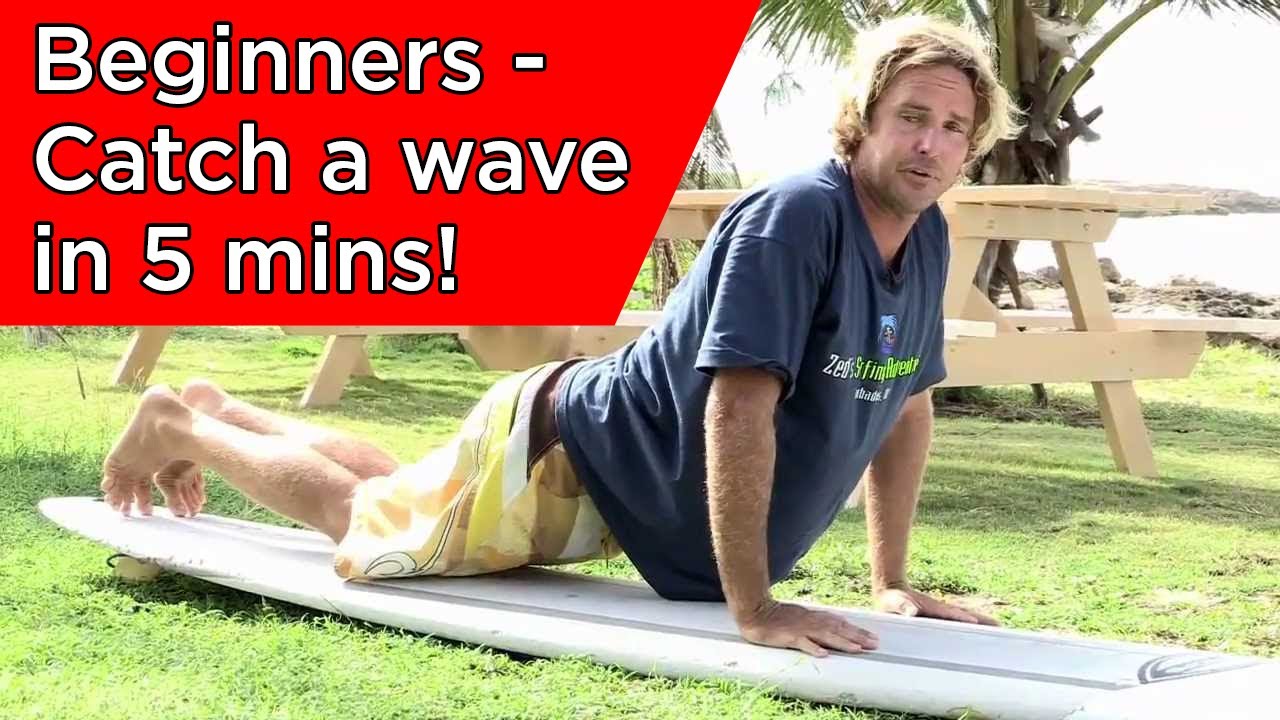
4. Push Up Like A Cobra Pose
Press up with your arms, lifting your chest off the board. Your hips and legs should stay low and relaxed. This move is similar to the cobra pose in yoga.
Non-obvious tip: Don’t grab the rails (edges) of the board—this can make the board wobble and turn unexpectedly.
5. Pop Your Feet Under You
In a single, quick movement, bring your feet under your body. Your back foot lands first, flat and across the board. Your front foot lands just behind where your chest was lying.
Think about jumping your feet forward, not stepping one foot at a time. Stepping is slower and less stable.
6. Land Low And Centered
Bend your knees deeply and keep your weight centered over the board. Your shoulders should be facing sideways, and your arms out for balance.
Real-world example: Watch videos of pro surfers—they always land with low, bent knees, never standing stiff or upright.
7. Look Forward, Not Down
Keep your eyes looking toward where you want to go, not at your feet. Looking down is a common cause of falling.
Complete Pop-up Sequence (at A Glance)
- Paddle and catch the wave
- Place hands flat under chest
- Push chest up (don’t use knees)
- Pop both feet under you quickly
- Land low, knees bent, arms out
- Look forward and ride the wave
Practicing The Pop-up On Land
Practicing on the beach (or even at home on a mat) is the fastest way to build muscle memory. Here’s a simple “dry land” drill:
- Lie face down with hands under your chest
- Push up with your arms, keeping hips low
- Pop both feet under you at once, landing low and balanced
- Stand up and freeze—check your foot position
- Repeat 10–20 times before every surf session
Experienced surfers still use this drill to keep their pop-up sharp. The more you practice on land, the easier it will feel in the water.
Pop-up Variations And When To Use Them
Not everyone can do a “standard” pop-up right away. Some people need to start with easier variations.
The Knee Pop-up
Instead of bringing both feet up at once, you can first bring your back knee onto the board, then bring your front foot forward. This method is easier for those with limited flexibility or strength.
Warning: The knee pop-up is slower and less stable, but it’s better to stand up slowly than not at all. As you improve, try to switch to the standard pop-up.
The Step-by-step Pop-up
For those struggling with the jump, you can break it into small parts:
- Push up with arms
- Bring back foot onto the board
- Bring front foot forward
- Stand up fully
This method is rarely used by advanced surfers, but it can help beginners gain confidence.
Common Mistakes And How To Fix Them
It’s easy to develop bad habits as you learn. Here are the most frequent mistakes and how to correct them:
1. Grabbing The Rails
Holding the edges of the board makes it tip sideways. Always keep your hands flat, palms down, by your chest.
2. Standing Up Too Soon
If you try to stand before the wave is pushing you, you’ll lose balance. Wait until you feel the forward movement.
3. Looking Down
Your body follows your head. If you look at your feet, you’ll fall. Train yourself to look forward every time.
4. Not Bending Knees
Straight legs make balancing hard. Bend your knees deeply—think “squat” position.
5. Feet Too Close Together
If your feet are close, you’ll wobble. Land with your feet at least shoulder-width apart.
6. Trying To Stand In One Motion
Some beginners try to stand straight up instead of popping quickly. The pop-up should be explosive—a quick, smooth move, not a slow climb.

Building Strength And Flexibility For Surfing
Many people think standing up on a surfboard requires lots of upper body strength. In reality, technique and timing matter more, but a basic level of fitness does help. Here are exercises that make the pop-up easier:
- Push-ups: Build arm and chest strength for the initial push
- Burpees: Mimic the pop-up movement and improve explosive power
- Yoga (especially Cobra and Upward Dog): Increases flexibility in your back and shoulders
- Core exercises: Planks and crunches help with stability
You don’t need to be an athlete, but a little training goes a long way.
How Stance Affects Your Balance
Foot placement matters. Your stance is how you stand on the board once you’re up. There are two main stances:
| Stance | Front Foot | Back Foot | Common For |
|---|---|---|---|
| Regular | Left foot forward | Right foot back | Right-handed people |
| Goofy | Right foot forward | Left foot back | Left-handed people |
If you’re not sure which stance feels natural, try sliding on a floor in socks or jumping forward—whichever foot goes forward first is usually your lead foot.
Progressing Beyond The Pop-up
Once you can stand up consistently, focus on these next steps:
- Turning: Shift weight on your toes or heels to steer the board
- Trimming: Move forward or backward slightly to speed up or slow down
- Riding Green Waves: After mastering whitewater, try catching unbroken (green) waves
Non-obvious insight: Don’t rush to shorter boards. Many beginners try to “upgrade” too soon, but longer boards help you learn faster and have more fun.
Safety Considerations For Beginners
Standing up on a surfboard is exciting, but safety should always come first. Remember these basics:
- Always wear a leash so you don’t lose your board
- Check for other surfers around you before popping up
- Practice popping up away from rocks and strong currents
- Never surf alone as a beginner
Bonus tip: If you fall, cover your head with your arms and come up slowly. The board can bounce back after a wipeout.

Realistic Timeline: How Long Does It Take To Stand Up?
For most people, standing up on a surfboard takes between 1 and 5 sessions with practice. Children and flexible adults sometimes do it on their first day. If you practice pop-ups on land and paddle fitness, your chances improve quickly.
Stat: Surf schools report that about 80% of beginners stand up in their first lesson if conditions are good and the board is right for their size.
Extra Resources And Where To Learn More
Watching video tutorials and joining a surf school can speed up your progress. To see pop-ups in action, check out Wikipedia’s Surfing page or official surf education channels. Learning with a coach or friends also makes the process safer and more enjoyable.
Frequently Asked Questions
What If I Can’t Jump Both Feet Up At Once?
That’s normal for many beginners. Try the knee pop-up or step-by-step method at first. With regular practice on land, you’ll build the strength and speed to pop up both feet together over time.
How Do I Know If My Feet Are In The Right Place?
Your front foot should land just behind where your chest was lying, pointing toward the side of the board. Your back foot should be near the tail, across the board. Both feet should be at least shoulder-width apart for stability.
Should I Use A Foam Board Or A Hard Board To Learn?
Foam boards are best for beginners because they are stable, float well, and are less likely to hurt you if you fall. Hard boards can be slippery and less forgiving. Once you’re confident standing up, you can try smaller or harder boards.
Can I Practice The Pop-up At Home?
Absolutely! Practicing on a yoga mat or carpet at home builds muscle memory. The more you repeat the move on land, the easier it becomes in the water.
What’s The Biggest Mistake Beginners Make When Standing Up?
Most beginners either look down at their feet or try to stand too quickly before the wave is pushing them. Focus on looking forward and timing your pop-up as the wave lifts your board. Bend your knees and stay low for the best balance.
Learning how to stand up on a surfboard is a journey. With patience, practice, and the right technique, you’ll soon experience the thrill of riding waves. Remember, every surfer started as a beginner—enjoy the process and have fun!