Choosing the right ski length can make learning much easier for beginners. Many new skiers feel unsure about what size to pick, and it’s easy to get lost among numbers, brands, and advice from friends. The right length of skis helps you feel stable, learn faster, and enjoy your time on the slopes.
But what exactly is the best ski length for a beginner? Let’s break it down step by step, so you can feel confident before you even put your boots on.
Why Ski Length Matters For Beginners
Ski length is more than just a number—it changes how you balance, turn, and stop. Shorter skis are easier to control, especially at slow speeds. This helps beginners feel safe and allows them to learn the basics without fear. In contrast, longer skis can be harder to manage because they turn slowly and need more skill to control.
A ski that’s too long can make you feel out of control. Too short, and you might not get enough stability. That’s why it’s important to pick a ski length that matches your body size, skill, and the type of skiing you want to do.
Main Factors That Affect Ski Length
Several things decide what ski length is best for you. Let’s look at the most important ones:
1. Your Height And Weight
Your body size is the starting point for choosing ski length. Taller and heavier people need longer skis for better balance and support. Lighter and shorter skiers do better with shorter skis.
2. Your Skill Level
A beginner should always start with shorter skis. They’re easier to control and less likely to catch an edge. As you improve, you can try longer skis for more speed and stability.
3. Type Of Skiing
Are you planning to ski only on groomed runs, or do you want to try powder? For most beginners, all-mountain skis are the best choice, and their ideal length is a bit shorter than other types.
4. Age
Children’s skis are much shorter, but even adults should choose length based on age and fitness. Older beginners sometimes prefer shorter skis for easier handling.
5. Gender
Women’s skis are sometimes a bit lighter and shorter for the same height and weight, but the difference is small. The main focus should be on body size and skill.
How To Measure The Right Ski Length
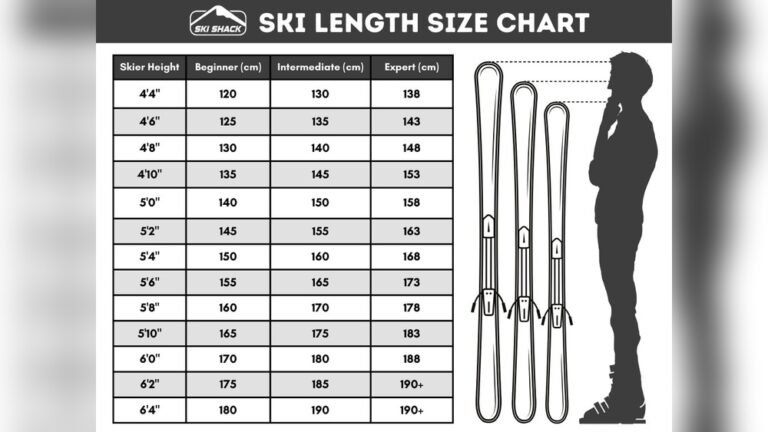
There’s no single “perfect” number, but you can use some simple guidelines. For most beginners, the best ski length is somewhere between the chin and the nose when the ski stands upright.
Here’s a quick way to check:
- Stand the ski vertically next to you.
- The tip should reach between your chin and your nose.
A more precise method uses your height and weight. This helps adjust for people who are lighter or heavier than average.
Example:
- If you are 170 cm tall, most beginners will start with skis that are 145–160 cm long.
- If you are heavier, choose closer to 160 cm.
- If you are lighter, choose closer to 145 cm.
Quick Reference Table: Beginner Ski Length By Height
To help you see the right range quickly, here’s a common recommendation for adult beginners:
| Skier Height (cm) | Recommended Ski Length (cm) |
|---|---|
| 150–155 | 135–145 |
| 156–160 | 140–150 |
| 161–170 | 145–160 |
| 171–180 | 155–165 |
| 181–190 | 165–175 |
Remember: These are just starting points. Your weight and confidence can shift the ideal length by a few centimeters.
How Weight Changes The Right Ski Length
Weight plays a big role, especially if you are much heavier or lighter than average for your height. Heavier skiers need longer skis for support, while lighter skiers can go shorter. Ski manufacturers often give a weight chart to help you choose.
Here’s a simplified reference:
| Weight (kg) | Ski Length for Beginners (cm) |
|---|---|
| 45–55 | 135–145 |
| 56–65 | 140–150 |
| 66–75 | 150–160 |
| 76–85 | 160–170 |
| 86–95 | 170–175 |
If you fall between sizes, beginners should always pick the shorter ski for easier learning.
Men Vs. Women: Does Gender Matter?
Many ski brands make specific models for men and women. The main differences are usually the weight, flex, and sometimes the mounting position. For ski length, women’s skis are often 5–10 cm shorter for the same height. However, this is just a guide.
A confident woman who is athletic may do well with a longer ski, while a cautious male beginner might prefer a shorter one. Gender is less important than comfort and control.

Adult Vs. Child: Ski Length For Kids
Children’s skis are much shorter. The most common rule: the ski should reach somewhere between the child’s chest and chin.
For example:
- A child who is 120 cm tall may start with a ski around 100–110 cm long.
- Lighter or less confident children should start with the shorter end.
Kids grow quickly, but it’s better to pick a ski that’s a bit too short than too long for safety and fun.
Common Mistakes Beginners Make
Even with all these guidelines, many beginners still pick the wrong ski length. Here are some common mistakes to avoid:
- Choosing skis that are too long – Many people think longer skis are “cool” or more stable, but for beginners, they are much harder to control.
- Ignoring weight – A heavier beginner on a short ski will feel unstable, while a light beginner on a long ski will struggle to turn.
- Not asking for help – Ski shop staff have experience fitting thousands of people. Always ask for their advice.
- Letting friends choose for you – What works for your friend may not work for you. Everyone’s body is different.
- Not considering the type of skiing – If you stick to groomed runs, choose an all-mountain ski in the beginner length range.
How Flex And Shape Affect Length Choice
Ski length is important, but it’s not the only thing. Ski flex (how stiff or soft the ski is) and shape (sidecut/radius) also affect how a ski feels.
- Softer flex is better for beginners because it’s easier to turn and more forgiving.
- Shorter turning radius (more sidecut) means the ski turns more easily.
If you’re unsure, ask about beginner skis with a soft flex and short radius for the easiest learning.
When To Go Longer Or Shorter
Even with guidelines, there are reasons to choose a ski that’s a bit longer or shorter.
Choose a longer ski if:
- You are heavier than average for your height.
- You want more stability at higher speeds (after you gain some confidence).
- You are athletic or have experience with similar sports.
Choose a shorter ski if:
- You are lighter than average.
- You want to make learning as easy as possible.
- You feel nervous about speed or control.
Real-world Example: First Ski Lesson
Imagine a beginner named Ana. She is 165 cm tall and weighs 60 kg. She plans to ski only on groomed runs and feels a bit nervous. According to the tables above, her ideal ski length is 145–155 cm. She should start at 145 cm, as a shorter ski will help her learn basic turns. After a few lessons, Ana can try a longer ski for more speed and stability.
Renting Vs. Buying: How To Decide On Ski Length
For your first trips, renting is often better. Rental shops have a range of lengths and can adjust based on how you feel. If you plan to buy your own skis, try a few different lengths first. It’s better to be slightly short than too long as a beginner.
Ski Length And Terrain Types
Not all skiing happens on the same type of snow. Here’s a quick look at how ski length changes with terrain:
- Groomed slopes: Shorter skis are best for beginners.
- Powder: Slightly longer skis help you float but are not needed for new skiers.
- Park/freestyle: Shorter skis for tricks and jumps.
- Off-piste/ungroomed: Beginners should avoid until more advanced.
Most beginners will spend 100% of their time on groomed runs, so stick with the recommended lengths above.
Sidecut And Ski Width: Do They Matter?
Sidecut means how much the ski curves inward in the middle. More sidecut (shorter radius) helps you turn more easily, which is great for beginners. Ski width (underfoot) also plays a small role—narrower skis are easier to control on hard snow.
For your first skis, look for:
- Medium to narrow waist width (70–85 mm)
- Noticeable sidecut (short turning radius)
This makes learning basic turns smoother and less tiring.

Ski Length For Different Types Of Beginner Skis
There are a few main types of beginner skis:
- All-mountain skis: Best for most beginners; choose between chin and nose height.
- Carving skis: Slightly shorter; easier to turn.
- Freestyle skis: Shorter for tricks; not usually for first-time skiers.
- Powder skis: Longer for deep snow; not for beginners.
For your first pair, stick with all-mountain or carving skis in the recommended range.
How To Tell If Your Skis Are The Right Length
After a few runs, you can feel if the skis are the right size. Signs your skis are too long:
- Hard to turn or stop
- Feel like you’re “fighting” the ski
- Lose control at low speeds
Signs your skis are too short:
- Feel unstable at medium speed (less of a problem for true beginners)
- Tip dives into soft snow (rare on groomed slopes)
If you feel comfortable, balanced, and able to turn easily, you’ve chosen well.
Expert Tips For First-time Buyers
- Test before buying – Rent or demo different lengths to see what feels best.
- Talk to instructors – They can spot issues and suggest changes.
- Don’t focus on “cool” skis – Simple, beginner-friendly models are best for learning.
An extra insight: Many beginners don’t realize that ski length is just as important as boot fit. Uncomfortable boots will ruin your day much faster than a ski that’s 5 cm too long or short.
Key Takeaways
- Most beginners do best with skis that stand between their chin and nose.
- Height, weight, and skill are the most important factors.
- Shorter skis are always easier for learning the basics.
- Don’t be afraid to ask for help or try different lengths before buying.
- It’s better to start short and go longer as you improve.
For more in-depth information, you can visit the Wikipedia page on ski length.
Frequently Asked Questions
How Do I Know If My Skis Are Too Long Or Too Short?
If your skis are too long, you’ll find it hard to turn, control speed, and might feel “out of balance. ” If they’re too short, you may feel unstable at moderate speeds, but for true beginners, this is rare.
Can I Use The Same Ski Length As My Friend If We Are The Same Height?
Not always. Weight and skill matter too. If you’re lighter or less confident, go shorter. If you’re heavier or athletic, you can try a longer ski.
Should Children Use The Same Ski Length Rule As Adults?
No. Kids should use much shorter skis, usually between their chest and chin. Safety and control are more important than speed for young skiers.
How Often Should I Change My Ski Length As I Improve?
As your skills grow, you can move up 5–10 cm in ski length. This gives you more stability and speed. Try a longer ski after you feel comfortable on all beginner slopes.
Is It Better To Rent Or Buy Skis As A Beginner?
Renting is usually best. You can try different lengths and styles without spending a lot. Once you know what you like, you can buy the perfect pair for your style and body.
Choosing the right ski length as a beginner makes learning fun and safe. Start with the right size, focus on balance and control, and you’ll enjoy every moment on the snow.
