Surfing is a thrilling sport that connects people with the ocean’s energy. Whether you dream of riding big waves or simply want to enjoy the rush of your first ride, there is one skill every beginner must master: the pop-up technique. It is the moment when you shift from lying on your board to standing up and actually surfing the wave. Without a smooth pop-up, catching and riding waves becomes nearly impossible.
Some people think surfing is only about balance and paddling. But the pop-up is the bridge between catching a wave and truly surfing. If you pop up too slowly, you miss the wave. If your hands or feet are in the wrong place, you will fall.
The pop-up technique is the first major test for every new surfer. Let’s explore what it is, why it matters, how to do it right, and how you can improve your own pop-up step by step.
What Is The Pop-up Technique In Surfing?
The pop-up technique in surfing is the quick movement that takes a surfer from lying flat on the surfboard to standing and riding a wave. It looks simple when pros do it, but it’s a complex move that involves timing, strength, and good body control.
When a wave lifts your board, you paddle hard, and then—at the right moment—you push your chest up, bring your feet underneath you, and stand in a balanced position. This motion must be fast and smooth. If you do it well, you “pop up” just as the wave carries you forward.
If you do it wrong, you lose speed, get off balance, or wipe out.
Even experienced surfers spend time improving their pop-up. It’s a basic skill, but also a foundation for advanced moves and bigger waves.
Why Is The Pop-up So Important?
The pop-up is not just the way you stand up—it affects every part of your surfing. Here’s why:
- Timing: A fast pop-up means you catch the wave at the best spot.
- Balance: A clean pop-up puts your feet in the right place, making it easier to stay upright.
- Confidence: If you trust your pop-up, you feel less nervous and enjoy the ride more.
- Wave Count: The better your pop-up, the more waves you will catch.
Some beginners can paddle well and read waves, but struggle with the pop-up. This is often what keeps them from moving from whitewater to green waves. Mastering the pop-up opens the door to real surfing progress.

The Basic Steps Of The Pop-up Technique
The pop-up has several clear steps. Each step must be done in order and with good form. Here is how it works:
- Paddle for the Wave: Start by paddling hard, aiming to match the speed of the wave.
- Feel the Lift: As you feel the wave start to push your board, prepare to move.
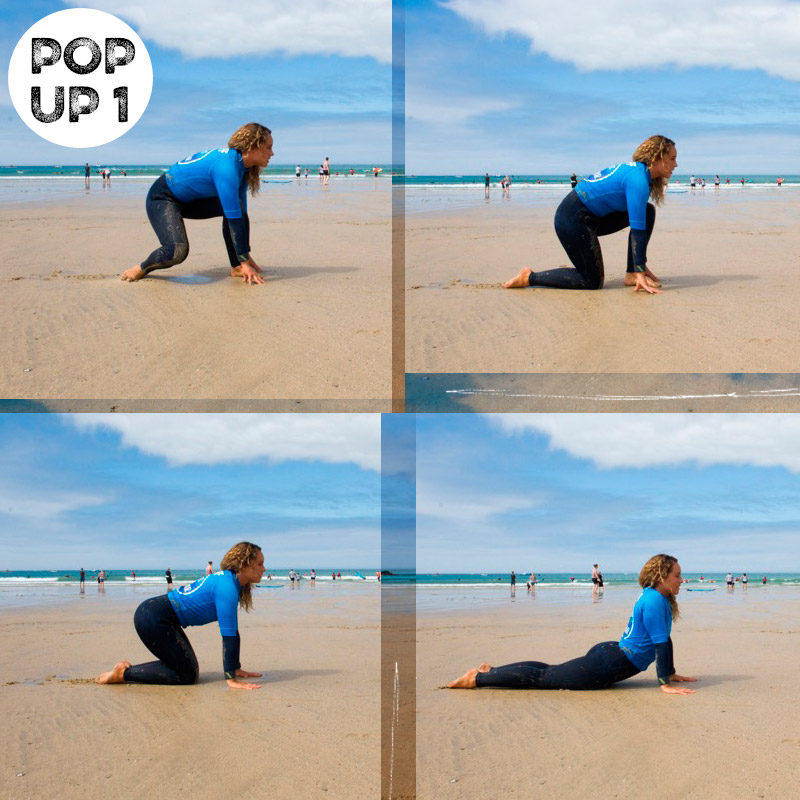
- Hands Under Chest: Place your hands flat on the board, under your chest, close to your ribs.
- Push Up: Press your upper body up with straight arms, keeping your hips low and your back arched.
- Bring Feet Forward: In one quick motion, slide or “pop” your back foot (for most, the right foot) under your body, landing it near the tail of the board. Your front foot should land just behind your hands, near the center line.
- Stand and Balance: Quickly lift your hands off the board and find your balance in a crouched position, knees bent, eyes forward.
The entire process takes less than a second for experienced surfers. For beginners, it may take longer, but speed increases with practice.
Different Pop-up Techniques
Not everyone uses the same method for popping up. Your body type, flexibility, and fitness level all play a role. Here are the most common techniques:
| Technique | Best For | How It Works |
|---|---|---|
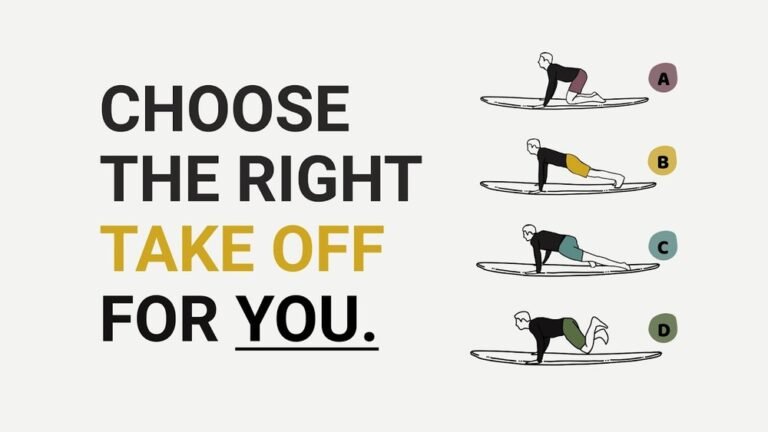
| Standard Pop-Up | Most beginners & intermediates | Push up with both hands, jump both feet under you at the same time |
| Step-Through Pop-Up | Less flexible surfers | Bring your back foot up first, then slide your front foot into place |
| Knee Pop-Up | Older surfers or those with injuries | First bring your back knee forward, then lift into standing position |
The standard pop-up is the fastest and works best as you progress. The step-through and knee pop-up are slower but help if you have tight hips or less upper body strength.
Common Mistakes And How To Fix Them
Many beginners repeat the same errors when learning the pop-up. Knowing these can save you time and frustration.
- Looking Down: If your eyes are on your feet or board, you lose balance. Always look forward.
- Wrong Hand Placement: Hands too far forward or wide make it hard to push up. Keep them under your chest.
- Standing Too Early: Popping up before the wave lifts you will make you fall off the back.
- Standing Too Late: If you wait too long, the wave passes under you.
- Feet Off-Center: If your feet land to the side, the board tips over. Practice landing them on the center line.
- Using Knees: Going to your knees may feel easier, but it slows you down and makes standing harder on fast waves.
- Not Committing: Hesitation leads to awkward, slow movements. Try to do the move in one quick, confident motion.
A non-obvious insight: Most people pop up slower in the water than on land, because the moving board and wave add stress. Practicing on land helps, but expect a learning curve in real waves.
How To Practice The Pop-up On Land
Dry land training is the easiest way to build muscle memory for the pop-up. Here’s how to do it:
- Find a soft surface. A yoga mat or carpet works well.
- Lie flat, hands by your ribs. Imagine you are on your surfboard.
- Practice the full movement. Push up and bring your feet under you in one quick move.
- Repeat. Do sets of 10–20 pop-ups, focusing on speed and smoothness.
Some surfers use a skateboard deck or balance board for added challenge. The key is doing the move in one motion—not in steps.
A helpful tip: Film yourself practicing. Small errors in foot or hand position are easier to see on video than to feel.

Pop-up Technique For Different Board Types
The pop-up is slightly different depending on your board. Longboards, funboards, and shortboards each need small adjustments.
| Board Type | Pop-Up Difficulty | Notes |
|---|---|---|
| Longboard | Easy | More stable, more space for feet, good for learning |
| Funboard | Medium | Balance between stability and maneuverability |
| Shortboard | Hard | Less stable, needs faster, more explosive pop-up |
Longboards are best for learning, as the extra length and width make balance easier. Shortboards require a very quick, powerful pop-up because there is less room for error.
How To Improve Your Pop-up
Improvement comes from both practice and physical training. Here are some proven ways to get better:
- Drills on Land: Practice pop-ups daily until the movement feels automatic.
- Strength Training: Push-ups, burpees, and core exercises help you build the muscles needed.
- Flexibility Work: Stretch your hips and lower back. Tight muscles slow your movement.
- Surf-Specific Yoga: Yoga poses like cobra, downward dog, and lunges support pop-up motion.
- Visualize Success: Picture yourself popping up smoothly before you paddle for each wave.
- Get Feedback: Ask a friend or coach to watch and correct your form.
- Track Progress: Time yourself—good pop-ups are usually under one second.
A key insight: Explosive movement is more important than raw strength. Fast muscle reaction lets you pop up quickly, even if you are not the strongest person in the lineup.
When To Start Practicing In The Water
Once you can do 20 fast, smooth pop-ups on land, try in the water. Start with small whitewater waves. Focus on:
- Timing: Wait until the wave lifts you.
- Commitment: Do the movement in one quick motion.
- Feet Position: Land on the board’s stringer (center line).
At first, expect to fall often. This is normal. The water adds movement and nerves, but after several sessions, your pop-up will feel natural.
Advanced Pop-up Variations
As you progress, you may adapt your pop-up for bigger waves or special situations:
- Late Take-Off: Pop up quickly when dropping down a steep wave.
- Quick Direction Change: Angle your body during the pop-up to start riding down the line.
- Pop-Up with Turns: On shortboards, some surfers twist their hips during the pop-up to set up a bottom turn.
These are not for beginners, but knowing they exist can help you set future goals.
Building Confidence With The Pop-up
The pop-up is as much mental as physical. Fear of falling, embarrassment, or past wipeouts can make you hesitate. Remember:
- Every surfer has struggled with the pop-up.
- Practice builds confidence. The more you do it, the less you think about it.
- Focus on progress, not perfection.
One overlooked tip: Breathing deeply before you pop up calms your nerves and helps you move faster. Try a deep breath as you paddle for the wave.
Real-world Example: Learning The Pop-up
Consider Anna, a 27-year-old beginner. She tried surfing for the first time in Bali. The first day, she could paddle but fell every time she tried to stand. A local coach had her practice 30 pop-ups on the sand before every session.
After one week, Anna’s pop-up became automatic, and she rode her first green wave.
Her story shows that practice, feedback, and patience are key. Many beginners want to rush, but time spent on the basics leads to faster progress.
Resources For Further Learning
If you want to see the pop-up in action, many surf schools and pros have tutorial videos. One useful resource is the Wikipedia page about the pop-up in surfing. Watching slow-motion videos can reveal details you might miss in real time.
Frequently Asked Questions
What Muscles Does The Pop-up Use Most?
The pop-up mainly uses chest, triceps, shoulders, core, and hip flexors. Strong arms help push up, but explosive core and hip movement are key for bringing your feet forward quickly.
How Long Does It Take To Learn A Good Pop-up?
Most beginners need one to two weeks of daily practice to develop a reliable pop-up on land. Doing it smoothly in the water may take longer, as the moving board adds difficulty.
Can I Surf If I Can’t Do A Pop-up?
You can try, but surfing without a pop-up is very hard. Some people with injuries use alternative methods, but for most, a smooth pop-up is essential for catching and riding waves safely.
What If I Am Not Flexible Enough?
If you have tight hips or back, start with the step-through or knee pop-up. Yoga and stretching can improve flexibility. Over time, aim for the standard pop-up, as it is faster and more efficient.
Is It Normal To Fall While Learning The Pop-up?
Yes! Falling is part of learning. Even experienced surfers fall when trying new boards or big waves. Every fall teaches balance and timing. The key is to keep practicing and not give up.
Surfing is a journey, and mastering the pop-up technique is your first big step. With patience, focused practice, and the right mindset, you’ll soon find yourself riding waves with confidence and joy. The ocean rewards those who keep trying, and every good pop-up brings you closer to the thrill of surfing.
