Duck diving is one of those essential skills that separates beginner surfers from those who can confidently handle bigger waves. If you’ve ever watched surfers paddle out into the ocean, you might have noticed how they disappear under oncoming waves, popping up safely on the other side. That smooth, underwater maneuver is called duck diving. For many, it’s the key to getting past breaking waves and reaching the lineup, where the real surfing begins.
This article covers everything you need to know about duck diving in surfing—from what it is and why it matters, to detailed steps, common mistakes, advanced tips, and real-world examples. Whether you’re a curious beginner or looking to improve your technique, you’ll find practical advice, expert insights, and answers to questions surfers often ask.
By the end, you’ll understand duck diving not just as a technique, but as a vital part of the surfing experience.
What Is Duck Diving?
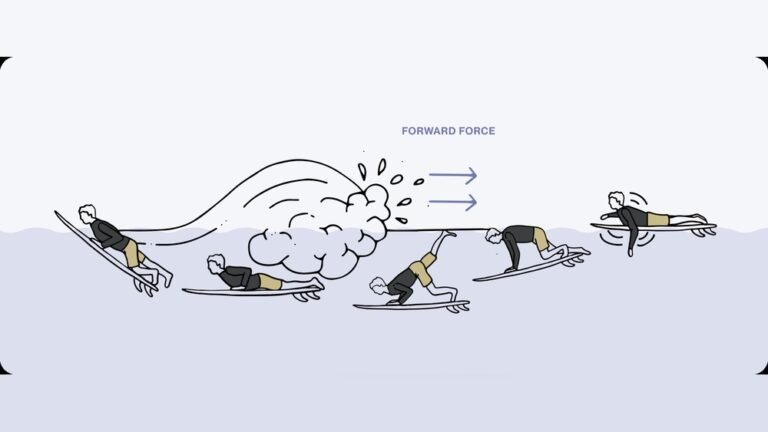
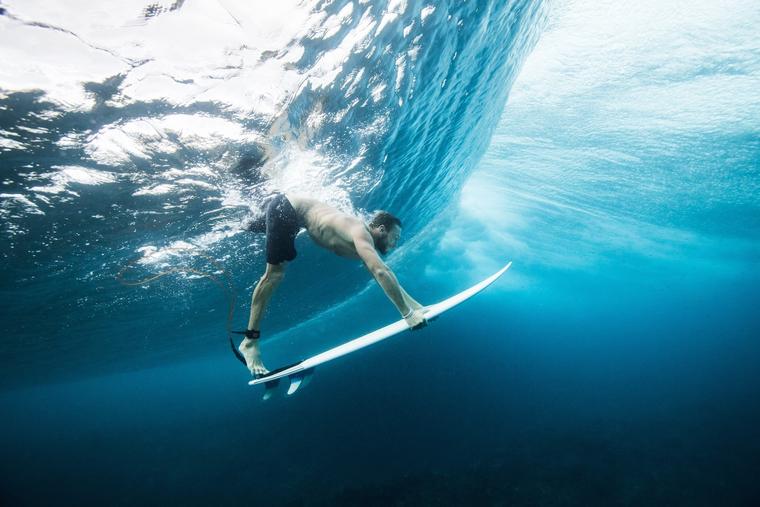
Duck diving is a technique surfers use to push themselves and their boards under an oncoming wave. Instead of letting the wave hit them or push them back, surfers use their body weight and a specific motion to dive their board nose-first under the water, then guide it through and out the other side of the wave.
The name “duck dive” comes from the way ducks dive under water to avoid obstacles or catch food. In surfing, duck diving helps you avoid the wave’s power, conserving your energy and positioning you better to catch the next set.
Why Do Surfers Duck Dive?
Waves breaking near the shore create a lot of power. If you simply try to paddle through them, you’ll be pushed back or flipped over. Duck diving allows you to:
- Get past breaking waves without losing ground
- Reach the lineup (the area behind the waves) efficiently
- Stay in control of your board and direction
- Save energy for paddling and catching waves
Without duck diving, you would spend much of your session fighting waves and making little progress.
How To Duck Dive: Step-by-step Guide
Learning to duck dive takes practice, but the basic steps are clear. Here’s a breakdown of the process, with tips for each phase.
1. Paddle Toward The Wave
As a wave approaches, paddle directly at it. You want to meet the wave head-on, not at an angle.
2. Grab The Rails
About one board-length away from the wave, grip both rails (the sides of your board) firmly. Your hands should be near the lower third of your board, not too close to the nose.
3. Push The Nose Down
Use your body weight and arms to push the nose of the board deep under the water. Your arms should be straight, and your chest should be low, almost touching the board.
4. Use Your Knee Or Foot
As the nose dips down, use your back knee (or sometimes your foot) to push the tail of the board under. This helps sink the whole board, not just the front.
5. Streamline Your Body
Keep your body tight and close to the board. The more streamlined you are, the less resistance you’ll feel from the water.
6. Angle Up And Surface
Once you’re under the wave, angle the nose slightly upward and pull your chest up. The wave will pass over you, and you’ll surface on the other side.
7. Resume Paddling
As soon as you’re past the wave, start paddling again. Don’t lose momentum—this helps you avoid getting caught by the next wave.
Practical Example
Imagine you’re paddling out, and a chest-high wave comes toward you. If you don’t duck dive, that wave can stop you and push you back several meters. But with a well-timed duck dive, you can slide under the wave and keep moving forward, saving time and energy.
When Should You Duck Dive?
Duck diving is used whenever a breaking wave or a large whitewater approaches and you need to get past it. However, not every situation calls for a duck dive. Sometimes, you can simply paddle over smaller waves, especially if you’re using a bigger board.
Duck diving is most effective with shortboards and smaller surfboards. With longboards or foam boards, duck diving is much harder due to the board’s size and buoyancy. In those cases, surfers often use a different technique called the turtle roll.
What Makes Duck Diving Difficult?
Many beginners find duck diving challenging, and for good reason. The main difficulties include:
- Sinking the board: Shorter, thinner boards are easier to duck dive. Longboards are almost impossible to sink deep enough.
- Timing: If you go too early or too late, the wave’s power can still hit you.
- Strength and coordination: Duck diving requires upper body strength, quick movements, and precise timing.
- Water confidence: Being comfortable under water, even when it’s turbulent, is essential.
New surfers often underestimate how much practice is needed to master the motion. Even experienced surfers sometimes miss a dive if their timing or technique is off.

Common Mistakes And How To Avoid Them
Improving your duck dive means avoiding the errors most beginners make. Here’s what to watch for:
1. Not Pushing The Board Deep Enough
If you only dip the nose, the wave will catch the rest of your board and push you back. Use your knee or foot to sink the tail for a deeper dive.
2. Incorrect Timing
Start your duck dive too soon, and you may surface before the wave passes. Go too late, and the wave will hit you before you’re under. Practice timing so you dive just before the wave reaches you.
3. Loose Body Position
If your body is not tight to the board, the wave will pull you apart from it. Keep your chest close and your grip firm.
4. Looking Up Too Soon
Many surfers try to surface too early. Wait until the wave has passed overhead before angling upward.
5. Choosing The Wrong Technique For Your Board
Don’t try to duck dive a board that’s too big or buoyant. For longboards, learn the turtle roll instead.
Duck Diving Vs. Turtle Roll
Not all boards are created equal when it comes to duck diving. Here’s a simple comparison:
| Technique | Best For | Main Motion |
|---|---|---|
| Duck Dive | Shortboards, Fish, Hybrids | Dive under wave, board nose-first |
| Turtle Roll | Longboards, Large Foam Boards | Roll upside down, let wave pass |
If you’re using a shortboard, duck diving is the preferred method. For longboards, you’ll need to master the turtle roll, which involves flipping the board upside down as the wave passes.
Improving Your Duck Dive: Tips From Experienced Surfers
Surfers who master duck diving often share these advanced tips:
- Stay relaxed: Being tense wastes energy and makes your body less streamlined.
- Use your legs: Your back knee or foot helps push the tail down. Don’t just rely on your arms.
- Practice in calm water: Before trying in real waves, practice the motions in a pool or flat water.
- Watch others: Study experienced surfers. Notice how deep they go and how quickly they resurface.
- Film yourself: Video feedback can help spot mistakes you don’t feel in the moment.
An insight many beginners miss: sometimes, a smaller wave can be harder to duck dive than a larger one, because it has less water and passes faster—timing becomes even more important.
How Duck Diving Affects Your Surf Session
A good duck dive not only helps you get out past the waves—it also sets the tone for your entire surf session. Here’s how:
- Saves energy: Less time fighting waves means more energy for paddling and catching waves.
- Builds confidence: Mastering duck diving helps you feel safe and in control, even in bigger surf.
- Keeps you in position: You’ll spend more time in the lineup, less time being pushed back to shore.
Poor duck diving, on the other hand, can leave you exhausted, frustrated, and missing out on the best waves.

Physical Skills Required For Duck Diving
Duck diving is not just about technique—it also requires certain physical abilities:
- Upper body strength: To push the nose deep underwater
- Leg strength: To sink the tail with your knee or foot
- Core stability: To keep your body tight and streamlined
- Breath control: For staying calm underwater, even in choppy waves
Surfers often do exercises like push-ups, planks, and swimming to build these muscles. Flexibility and comfort underwater also make a big difference.
Training Drills And Exercises
To improve your duck diving, try these land and water drills:
- Push-up practice: Builds arm and shoulder strength for pushing the board down.
- Knee drives: While lying on your board, practice quickly driving your back knee into the tail.
- Pool duck dives: Use a bodyboard in a pool to mimic the motion in a safe environment.
- Breath-hold exercises: Train yourself to stay calm and hold your breath for 10–20 seconds, simulating a long duck dive under a big wave.
Remember, the goal is not just strength, but smooth, coordinated movement.
How Board Choice Affects Duck Diving
Your surfboard plays a big role in how well you can duck dive. Here’s a quick comparison of common boards:
| Board Type | Duck Dive Difficulty | Best Technique |
|---|---|---|
| Shortboard | Easy | Duck Dive |
| Fish | Moderate | Duck Dive |
| Hybrid | Moderate | Duck Dive |
| Longboard | Very Hard | Turtle Roll |
| Foam Board | Very Hard | Turtle Roll |
If you’re shopping for a board and plan to surf bigger waves, consider a shorter board that makes duck diving possible. For beginners, starting on a bigger board is fine, but know that duck diving will be much harder.
Safety Considerations
Duck diving is generally safe, but there are some risks if you’re not prepared:
- Leash entanglement: Make sure your leash is secure, but not wrapped around your feet.
- Collisions: If surfing with others, look ahead before duck diving to avoid hitting someone.
- Hold-downs: In larger surf, you may be held underwater longer than expected. Stay calm and practice breath control.
- Board recoil: If you let go of your board, it can shoot back toward you or others.
An often-overlooked tip: always check your surroundings before duck diving, especially in crowded lineups.
Real-world Examples
Let’s look at how duck diving works in real surf situations:
- Intermediate surfer in 4-foot waves: Without duck diving, the surfer gets pushed back and struggles to reach the lineup. With good duck diving, they pass 5–6 waves easily and get more rides.
- Beginner with a longboard: Tries to duck dive but can’t sink the board. Gets stuck in the whitewater and becomes exhausted. Learns to use the turtle roll instead.
- Advanced surfer in big surf: Times each duck dive perfectly, conserving energy and staying safe even when sets are overhead.
Understanding these scenarios helps you see the importance of choosing the right technique for your board and wave size.
The Role Of Duck Diving In Surf Progression
Learning to duck dive is a turning point for most surfers. It marks the transition from battling waves to actually surfing them. Once you can reliably duck dive, you’ll feel more confident in bigger, better waves and waste less time struggling in the whitewater.
New surfers often focus on riding waves, but experienced surfers know that the ability to get out to the lineup—and stay there—matters just as much. Duck diving is a skill that pays off every session.
Frequently Asked Questions
What Is The Difference Between Duck Diving And A Turtle Roll?
Duck diving involves pushing your shortboard nose-first under the wave, while a turtle roll is used with longboards: you flip the board upside down, hold on tight, and let the wave pass over. Duck diving is faster and keeps you moving forward, but only works with smaller boards.
How Deep Should I Go When Duck Diving?
Aim to go deep enough that the wave’s main energy passes above you—usually 2–4 feet under the surface. If you don’t go deep enough, you’ll still feel the wave’s push. The bigger the wave, the deeper you’ll need to go.
Can You Duck Dive With A Longboard?
Generally, no. Longboards are too big and buoyant for effective duck diving. Most surfers use the turtle roll instead for boards over 8 feet.
How Can I Practice Duck Diving On Land?
You can practice the basic motion on your board on sand or grass: grip the rails, push the nose down, drive your knee into the tail, and streamline your body. Strength training (push-ups, planks) also helps build the muscles you’ll use in the water.
Is Duck Diving Dangerous?
Duck diving is safe for most surfers, but be aware of your surroundings, leash, and other people. In big surf, you may be held under longer, so practice breath control. Never let go of your board, as it can become a hazard.
Mastering duck diving is one of the most rewarding skills in surfing. It gives you access to better waves and a safer, more enjoyable session. Take your time, practice in different conditions, and you’ll soon find yourself gliding under waves with confidence—ready for whatever the ocean brings. For more on surf techniques and ocean safety, you can check resources like Wikipedia’s duck dive article.
