Ice climbing is an adventure that pulls you into a world of frozen waterfalls, icy cliffs, and stunning winter landscapes. But to climb safely and enjoy the experience, you need the right equipment. If you are new to ice climbing, you might feel overwhelmed by the gear lists, technical terms, and choices.
This guide will make things clear, step by step. You’ll learn what equipment is needed for ice climbing, how each item works, and what really matters when you pack for a trip.

Today's Exclusive Deals
Limited-time Exclusive Deals. Check current discount on Amazon.
Check Price on Amazon As an Amazon Associate I earn from qualifying purchases.Ice climbing is not just about strength; it’s about safety, efficiency, and understanding your environment. The right equipment can make a huge difference. Whether you plan to climb vertical ice or mixed rock-and-ice routes, this article covers every essential item.
Let’s get started.
Ice Climbing Clothing
Clothing is your first line of defense against cold. When you climb, your body generates sweat, but standing still makes you cold fast. The key is layering.
Base Layer
Your base layer must keep you dry. Choose synthetic or merino wool tops and bottoms. Cotton is a mistake—it soaks up sweat and chills you.
Insulation Layer
This is usually a fleece or lightweight synthetic jacket. Some climbers use thin down jackets. The goal: trap warmth but let moisture escape.
Outer Layer
You need a waterproof and windproof shell jacket and pants. Look for gear with reinforced areas on the knees, elbows, and seat. Ice screws and crampons can damage thin fabrics.
Gloves
Bring at least two pairs: one for climbing and one for belaying. Climbing gloves should be dexterous and water-resistant. Belay gloves can be thicker and warmer.
Socks And Headwear
Use thick wool or synthetic socks. Always pack an extra pair. For your head, a beanie under your helmet and a balaclava or neck gaiter protect your face from wind.
Non-obvious tip: Many beginners forget to pack spare gloves. Wet gloves can freeze quickly, so backups are essential.
Ice Climbing Footwear
Your feet are your foundation on the ice.
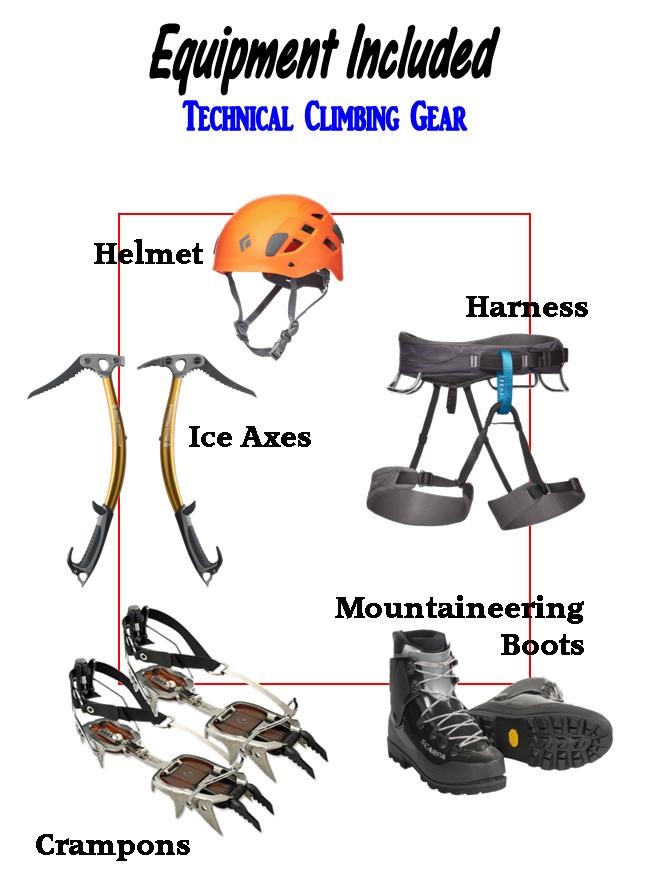
Mountaineering Boots
You need stiff, insulated mountaineering boots. These boots support your ankles and have rigid soles for attaching crampons. There are two main types:
- Single boots: Lighter, good for shorter, less extreme climbs.
- Double boots: Warmer, best for very cold or multi-day trips. They have a removable liner that dries faster.
Gaiters
Gaiters cover your lower legs and boots, keeping snow and ice out. They also protect your pants from crampon spikes.
Insight: Boots that fit poorly can cause cold toes and blisters. Try on boots with thick socks before buying.
Crampons
Crampons are metal spikes that attach to your boots, giving you grip on ice.
Types Of Crampons
- Step-in (automatic): Quick to attach, very secure, but require boots with toe and heel welts.
- Hybrid (semi-automatic): Use a heel clip and toe strap; fit more boot types.
- Strap-on: Fit almost any boot, but less precise for technical climbing.
Most ice climbers prefer 12-point crampons with vertical front points for steep ice. Adjustable anti-balling plates prevent snow from sticking underneath.
Crampon Fit And Care
Check that your crampons fit your boots exactly. Loose crampons can fall off or twist, causing a fall. After every climb, dry them to prevent rust.
Ice Axes And Ice Tools
Ice axes are the main tools for climbing frozen surfaces.
Types Of Axes
- Mountaineering Axes: Straight shaft, best for glacier travel or easy slopes.
- Technical Ice Tools: Curved shaft, aggressive pick, designed for vertical ice.
For pure ice climbing, you need two technical ice tools—one for each hand.
Features To Look For
- Leashless tools are now standard. They let you change hands easily, reduce tangle, and are safer if you fall.
- Interchangeable picks are useful; you can swap them if they wear out.
- Some tools have hand rests for better grip.
Example: The Petzl Nomic and Black Diamond Viper are popular choices for vertical ice.
Climbing Harness
A good climbing harness is your connection to the rope. For ice climbing, choose a harness with:
- Adjustable leg loops (to fit over bulky clothing)
- Gear loops for carrying screws, quickdraws, and slings
- Ice clipper slots for organizing ice screws
Make sure your harness fits snugly but is not too tight. Always try it on with your full winter clothing.
Helmets
Helmets protect your head from falling ice and accidental hits from tools. Modern helmets are lightweight and comfortable. Look for:
- Side and top impact protection
- Adjustable straps for a secure fit over hats or balaclavas
- Ventilation to prevent fogging and overheating
Never climb without a helmet. Even small chunks of ice can cause serious injury.
Ice Screws And Protection
Ice climbing needs special protection because ice is fragile and changes with temperature.
Ice Screws
Ice screws are metal tubes with sharp threads that you screw into the ice. They act as anchors for your rope in case of a fall. A typical rack has:
- 6 to 10 ice screws of various lengths (10–22 cm)
- Shorter screws for thin ice, longer for thick ice
Quickdraws And Runners
You’ll need quickdraws to connect your rope to the ice screws. Bring some longer runners/slings for reducing rope drag.
V-threads (abalakov Anchors)
Sometimes, you need to make your own anchor from the ice. For this, you need a V-thread tool (hook) to thread cord or webbing through holes in the ice.
Ropes
Ice climbing uses special ropes for cold and wet conditions.
Types Of Ropes
- Single ropes (9–10 mm): Easy to handle, good for straightforward climbs.
- Half ropes (8–9 mm): Used in pairs for wandering routes or longer rappels.
Most important: use dry-treated ropes. These resist water, so they don’t freeze and stay flexible.
Rope Length
A 60-meter rope is common. For multi-pitch climbs or long rappels, some climbers use 70 meters.

Belay Devices
A belay device helps control the rope during climbing and rappelling.
Types
- Tube-style (ATC): Simple, reliable, easy to use with gloves.
- Assisted-braking: Some, like the Petzl GriGri, are not ideal for ice because ropes can be icy or too thin.
Bring a prussik loop or auto-block backup for extra safety during rappels.
Carabiners
Carabiners connect everything together. You need a mix of:
- Locking carabiners: For belaying, anchors, and important connections.
- Non-locking carabiners: For quickdraws and gear organization.
Oval or pear-shaped carabiners are easy to use with gloves.
Other Essential Gear
Backpack
A 30–40 liter backpack carries your gear, food, and water. Look for ice axe loops, crampon pocket, and a durable outer fabric.
Hydration
Bring an insulated water bottle. Hydration bladders can freeze. Add a thermos with a hot drink for long days.
Headlamp
Winter days are short. Pack a headlamp with fresh batteries. LED models are reliable, and a spare is smart.
First Aid And Emergency Kit
Include bandages, tape, painkillers, a rescue blanket, and a small knife. Know how to use every item.
Map, Compass, And Gps
In remote areas, navigation tools are vital. Don’t rely only on your phone—batteries drain fast in the cold.
Sunglasses Or Goggles
Bright snow and ice can damage your eyes. Goggles protect against wind and flying ice.
Typical Gear Setup By Climb Type
To help you visualize what you might need, here’s a quick comparison:
| Climb Type | Must-Have Gear | Optional Gear |
|---|---|---|
| Single-Pitch Waterfall | Helmet, harness, 2 ice tools, crampons, 6 ice screws, rope, belay device | Backpack, spare gloves, V-thread tool |
| Multi-Pitch Ice | All of above plus extra screws, extra runners, half ropes | Double boots, thermos, GPS |
| Mixed Climbing | Technical tools, crampons, rock gear (nuts, cams), helmet | Goggles, knee pads |
Ice Climbing Gear: What To Prioritize
Buying all your gear at once can be expensive. Here’s a summary of what matters most:
| Equipment | Why Important? | Budget Tip |
|---|---|---|
| Boots & Crampons | Directly affect warmth and safety | Never buy used boots unless you try them first |
| Ice Tools | Key to climbing vertical ice | Rent or borrow until you know your style |
| Helmet & Harness | Basic safety for all climbing | Buy new for best fit and safety |
| Clothing | Protects against cold and wet | Layering with non-cotton clothes can save money |
Common Beginner Mistakes
- Ignoring fit: Ill-fitting boots or harnesses can ruin your climb.
- Skipping backups: Always pack spare gloves and socks.
- Overpacking: Too much gear slows you down. Take only what you need.
- Underestimating cold: Start with more layers; you can always remove some.
- Using non-dry ropes: Wet ropes freeze and become stiff.
Non-obvious insight: Many new climbers focus on technical tools but forget about small items like V-thread tools or extra headlamp batteries. These can be crucial if plans change.
Where To Learn More
If you want in-depth gear reviews, technique advice, or route guides, check out the American Alpine Club. Their resources are respected and beginner-friendly.
Frequently Asked Questions
What Is The Difference Between Ice Climbing And Mountaineering Gear?
Mountaineering gear is designed for snow and moderate slopes, while ice climbing gear is built for vertical ice. For example, ice tools are more curved and aggressive than general ice axes, and crampons for climbing have sharper front points.
Can I Use Rock Climbing Gear For Ice Climbing?
Some items, like harnesses and carabiners, can be used for both. But you need specialized boots, crampons, ice tools, and ice screws for safety and performance on ice.
How Do I Care For My Ice Climbing Equipment?
After each trip, dry all gear to prevent rust and mold. Sharpen your crampons and tools when needed. Store ropes in a cool, dry place and avoid UV exposure.
How Many Ice Screws Do I Need?
For most single-pitch climbs, 6–8 ice screws of different lengths are enough. For longer or multi-pitch routes, bring more, plus a V-thread tool for making anchors.
Is It Safe To Try Ice Climbing Without A Guide?
If you are new, climbing with an experienced guide or instructor is the safest way to learn. Ice climbing is technical and the environment can be unpredictable. A guide helps you use gear correctly and stay safe.
Ice climbing is a demanding but rewarding sport. With the right equipment, careful preparation, and proper guidance, you’ll be ready to tackle frozen waterfalls and enjoy winter’s wildest adventures. Every piece of gear plays a role in your safety and success.
Invest time in learning, and you’ll climb with confidence.