
Freefall in skydiving is one of the most thrilling experiences a person can have. The moment you leave the airplane, you feel weightless, the wind rushes past you, and your body accelerates toward the earth. But what exactly is freefall?
Why does it feel so different from other forms of falling, and what do you need to know to understand and enjoy it safely? This article will explain every detail of freefall in skydiving, from the science behind it to what you’ll actually experience in the sky.

Today's Exclusive Deals
Limited-time Exclusive Deals. Check current discount on Amazon.
Check Price on Amazon As an Amazon Associate I earn from qualifying purchases.If you’ve ever wondered why people love this part of the jump, or if you’re thinking of trying skydiving yourself, you’ll find answers here.
What Is Freefall In Skydiving?
Freefall in skydiving is the part of the jump when a skydiver has exited the aircraft but has not yet deployed their parachute. During this time, the skydiver is falling freely, only influenced by gravity and air resistance. Typically, freefall lasts from a few seconds up to one minute, depending on the jump altitude and when the parachute is opened.
The feeling of freefall is unique. Many first-timers expect a stomach-dropping sensation, like on a roller coaster, but freefall feels more like floating or flying. That’s because once you reach terminal velocity, the force of the air balances your acceleration, and you stop speeding up.
Today's Exclusive Deals
Limited-time Exclusive Deals. Check current discount on Amazon.
Check Price on Amazon As an Amazon Associate I earn from qualifying purchases.This balance creates the sensation of flying, not just falling.
The Physics Behind Freefall
Skydiving freefall is not just about falling; it’s about how the body interacts with the air. Here’s what happens:
- Acceleration: When you first jump, you accelerate downward due to gravity.
- Air Resistance: As you speed up, air pushes against your body, creating drag.
- Terminal Velocity: Eventually, drag equals the force of gravity. You stop accelerating and fall at a constant speed, called terminal velocity.
For most skydivers in a belly-to-earth position, terminal velocity is around 120 mph (193 km/h). If you change your position, you can fall faster or slower. For example, diving head-first increases your speed to around 150-180 mph (240-290 km/h).
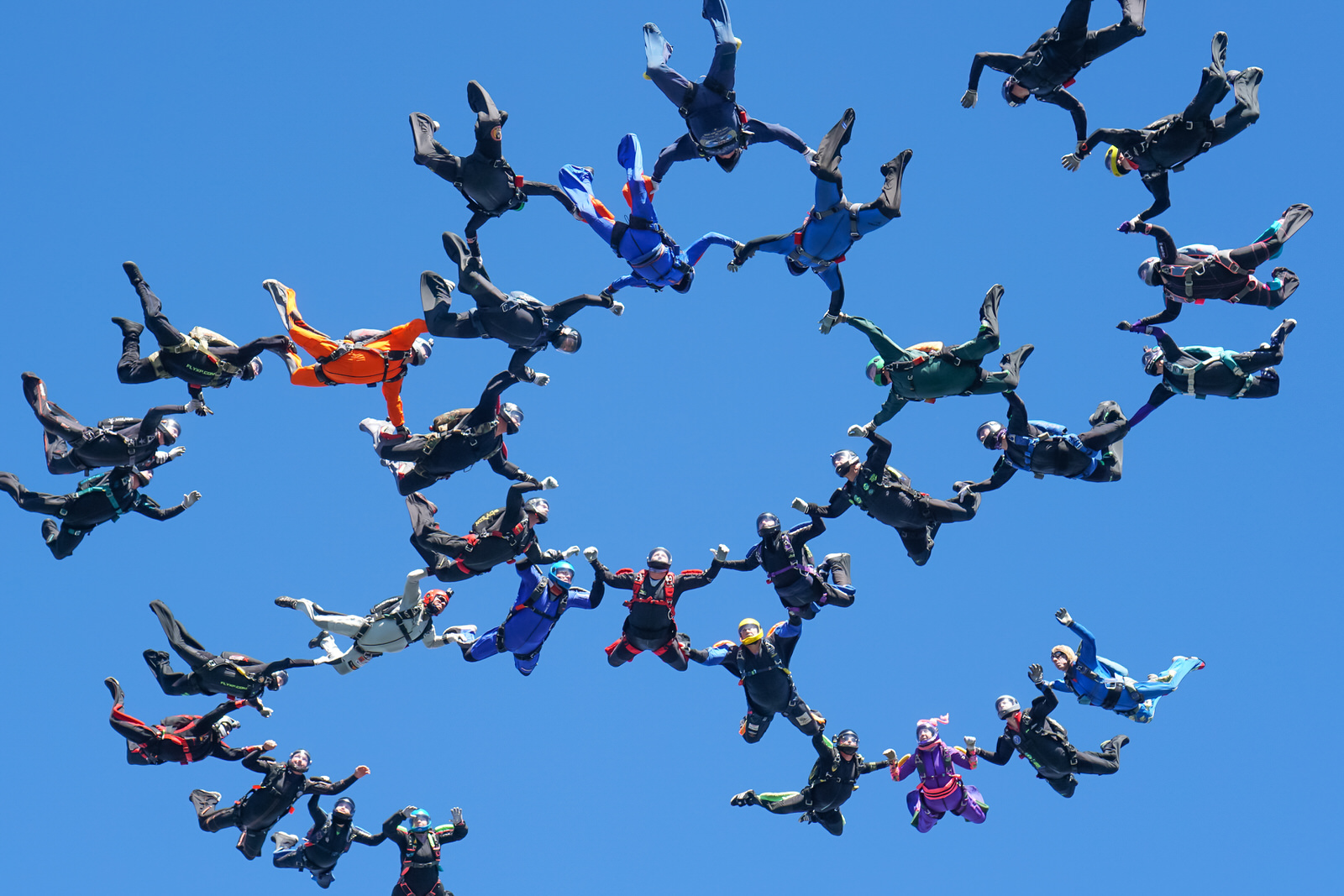
Stages Of A Skydive: Where Freefall Fits In
Understanding where freefall fits in the overall skydive helps you see why it’s the highlight for many jumpers. Here’s a typical skydive timeline:
Today's Exclusive Deals
Limited-time Exclusive Deals. Check current discount on Amazon.
Check Price on Amazon As an Amazon Associate I earn from qualifying purchases.| Stage | Altitude | Duration | Description |
|---|---|---|---|
| Exit | 10,000–15,000 ft (3,000–4,500 m) | Instant | Jump from the aircraft |
| Freefall | Until 2,500–5,000 ft (760–1,500 m) | 30–60 sec | Unhindered fall before parachute opens |
| Canopy Flight | 2,500–5,000 ft down to landing | 3–5 min | Controlled descent with open parachute |
| Landing | Ground | Seconds | Final flare and touchdown |
Freefall is the fastest and most intense part. For most skydives, it’s the main reason people jump.
What Does Freefall Feel Like?
The sensation of freefall surprises many people. Here’s what you can expect:
- No Stomach Drop: Unlike roller coasters, you don’t feel a sudden drop. The wind supports you almost instantly.
- Wind Pressure: The air feels strong against your body, especially your face and arms.
- Noise: Freefall is loud. The wind can make it hard to hear anything else.
- Temperature: It can be cold, especially at higher altitudes.
- Movement Control: You can move your arms and legs to turn, flip, or even slow down.
A non-obvious insight: many beginners expect to feel out of control, but with a stable belly-to-earth position, most people naturally stabilize within a few seconds. The airflow helps you stay level.
Types Of Freefall Positions
How you position your body changes your freefall experience. The main positions are:
- Belly-to-Earth (Stable Position): Most common for beginners. Easy to control, slower fall.
- Head-Down: Experienced skydivers use this for faster speeds.
- Sit-Fly: Sitting position, falls between head-down and belly-to-earth speeds.
- Tracking: Arms at sides, body streamlined. Used to move across the sky.
- Back Flying: Face up toward the sky.
| Position | Approx. Speed (mph) | Skill Level |
|---|---|---|
| Belly-to-Earth | 120 | Beginner |
| Head-Down | 150–180 | Advanced |
| Sit-Fly | 140–160 | Intermediate/Advanced |
| Tracking | 100–160 | Intermediate |
| Back Flying | 110–130 | Intermediate |
Different positions are not just for fun—they allow skydivers to perform group jumps, formations, or creative maneuvers.
Freefall Duration: What Affects How Long You Fall?
Several factors influence how long you stay in freefall:
- Exit Altitude: The higher you jump, the longer the freefall. Most tandem jumps exit at 10,000–14,000 ft.
- Body Position: Streamlined positions (like head-down) make you fall faster, shortening your freefall.
- Parachute Deployment Altitude: Opening your parachute higher means a shorter freefall, and vice versa.
For a typical tandem skydive from 13,000 ft, freefall lasts about 45–60 seconds. Accelerated Freefall (AFF) students may deploy sooner for safety, so their freefall is shorter.
Here’s a quick comparison of freefall duration by altitude:
| Jump Altitude (ft) | Freefall Time (sec) |
|---|---|
| 10,000 | 30 |
| 12,000 | 40 |
| 14,000 | 60 |
| 18,000 | 80 |
It’s important to note: weather and air density can slightly change these times.
Safety In Freefall
Skydiving has become much safer over the years, thanks to training and technology. Here are some key safety points about freefall:
- Automatic Activation Devices (AADs): These devices will automatically deploy the parachute if the skydiver hasn’t opened it by a certain altitude.
- Altimeters: Worn on the wrist or chest, these show your altitude so you know when to deploy.
- Training: Before your first jump, you’ll be taught how to maintain a stable position and what to do in case of trouble.
A common beginner mistake is forgetting to check your altitude. Modern skydivers use audible altimeters as backups, which beep when it’s time to pull.
Freefall In Tandem Skydiving
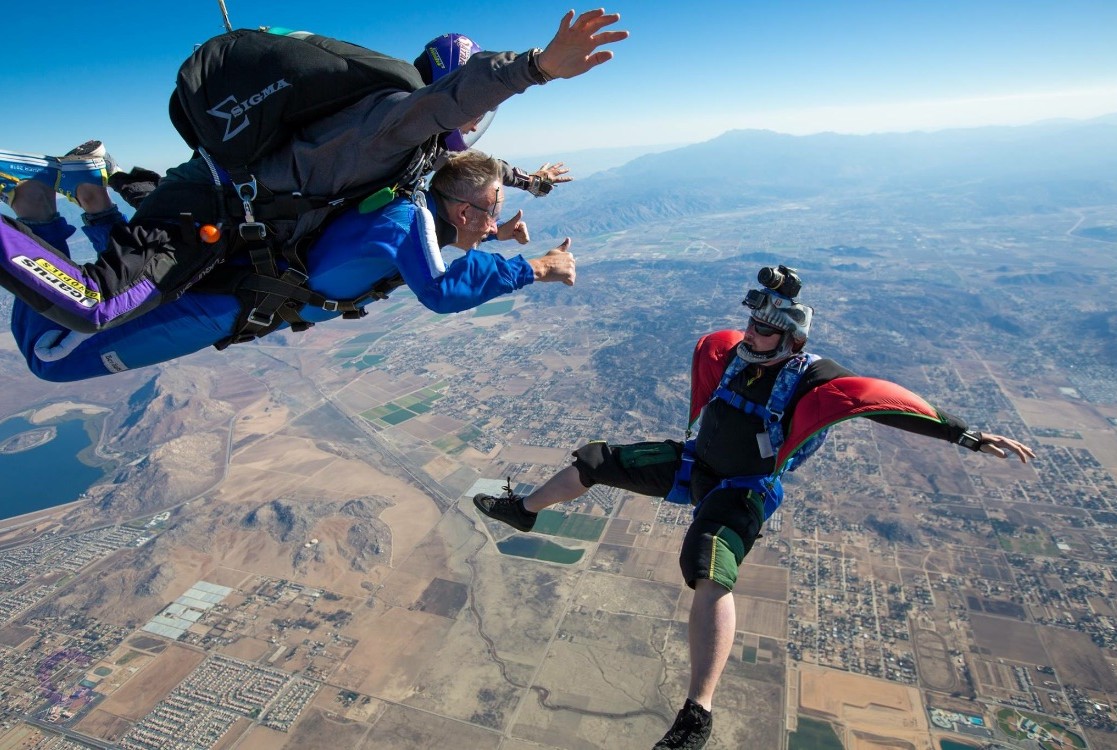
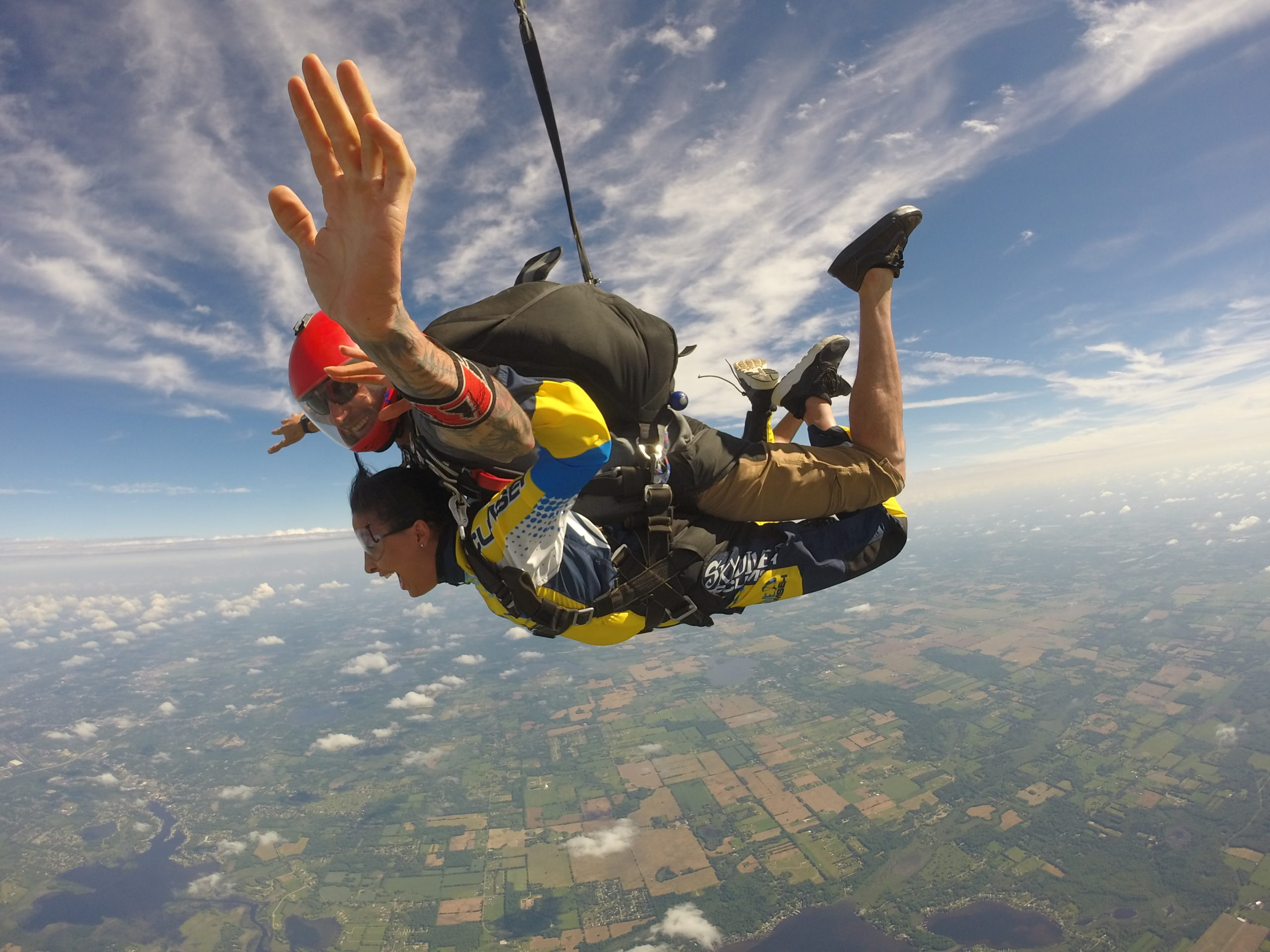
Most first-timers experience freefall through a tandem skydive. You’re harnessed to an instructor, who controls the jump and parachute. This allows you to experience the thrill of freefall with minimal training.
- Instructor Responsibilities: The instructor manages exit, freefall stability, and parachute deployment.
- Your Role: Keep your body in the right position and enjoy the ride.
Tandem jumps are the safest way for beginners to experience freefall, as the instructor handles all technical aspects.
Accelerated Freefall (aff) Training
If you want to skydive solo, you’ll take an Accelerated Freefall course. In AFF, you jump with two instructors holding onto you during freefall. This helps you learn stability and deployment skills. After several jumps, you’ll progress to jumping alone.
- First AFF Jumps: Instructors hold you for stability.
- Progression: As you show skill, you get more freedom.
AFF is the fastest way to become a licensed skydiver.
Freefall Records And Extreme Jumps
Freefall isn’t just for fun—it’s pushed the limits of human achievement. The highest and fastest freefall records have set milestones:
- Felix Baumgartner (2012): Jumped from 128,100 ft (39,045 m), reaching speeds over 843 mph (1,357 km/h).
- Alan Eustace (2014): Broke the altitude record with a jump from 135,890 ft (41,419 m).
These jumps required special suits and equipment to survive the low temperatures and thin air. These records show the extreme possibilities of freefall.
Freefall In Wind Tunnels
You don’t need a plane to experience freefall. Indoor skydiving uses vertical wind tunnels to simulate freefall conditions. Air blows upward at high speeds, allowing you to float and practice maneuvers safely.
- Training Tool: Great for beginners to learn body control.
- No Parachute Needed: You’re just a few feet above a net.
Wind tunnels have made skydiving skills more accessible and safe for all ages.
How To Prepare For Your First Freefall
If you’re planning your first skydive, a little preparation helps:
- Listen Carefully: Your instructor will brief you on safety and body position.
- Stay Relaxed: Tension makes it harder to stay stable. Breathe and focus.
- Arch Your Body: Push your hips forward and keep your chin up. This position is naturally stable.
- Check Altitude: Get used to checking your altimeter regularly.
- Trust Your Instructor: For tandem or AFF, your instructor is trained to keep you safe.
A non-obvious tip: Don’t hold your breath. Many beginners forget to breathe in freefall. Slow, steady breathing keeps you calm and lets you enjoy the moment.
Common Myths About Freefall
Many myths about freefall make people nervous. Let’s clear up a few:
- You Can’t Breathe: False. The air is thinner, but breathing is possible. Just relax and let yourself breathe naturally.
- You’ll Feel Like You’re Falling: It feels more like floating in strong wind.
- Parachutes Don’t Open: Modern parachutes are highly reliable. Reserve chutes and AADs add extra safety.
- Freefall is Dangerous: Skydiving has risks, but with training and equipment, it’s statistically safer than many other extreme sports.
The Joy And Challenge Of Freefall
Ask any skydiver why they jump, and most will mention the rush of freefall. It’s a mix of freedom, excitement, and focus. Every jump is slightly different. Even experienced skydivers learn new things in freefall, from advanced maneuvers to group formations.
A practical insight: freefall helps build confidence. Controlling your body at high speed improves awareness, calmness under pressure, and trust in your equipment and training.
Frequently Asked Questions
What Is The Main Difference Between Freefall And Regular Falling?
Freefall in skydiving means falling without any parachute deployed, only affected by gravity and air resistance. Regular falling (like tripping or jumping from a small height) is much shorter and doesn’t reach the high speeds of skydiving freefall.
How Fast Do You Fall During Freefall?
A typical belly-to-earth freefall speed is around 120 mph (193 km/h). Head-down positions can reach up to 180 mph (290 km/h) or more.
Can You Breathe In Freefall?
Yes, you can breathe in freefall. The wind is strong, but the air is breathable. Beginners sometimes forget to breathe because of excitement, not because of lack of air.
Is Freefall Safe For Beginners?
With tandem jumps and proper training, freefall is safe for beginners. Safety equipment and instructor guidance make it one of the safest ways to experience extreme sports.
Where Can I Learn More About The Science Of Freefall?
You can find more in-depth science and safety details at the Wikipedia page on skydiving.
Freefall in skydiving is more than just falling—it’s a powerful, unforgettable experience. With the right preparation, anyone can enjoy the thrill and freedom of skydiving’s fastest moments. If you’re ready to step out of your comfort zone, freefall is waiting for you.