
Keeping your paddle board adventures smooth and stress-free starts long before you hit the water. It begins with caring for your gear—especially your paddle board pump. Whether you own an inflatable stand-up paddle board (iSUP) or share one with friends, your pump is essential. A well-maintained pump keeps your board firm, safe, and ready to go. But many paddle boarders forget about pump maintenance until it’s too late—leading to slow inflation, leaky hoses, or even a ruined day on the lake.
Exclusive Deals
Limited-time Exclusive Deals. Check current discount on Amazon.
Check Price on Amazon As an Amazon Associate I earn from qualifying purchases.In this guide, you’ll learn how to keep your paddle board pump in top shape. We’ll cover the steps, tools, and smart habits that protect your investment. You’ll also discover common mistakes, repair tips, and how to spot trouble early.
It doesn’t matter if you use a manual or electric pump—these methods will help you get more life and better performance out of your equipment. By the end, you’ll have the confidence and knowledge to keep your pump working for years.
Why Paddle Board Pump Maintenance Matters
Your paddle board pump is a vital part of your SUP experience. When you care for your pump, you:
Exclusive Deals
Limited-time Exclusive Deals. Check current discount on Amazon.
Check Price on Amazon As an Amazon Associate I earn from qualifying purchases.- Save money on repairs and replacements
- Reduce risk of sudden failures at the water
- Increase efficiency (faster, easier inflation)
- Protect your paddle board from under- or over-inflation
A neglected pump often leads to frustrating leaks, sticky valves, or even a blown hose. These problems can ruin a trip or even damage your board.
Types Of Paddle Board Pumps And Their Needs
Paddle board pumps come in several types, and each has unique care needs. The two main categories are manual pumps and electric pumps.
| Pump Type | Common Features | Maintenance Needs |
|---|---|---|
| Manual (Hand/Foot) Pump | Simple, no battery, double/single action, pressure gauge | Hose checks, lubrication, debris removal |
| Electric Pump | Plugs into car or battery, auto shut-off, digital display | Electrical checks, filter cleaning, battery care |
It’s important to know your pump type. For example, electric pumps often have air filters and need different cleaning steps than manual models.
Exclusive Deals
Limited-time Exclusive Deals. Check current discount on Amazon.
Check Price on Amazon As an Amazon Associate I earn from qualifying purchases.Basic Cleaning: The First Step To A Healthy Pump
Simple cleaning goes a long way. Dirt, sand, and salt are the biggest enemies of any paddle board pump. Here’s what you should do after every trip:
- Wipe the exterior with a damp cloth. Remove sand, salt, and mud from all surfaces.
- Check the hose for debris inside and out. Blow through the hose (away from your face) to clear fine particles.
- Clean pump connections—the end that attaches to your board and the pump itself. Use a small brush or cotton swab.
For electric pumps, be extra careful to keep water away from electrical parts. Let all parts dry completely before storage.
Lubrication: Keeping Things Moving Smoothly
A pump’s moving parts need to glide smoothly. Manual pumps especially benefit from regular lubrication. This reduces wear, prevents sticking, and makes pumping much easier.
- Use silicone-based lubricants. Avoid oils that attract dust or damage plastic/rubber.
- Apply a small amount to the piston shaft inside the pump cylinder (consult your manual for access).
- Wipe away excess to avoid build-up.
- Lubricate every 10-15 uses or after exposure to sand/water.
Pro tip: If your pump feels stiff or squeaks, it’s time to lubricate—even if it’s before the scheduled interval.
Inspecting For Damage And Wear
Regular inspection catches problems early. Focus on these areas:
- Pump hose: Look for cracks, splits, or bulges. Even a tiny hole can cause air leaks and slow inflation.
- O-rings and seals: These small rubber parts keep air inside. Check for dryness, cracks, or flat spots.
- Pressure gauge: Make sure it reads accurately. A broken gauge can lead to over- or under-inflation.
- Pump body: Check for dents, loose screws, or broken handles.
If you find damage, replace the part as soon as possible. Many manufacturers sell spare hoses and seals.
Caring For Your Pump Hose
The hose is both the most used and most damaged part of a paddle board pump. Here’s how to keep it in good shape:
- Never bend or twist the hose sharply.
- Store straight or in a loose coil.
- After use, blow out any sand or water.
- Avoid stepping on the hose, especially on rough ground.
- If you see a small crack, wrap it temporarily with tape, but replace the hose soon.
Beginner insight: Many first-time users damage hoses by packing them tightly into bags. Give your hose room to breathe!

Storing Your Paddle Board Pump Properly
Where you keep your pump matters as much as how you clean it. Proper storage can double its lifespan.
- Dry your pump fully before storing. Moisture causes rust and mold.
- Keep it out of direct sunlight. UV rays break down plastic and rubber.
- Store in a cool, dry place—not a hot car trunk or damp garage.
- For electric pumps, remove batteries if you won’t use them for a month or more.
Avoid leaving your pump in your paddle board bag if it’s wet or sandy. Give it its own spot to avoid accidental damage.
Electric Pump Special Care
Electric paddle board pumps need extra attention. Their motors, wires, and digital displays can be sensitive.
- Check the power cord and plug for damage before each use.
- Clean the air intake filter regularly. Dust or sand can cause overheating.
- Charge or replace batteries as recommended by the manufacturer.
- Never submerge the electric pump in water.
- Let the pump cool after heavy use (inflating multiple boards) to avoid overheating.
| Electric Pump Part | Maintenance Action | Frequency |
|---|---|---|
| Air Filter | Remove and clean with a soft brush | Every 3-5 uses |
| Power Cord | Check for cuts or frayed wires | Every use |
| Battery | Charge fully before storage | Every use/after long storage |
These extra steps make electric pumps last longer and work more reliably.
Troubleshooting Common Pump Problems
Even with great care, problems can happen. Here are some common issues and what to do:
- Pump won’t inflate or is very slow: Check for leaks in the hose or at the connection. Make sure seals are in place and the pump is assembled correctly.
- Pressure gauge not working: Inspect for blockages at the gauge port. Tapping gently can free stuck needles.
- Strange noises when pumping: Lubricate the piston or check for sand inside the cylinder.
- Electric pump shuts off early: Battery may be weak, or the auto shut-off is set too low. Check settings and battery charge.
If you can’t fix the problem yourself, check the manufacturer’s website or user forums for guides, or contact customer service.
How Often Should You Maintain Your Paddle Board Pump?
There is no one-size-fits-all answer, but here is a good general schedule:
- After every use: Wipe down, dry, and visually inspect.
- Every 10-15 uses: Lubricate moving parts, deep clean, check hoses and seals closely.
- Before and after storage: Do a full inspection and store properly.
Frequent users (weekly or more) should inspect and clean more often. Occasional users should check carefully before the first use each season.

Essential Maintenance Tools And Supplies
You don’t need a lot of special gear to take care of your paddle board pump. Here’s what you should have on hand:
- Soft cloths (for cleaning)
- Silicone lubricant
- Small brush or old toothbrush
- Cotton swabs
- Spare O-rings and seals
- Electrical tape (for temporary hose fixes)
- Screwdriver (for opening pump body if needed)
- Zip ties (for organizing cables on electric pumps)
Having these tools ready saves time and helps you fix small issues before they become big problems.
Mistakes To Avoid When Maintaining Your Pump
Some mistakes can shorten pump life or make problems worse:
- Using harsh cleaners: Chemicals can damage plastic and rubber parts.
- Over-lubricating: Too much oil attracts dirt and clogs moving parts.
- Ignoring small leaks or cracks: Small problems get worse fast under pressure.
- Forgetting electric pump battery care: Old batteries can leak or fail suddenly.
- Storing pump wet or in direct sun: This causes mold, rust, and UV damage.
Non-obvious tip: Never use compressed air to clean inside your pump—it can force sand into seals and make leaks worse.
When To Replace Your Paddle Board Pump
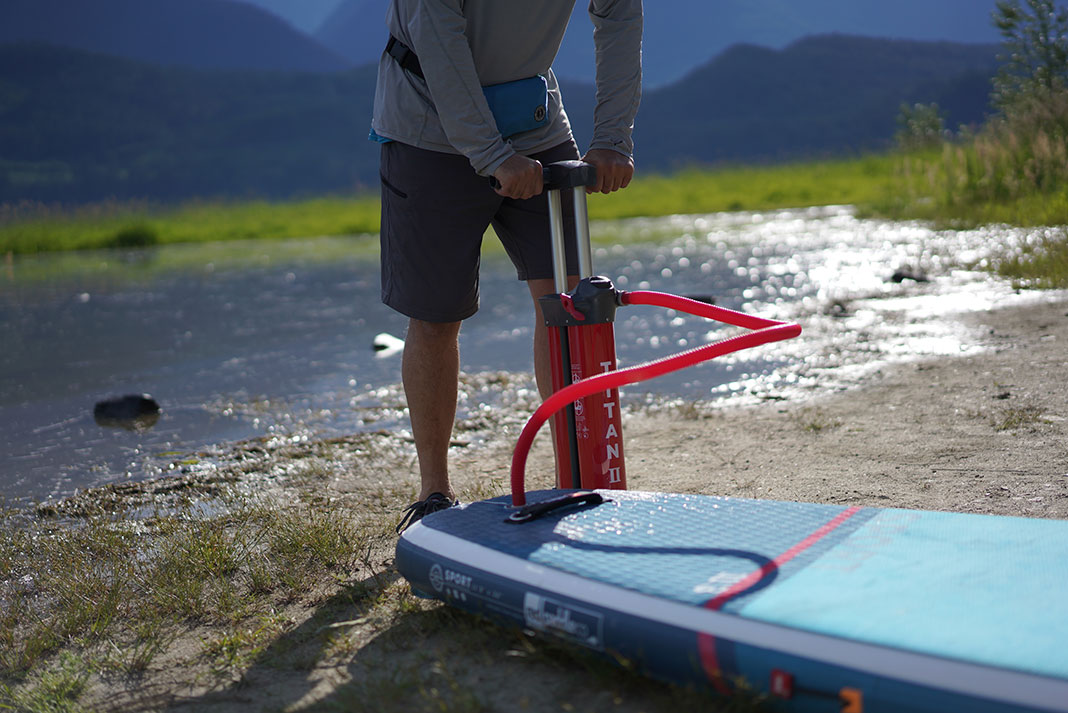
Even the best maintenance can’t make a pump last forever. You should consider replacing your pump if:
- The hose or seals are cracked and replacements are hard to find.
- The pressure gauge is broken and can’t be fixed.
- The pump body is warped or damaged.
- For electric pumps: The motor fails, or the battery will not hold a charge.
A high-quality pump can last for many years with care. But when it’s time, don’t risk your board or your safety—buy a new one.
Real-world Example: A Season With Good Pump Care
Jenna, a paddle boarder in Florida, uses her iSUP every weekend. She started having slow inflation and a squeaky pump handle. Instead of ignoring it, she:
- Cleaned her pump after each beach trip, focusing on sand and salt removal.
- Lubricated the piston monthly.
- Checked and replaced the hose when she spotted a small crack.
- Kept her electric pump’s battery charged during the off-season.
Result: Her pump worked smoothly all summer, and she avoided costly last-minute repairs. Her friends often borrowed her pump because it was reliable and easy to use.
Maintenance Checklist For Paddle Board Pumps
Here’s a practical checklist to keep your pump in top shape:
- Wipe down and dry after every use
- Inspect hose and connections for leaks or cracks
- Clean and lubricate moving parts monthly
- Check pressure gauge for accuracy
- Store in a cool, dry, shaded place
- For electric pumps: Clean air filter and check power cords
- Replace worn or damaged parts promptly
Following these steps will keep your pump (and your paddle board trips) running smoothly.
Frequently Asked Questions
How Do I Know If My Paddle Board Pump Is Leaking Air?
If your board inflates slowly or won’t reach full pressure, check for hissing sounds near the hose, connections, and seals. You can also apply soapy water to suspect areas—bubbles mean a leak.
Can I Use Wd-40 Or Oil To Lubricate My Pump?
No. Use only silicone-based lubricants. Products like WD-40 or regular oil can damage rubber and attract dirt, which causes more problems inside your pump.
How Can I Make My Pump Last Longer If I Paddle In Saltwater?
Rinse your pump and hose with fresh water after every trip. Salt causes corrosion and damages seals quickly. Dry all parts completely before storing.
Is It Safe To Repair A Cracked Pump Hose With Tape?
Tape is a temporary fix. Replace the hose as soon as possible, especially if the crack is near the connection. Leaky hoses can damage your board or make inflation impossible.
Where Can I Find Replacement Parts For My Paddle Board Pump?
Most SUP brands sell replacement hoses, O-rings, and seals on their websites. For electric pumps, check the manufacturer’s support page or visit SUP Board Guide for trusted suppliers.
Taking care of your paddle board pump is simple but powerful. With a few easy habits and careful checks, you’ll enjoy many seasons of trouble-free paddling—and fewer surprises at the water’s edge.

